




Is your manufacturing company looking to electrify its operations but unable to obtain additional power due to grid congestion? Discover solutions within your existing connection.
Your manufacturing company wants to go electric: electrify processes, charge vehicles, and perhaps use its own solar power. But due to grid congestion, you can’t get any additional connection capacity. Applications get stuck, wait times are long, and in the meantime, you still need to keep your production running reliably. Downtime or expensive emergency generators next to the factory are not an appealing prospect.
In this guide, you’ll learn how you can still electrify your operations using your existing power connection, through the smart use of energy management and industrial batteries. We focus specifically on manufacturing companies in the Netherlands and align with real-world practices on the shop floor. You can also find more background information about the industry on the industry page.
What if your manufacturing company wants to go electric but can't get additional power?
You want to electrify your manufacturing facility: electric ovens, new heat pumps, additional charging stations on the premises. The business case makes sense, the technical details are clear—but the grid operator tells you, “No additional transmission capacity; you’ll be put on the waiting list.” What now?
That’s the reality of grid congestion: during peak times, the power grid in your region is so overloaded that the grid operator is not allowed to authorize a higher connection capacity or a more powerful connection. In practice, no additional capacity means you can’t scale up your production on the grid any further, even if you want to invest in electrification, charging infrastructure, or new machinery.
For manufacturing companies, this has a direct impact on:
- Growth: new routes, additional shifts, or more charging stations will be limited.
- Sustainability: Electrification and solar energy storage seem to be stalling.
- Legal and internal goals: CO₂ reduction and energy conservation must continue as usual.
Important to know: a “no” from the utility company does not mean “no” to electrification. Behind the meter, you often have more flexibility than you think. With smart energy management, peak shaving, and—for example—an industrial battery, you can sometimes achieve a surprising amount within your existing connection.
You can find a detailed explanation of the causes and types of grid congestion on the Grid Congestion page, but here we’ll focus primarily on: what does this mean in practical terms for your manufacturing company, and what routes are still available to you?
Electrification Using Your Existing Connection: The Main Approaches
Electrification within your existing connection requires smart management of the capacity you do have. Instead of immediately thinking about upgrading the connection, you can combine different approaches on the production floor to smooth out peaks, reduce grid load, and still incorporate more electric drives or heat.
1. Reduce and spread out peak demand
In many manufacturing and process companies, power spikes occur because equipment starts up simultaneously or runs during the same shift. Specific examples include:
- Process planning: Turn on high-power equipment (ovens, compressors, large pumps) in phases rather than all at once at 7:00 a.m.
- Smart setpoints: for example, not running all electric motors at maximum capacity if it is not necessary for the process.
- Maintenance and optimization: Replacing outdated, inefficient drives with modern models equipped with variable-frequency drives can reduce peak power consumption.
This is often the first, relatively easy step toward creating space within your existing connection.
2. Industrial battery for peak shaving
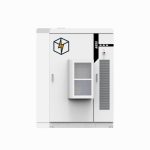
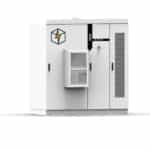
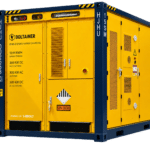
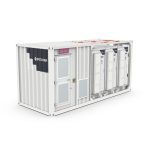
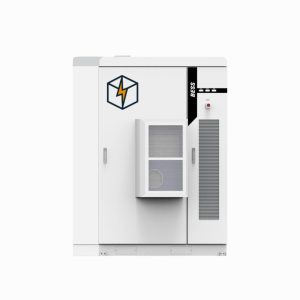
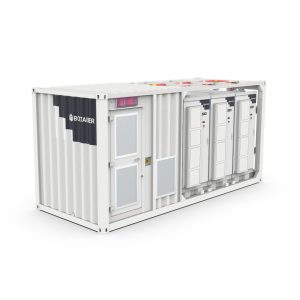
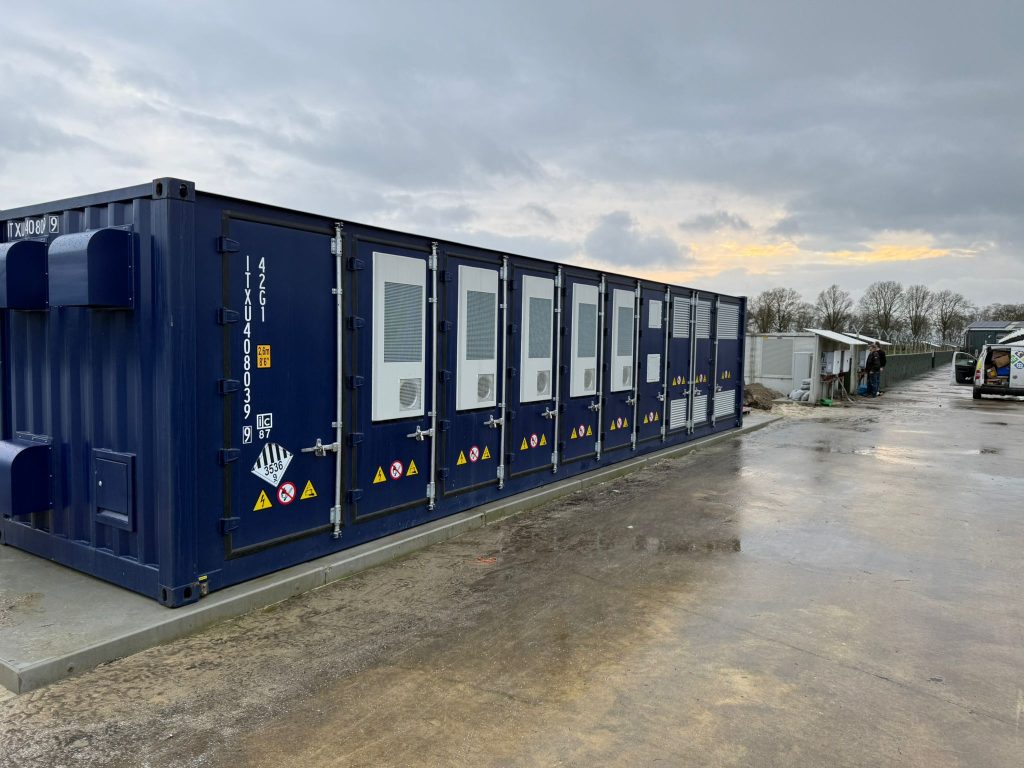
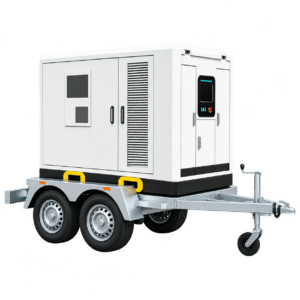
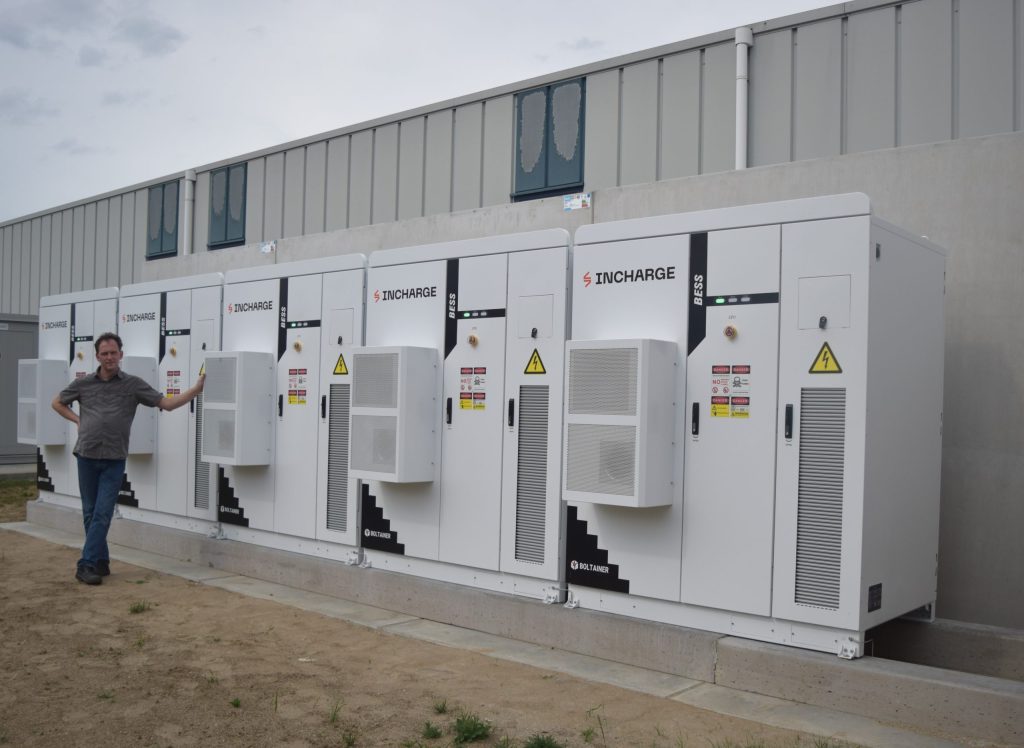
With an industrial battery in the form of an energy storage container or cabinet, you can implement peak shaving. The battery charges when your consumption is low and feeds power back into the grid during brief periods when your production peaks. On the shop floor, you’ll notice this, for example, when:
- simultaneous start-up of multiple production lines;
- cleaning or rinsing cycles with high power consumption;
- Test runs of new installations.
This keeps the grid connection “stable,” while ensuring your machines get what they need. You can find more information about applications during grid congestion on the grid congestion page.
3. Combining with self-generated power
If you have solar panels on your roof or property, you can combine them with a battery. During the day, the generated power directly fuels your operations; you can store any surplus for later use, such as for afternoon or evening shifts. This reduces your grid consumption during peak times and helps relieve the strain on the grid. In some cases, this even allows you to operate parts of your site as an off-grid microgrid, such as a remote warehouse or test facility.
4. Energy Management System (EMS) as the coordinator
An energy management system intelligently controls installations, power generation, and batteries based on measured and predicted load. Examples include:
- automatically shifting non-critical processes to off-peak hours;
- limiting the load capacity for internal transport while a furnace is heating up;
- managing the battery to handle peaks without requiring operators to intervene constantly.
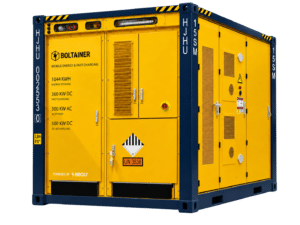
When combined with an industrial battery—such as the solutions Boltainer offers for the industrialsector—you can turn your connection into an actively controlled energy system that allows for greater electrification without requiring a more powerful connection.
How Peak Shaving Works with an Industrial Battery for Manufacturing Companies
An industrial battery acts as a temporary “virtual” source of additional power without placing an additional load on your utility connection. You remain within your contracted capacity while still being able to use more power-intensive or additional electrical equipment.
Basic principle: charge during off-peak hours, discharge during peak hours
A battery used for peak shaving is strategically controlled through energy management:
- Measuring Electricity Consumption The system continuously measures your manufacturing facility's electricity consumption on a 15-minute or per-second basis.
- Charging during periods of low demand or using self-generated power
- Outside of peak production times (such as at night or on weekends), the energy storage container or energy storage cabinet is charged gradually.
- Do you have solar panels on your roof? If so, the battery can also charge using excess solar energy.
- Discharging During Peak Periods As soon as the measured load approaches your contracted capacity, the battery rapidly supplies additional power. Grid consumption remains below the agreed-upon limit: this is peak shaving.
- Automatic Control: The balance between the grid, the battery, and the loads is managed automatically through smart energy management. Your operators have very little to do in their day-to-day operations.
Real-world example
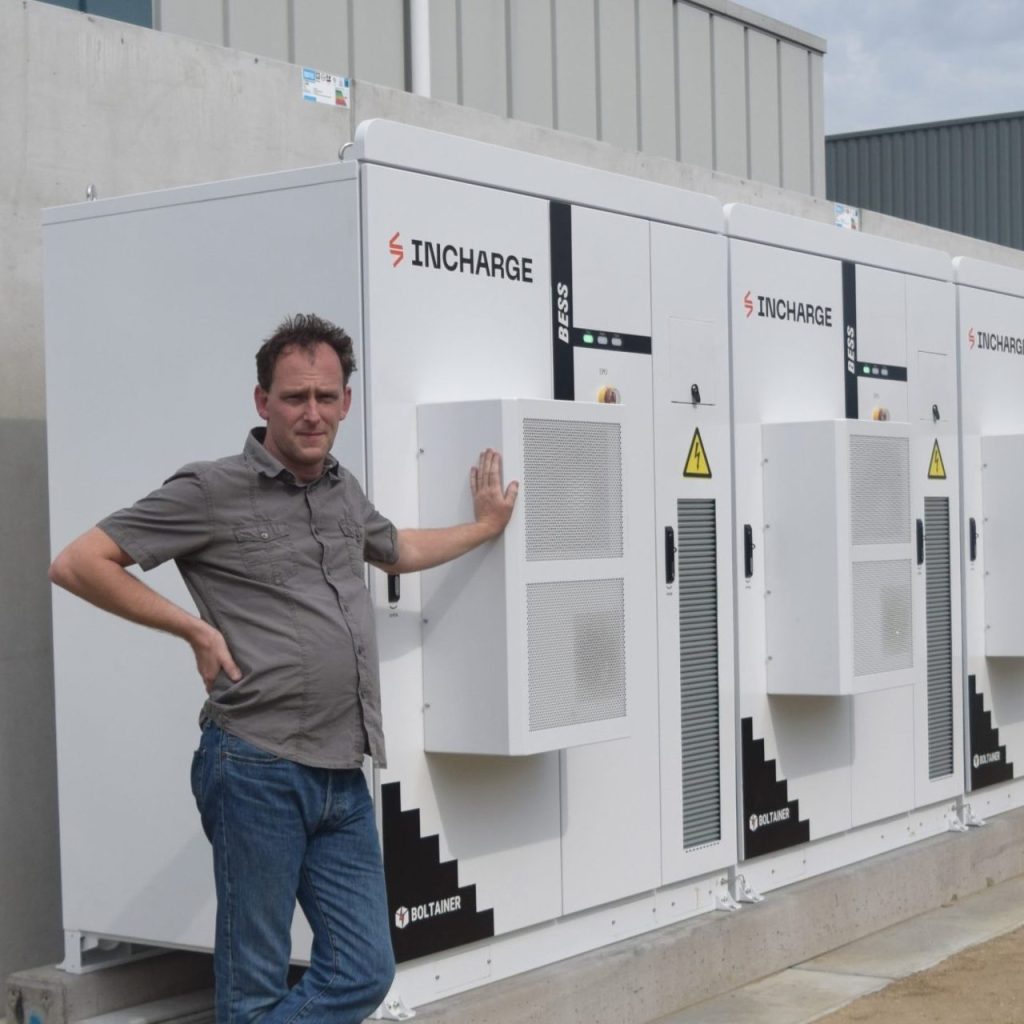
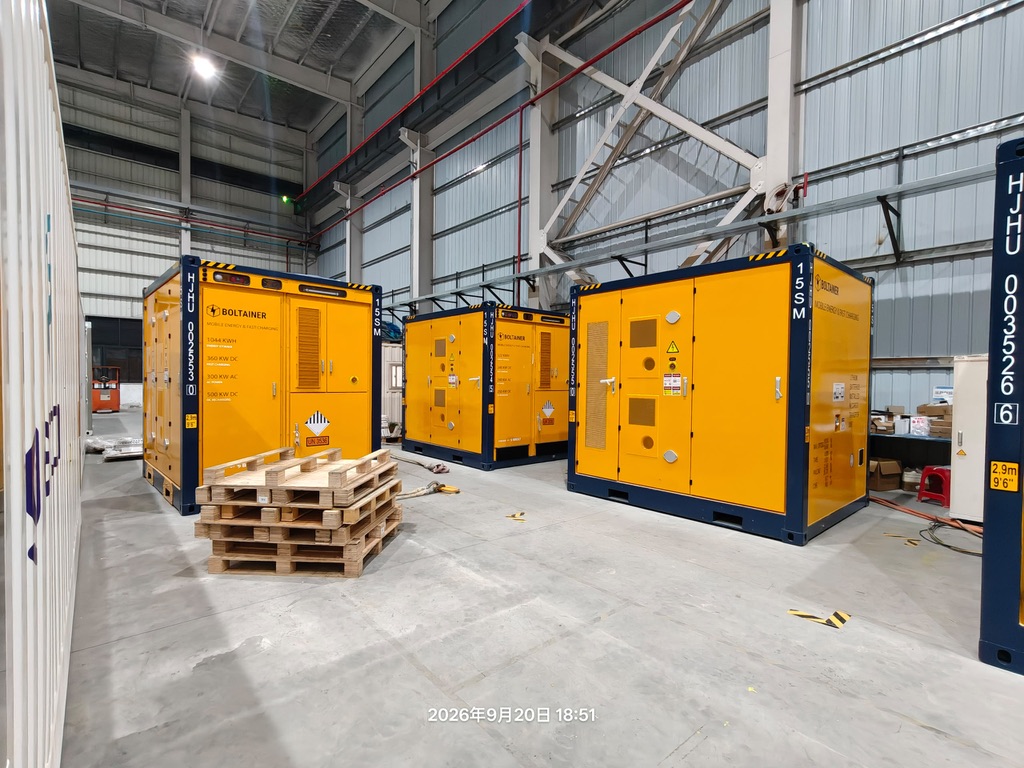
At an existing Boltainer installation at an industrial facility, the simultaneous startup of large motors and furnaces is managed by a megawatt-class battery. As a result, the measured grid load remains below the contracted capacity, while multiple production lines can operate simultaneously. [Needs: engineer-reviewed calculation]
Typical situations in manufacturing companies
- Simultaneous startup of compressors, fans, and pumps
- Filling Ovens or Induction Heaters
- Short but high spikes caused by test benches or presses
Without a battery, moments like these result in expensive peak rates or the need to increase capacity. Peak shaving “flattens out” these peaks.
Specifically for your factory: what are the benefits?
- Room for additional machines within the same contracted capacity.
- Lower peak power costs and more predictable energy costs.
- Less reliance on grid upgrades and a shorter time to market for new lines.
- Grid discharge is reduced because you smooth out your own peaks and use more of the electricity you generate yourself.
For more technical background on megawatt-level scalability and continuity, see the explanation of the industrial battery for the industry.
Step-by-Step Guide to Your Electrification Plan in the Event of Grid Congestion
A good electrification plan for grid congestion starts with structure. The step-by-step guide below will help you stay within your existing connection capacity while making room for growth.
Step 1: Understanding Quarter-Hourly Values and Peak Load
Collect at least 12 months' worth of meter readings for your main service connection. Analyze:
- when during the day your energy levels peak;
- which lines, machines, or loading points are responsible for this;
- differences between weekdays and weekends or between seasons.
Without this profile, every next step is just a guess.
Step 2: Identify all electrification measures
Identify all planned measures, for example:
- new electric machines or ovens;
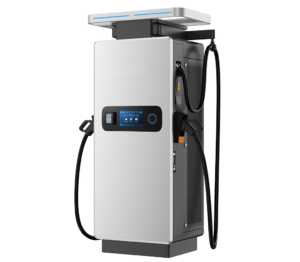
- charging infrastructure for forklifts, commercial vehicles, or trucks;
- electric water heaters or heat pumps.
For each measure, note the expected capacity and operating hours (continuous, shift work, daytime only, etc.).
Step 3: Simulate future power demand
Combine your current quarter-hourly values with the expected demand from new installations. This will show you:
- where the maximum contract value is exceeded;
- which hours are consistently in short supply;
- whether there is room to shift the load to off-peak hours.
[Requires: an engineer-reviewed overview of the analysis tools used]
Step 4: Investigate measures behind the meter
See how you can resolve bottlenecks without additional network capacity, for example by:
- an industrial battery (such as an energy storage container or cabinet) for peak shaving;
- smart process control (batching, shifting wash and dry cycles, loading during off-peak hours);
- On-site generation, such as solar power, combined with storage to use solar energy later.
Step 5: Business Case and Revenue Models
Develop several scenarios (for example, “process control only” vs. “battery + process control”). Take into account potential subsidies and the “Slim” revenue model for leveraging flexibility.
Conclude the process with a customized analysis in collaboration with a specialist such as Boltainer. They can work with you to determine which battery solution and charging infrastructure best suits your manufacturing facility and grid connection. Feel free to contact them for a no-obligation exploratory consultation.
Frequently Asked Questions
This is often due to grid congestion: the regional power grid temporarily lacks sufficient transmission capacity to safely deliver your additional peak power. Grid operators must first upgrade the existing grid before they can approve new or higher-capacity connections. On the page about grid congestion, you can read how this leads to waiting times and restrictions in the Netherlands, which can significantly delay plans for electrification and the expansion of power generation.
Is there a way we can expand our production without needing a higher-capacity grid connection?
In many cases, this is possible by reducing or shifting your peak load through smart energy management. An industrial battery can absorb peaks (peak shaving), relieve the strain on your connection, and temporarily function as an off-grid microgrid during additional production runs. On the Industry and Industrial Battery pages, you can see how energy storage in a container or cabinet is used in practice.
When does an industrial battery become a viable option for my factory?
A battery becomes particularly useful when your peak power demand is high, but your grid connection cannot be expanded, and production stoppages result in immediately noticeable costs or lost revenue. In such cases, a battery can smooth out peaks, manage machinery and charging infrastructure more intelligently, and make better use of your own solar energy. The applications and benefits listed on the Industrial Battery page provide a good indication of when energy storage becomes part of the business case.
How quickly can such a solution be implemented?
Typically, you’ll go through three phases: an analysis of consumption profiles and peak loads, a technical and financial design, and then on-site installation and commissioning. The exact timeline depends on the scale of your plant, desired integrations (such as charging stations or PV), and permits. On the Industry and Smart Revenue Model pages, you can see that similar solutions are already operational at other companies.
Request a no-obligation advisory report for your manufacturing company on electrification in the event of grid congestion, and find out which battery and energy management solution fits within your current connection.