




From cells and inverters to grid connection, software, and maintenance. This is how the price of a battery system is broken down and what determines the cost per kWh.
Key fact: The price of a battery system is often reduced to a cost per kWh, but that figure doesn’t tell the whole story. The cells are only part of the investment. Inverter capacity, connection, software, safety features, and maintenance all combine to determine what you actually pay, and the balance between these factors shifts with each application.
Where Your Money Goes
| Post | What It Depends On | Share |
|---|---|---|
| Battery Cells and Modules | Capacity in kWh, cell type, warranty terms | Largest single item |
| Inverter and Power Electronics | Power in kW, not capacity | Grows rapidly during short, high peaks |
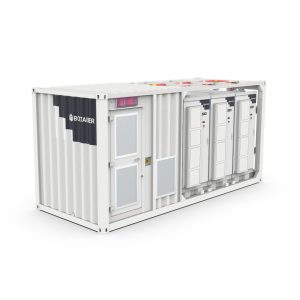
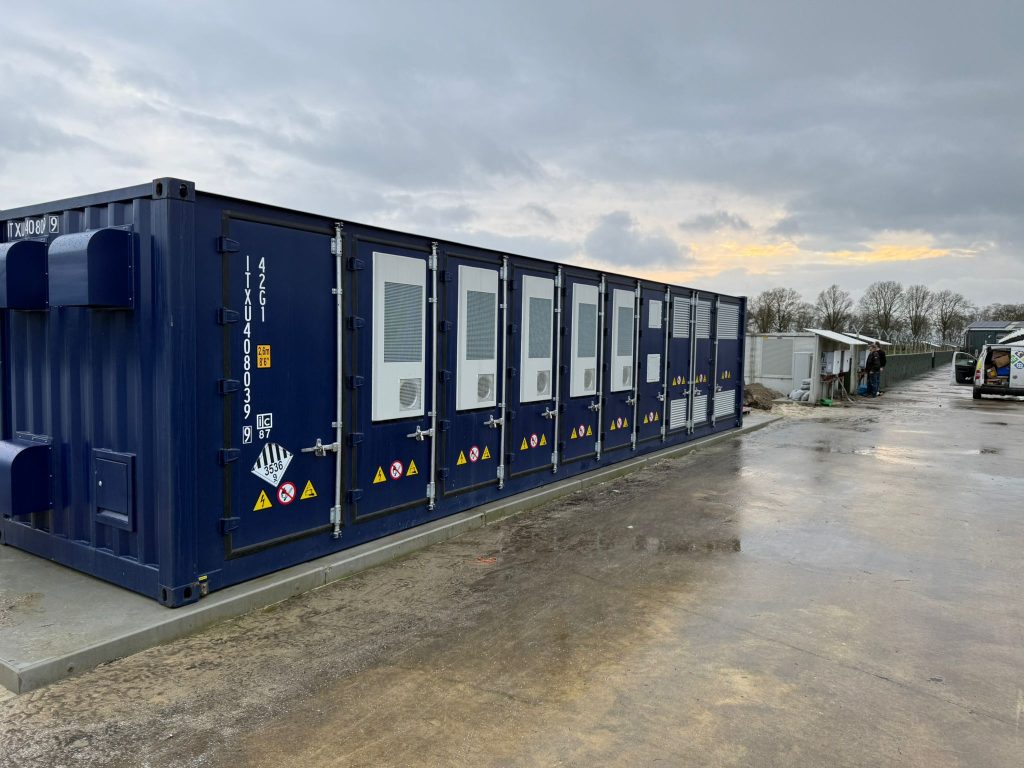
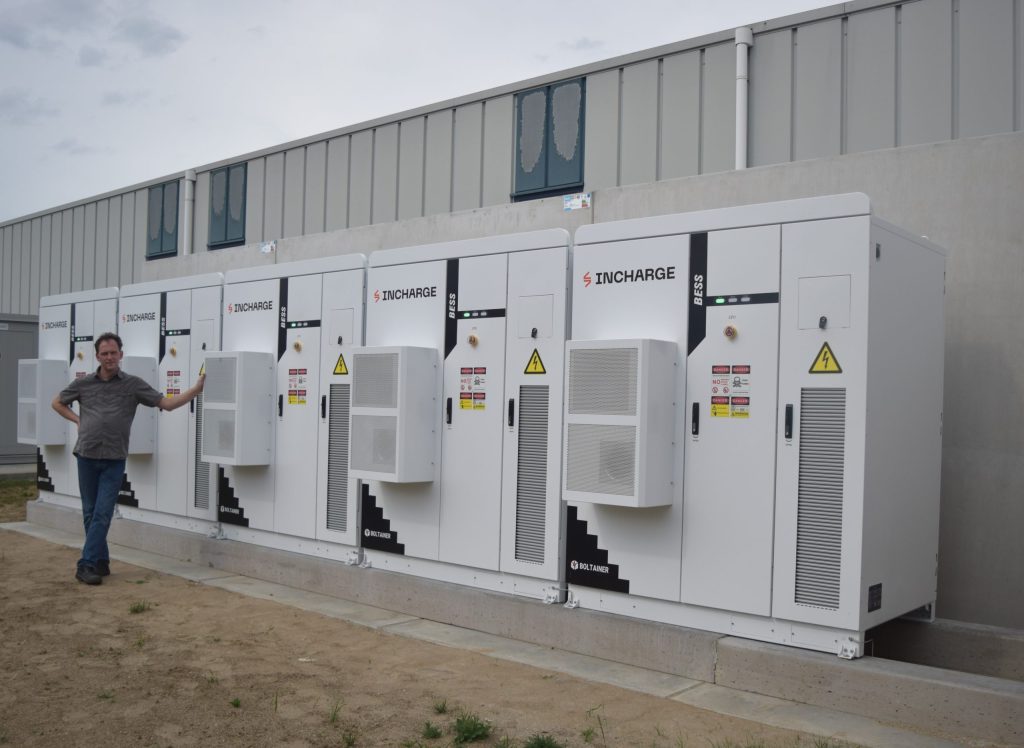
| Enclosure, Cooling, and Fire Safety | Cabinet or container, installed indoors or outdoors | Substantial for containers |
| Power Connection and Installation | Distance to your distribution facility, cabling, transformer | Highly location-dependent |
| Energy Management System | Management Focused on Peak Demand, Price, and Self-Consumption | A Key Factor in Return on Investment |
| Permits and Advice | Municipality, Fire Department, PGS 37-1 | Small but not zero |
| Maintenance and Monitoring | Service Level, Term | Recurring |
The most important lesson from this table: kWh and kW are two separate cost drivers. A system that needs to deliver moderate power for four hours is very different from a system that needs to deliver high power for fifteen minutes. Therefore, never ask for a price per kWh without specifying the power output.
Why the Price Per kWh Is Misleading
In a small system designed primarily to handle peak demand, the inverter accounts for a significant portion of the cost. The price per kWh is therefore high, even though the system does exactly what is needed. In a large system that shifts energy throughout the day, the price per kWh decreases, but a significantly larger amount of capital is tied up.
A more meaningful comparison is the cost per avoided peak kilowatt, or per shifted kilowatt-hour over the contract term. That translates to your monthly savings, rather than the amount in the container.
When comparing quotes, also pay attention to what isn't included. Common differences:
- Is the energy management system included, and for how many years?
- Is the connection to your distribution unit installed, including the wiring?
- Who is responsible for obtaining the permit and submitting the documentation to the fire department and the municipality?
- What is the warranty, expressed in cycles, years, and remaining capacity?
- Who is responsible for maintenance and monitoring, and how much does that cost per year?
- Is the usable capacity listed, or the nominal capacity?
Two quotes with the same price per kWh can differ by tens of thousands of euros on these points.
Revenue should be included in the same calculation
| Source of value | Where It Comes From |
|---|---|
| Lower monthly peak | Lower costs for your utility provider's peak-rate tariff |
| Lower Contracted Capacity | Possibly a lower contract value, and therefore lower fixed costs |
| More self-consumption | Use self-generated power instead of purchasing it |
| Avoided network expansion | No connection fee and no permanently higher standing charge |
| Smarter Purchasing | Charging at low or negative prices under a dynamic contract |
| Avoided downtime | Keep going when the power is low |
| Grant | Regulations regarding flexibility and charging infrastructure, which vary by round |
In practice, a business case rarely hinges on just one of these items. It’s the cumulative effect that matters. That’s why any serious calculation starts with your quarterly figures, not a price list.
Buy, Lease, or Battery-as-a-Service
| Buy | Lease | Battery-as-a-Service | |
|---|---|---|---|
| Upfront Investment | Complete | Limited | None |
| On the balance sheet | Yes | Depending on the shape | No, Boltainer remains the owner |
| Maintenance and Monitoring | Separate contract | Often included | Included |
| Total costs over the term | Lowest | Center | Highest |
| Residual Value Risk | With you | Shared | At Boltainer |
| Flexibility When Relocating or Expanding | Arrange it yourself | Depending on the contract | Subject to adjustment by mutual agreement |
For those who have capital available and plan to keep the system at the same location for the long term, purchasing is the most cost-effective option. For those who prefer to allocate their investment capital to their core business—or who want to see if it works first—a commercial battery through a service model allows them to get started more quickly. The choice is therefore less a technical question than a financial one.
What Drives Costs Up or Down in Your Case
Challenges: a long distance to your distribution facility, an indoor rather than outdoor installation, a permitting process with additional requirements, a brief peak that requires a lot of power, and the desire to serve multiple applications simultaneously.
Downside: a deployment site close to the distribution facility, an outdoor area with sufficient load-bearing capacity, a predictable and recurring peak pattern, and a design that serves one clear primary purpose, with the rest as a byproduct.
The biggest savings rarely come from negotiating the price per kWh. They come from a well-thought-out design: don’t build larger than necessary, and choose a location that minimizes the amount of cabling required.
What You Need for a Realistic Price Estimate
- Your quarterly figures over a 12-month period.
- Your connection rating in amperes and your contracted transmission capacity in kW.
- Your annual consumption and feed-in in kWh.
- Your contract type: fixed-term or flexible.
- The location where the system would be installed, including the distance to the distribution unit.
- Your plans for the next three to five years, including resources and a timeline.
With those six pieces of data, a well-founded calculation is possible. Without that data, any figure is just a guess, no matter how confidently it is presented.
What Makes a System Cheaper Than It Seems
Three factors are systematically excluded from the equation, even though they significantly alter the outcome.
A battery can eliminate the need for a grid upgrade or keep it smaller. The connection fee you avoid paying should be listed on the revenue side of your battery case, just like the higher standing charge that you won’t have to pay for years.
A system that smooths out peaks also gives you the flexibility to install equipment that otherwise wouldn't fit. The value of this lies not in cost savings but in the fact that revenue continues to flow.
And a mobile or modular system retains its residual value. If you move or your business needs change, you can relocate or reconfigure it instead of writing it off.
A step-by-step calculation example
Without specifying any amounts, the structure of a business case looks like this:
- Calculate your current costs for contracted capacity and monthly peak demand over the course of a full year.
- Determine how many kW your peak load will decrease with the proposed system, and what that amounts to on an annual basis.
- Add to that the kilowatt-hours you no longer need to purchase because you’re using your own generated electricity, and compare that to your actual purchase price, including tax.
- If you have a dynamic contract, take advantage of charging at the best times.
- Subtract the recurring costs from that: maintenance, monitoring, and, if applicable, the monthly fee for a service plan.
- Compare the result to the investment, or—in the case of Battery-as-a-Service—to the monthly fee.
- Calculate separately what you stand to lose if you do nothing: delayed growth, lost charging capacity, and curtailment of solar power.
Step seven is missing from almost every proposal, even though it often yields the highest figure.
Frequently Asked Questions About Costs
Why isn't there a fixed price listed on the website?
Because two companies with the same annual consumption may need completely different systems. The difference lies in the nature of your peaks, not in the total: short, sharp peaks require power, while long, gradual shifts require capacity, and those two have different costs. In addition, installation costs vary greatly depending on the location. A price list would therefore provide a false sense of certainty about the final cost.
What is the payback period?
That depends on how many energy sources you can combine. A system that only smooths out peaks pays for itself more slowly than a system that also increases self-consumption and purchases energy intelligently under a dynamic contract. We factor this into the simulation report based on your own profile, rather than using an industry average. When evaluating the results, be sure to also consider the scenario in which you take no action, including the resulting lost growth.
Are there any hidden costs?
The items most often overlooked are cabling to the distribution panel, the foundation or subgrade, and the costs of permits and consulting. In addition, the maintenance and monitoring contract is often left out of the comparison in quotes, even though it will amount to a substantial sum over ten years. We include these items in the quote up front, precisely because they account for the difference between two offers.
What about insurance?
You must notify your insurer about a battery system, as it changes the risk profile of your building or property. Systems that comply with PGS 37-1, are professionally installed, and are remotely monitored generally do not raise any objections. Be sure to check with your insurer well in advance, as they may impose additional requirements regarding the installation location or fire barriers that you’ll want to incorporate into the design.
Can I expand later without having to reinvest in the infrastructure?
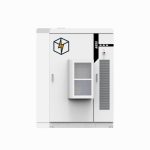
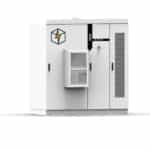
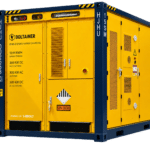
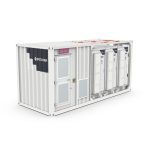
Yes, provided that these factors were taken into account in the initial design. Cabinets can be expanded in parallel, and containers have a modular design. What makes expansion costly isn’t the additional unit itself, but the infrastructure: cable cross-section, space, fire separation, and the capacity of the connection. Be sure to factor these points into the initial project, even if you plan to expand later.
What happens at the end of its useful life?
With Battery-as-a-Service, Boltainer retrieves the system. Upon purchase, we, as the manufacturer, are responsible for collection and recycling in accordance with applicable battery regulations. Technically, a system does not stop working suddenly: its capacity gradually decreases, while its power output is largely maintained. As a result, such an older system often remains quite useful for peak shaving.
Is a subsidy needed to make ends meet?
It shouldn’t be that way. Programs such as Flex-e for flexibility measures and SPRILA for charging infrastructure can make the investment more attractive, but eligibility criteria and conditions vary by round. The 2026 Flex-e round closed on October 15. Therefore, always run your business case without subsidies, and treat receiving a grant as a bonus rather than a prerequisite.
How can I fairly compare two quotes?
Compare them side by side based on six criteria: usable capacity in kWh, power output in kW, what’s included in terms of installation and wiring, the warranty in cycles, years, and remaining capacity, what the energy management system does and for how many years, and the annual costs for maintenance and monitoring. Then calculate the total cost over ten years. Only then will you see which offer is actually cheaper.