






Key fact: Peak shaving is the process of smoothing out the highest peaks in your electricity consumption, so that your draw from the grid remains steady while your business continues to operate as usual. During those times, a battery supplements your supply, allowing you to stay within your contracted transmission capacity. Your connection doesn’t change, but what you can do with it does.
Why Your Peak Rate Is More Expensive Than Your Regular Rate
As a large-scale commercial consumer, you don’t just pay for kilowatt-hours. You also pay for capacity: for the contracted transmission capacity you’ve agreed upon and, with most grid operators, for your monthly peak—the highest measured quarter-hourly value for that month.
That means that just 15 minutes can determine your costs for an entire month. A compressor that kicks in while a machine is loading, a production line that starts up while the cooling system is running at full capacity: that single moment determines your bill, even if the rest of the month was quiet.
There’s a second effect to consider. If you’re constantly hitting your limit, you can’t expand. No extra machine, no fast charger, no electric forklift. In a congested area, requesting additional power is often not an option, because you’ll end up on a waiting list.
How Peak Shaving Works
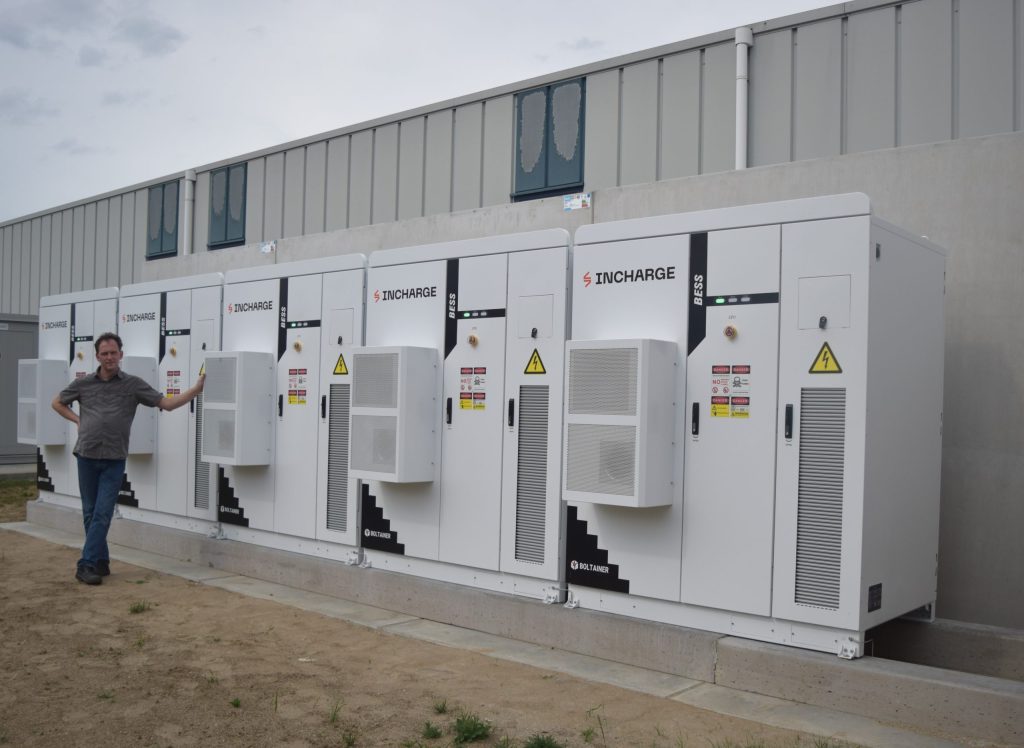
A battery with an energy management system continuously monitors your power consumption and takes action as soon as you approach the set limit.
- Outside of peak hours, the system charges—either from the grid during off-peak hours or from your own solar power.
- The system monitors your usage every 15 minutes—and often even more frequently.
- As soon as the load approaches your limit, the battery kicks in. The combined load from the grid and the battery remains below your contract limit.
- After the peak, the system recharges at a time when it costs you nothing.
This transforms your limit from a fixed risk into an adjustable value. That is the essence of peak shaving: not consuming less, but consuming the same amount with a flatter consumption profile relative to the grid.
What It Offers
| Effect | How It Develops |
|---|---|
| Lower monthly peak costs | The highest 15-minute value is falling |
| Lower fixed costs | You can sometimes reduce the value of your contract |
| Room to Grow | Heavier equipment fits into the same connection |
| Avoided network expansion | No connection fee and no permanently higher standing charge |
| More self-consumption | Use your own generated power exactly when you need it |
| Lower risk of exceeding the limit | The system automatically monitors the border |
In practice, a business case rarely hinges on just one of these points. It’s the combination of factors that matters, and the combination that’s right for you depends on your core values.
Who Benefits from Peak Shaving, and Who Doesn't
However, these are good candidates: sharp, short-term spikes in your consumption; a profile where you only reach your limit for a few dozen to a few hundred hours per year; plans for charging infrastructure or electrification; or a location in a congested area where increasing capacity is not an option.
Less obvious: a flat consumption profile without any significant peaks, or a base load that is consistently higher than your connection capacity. In the latter case, using a battery merely shifts the problem. Storage fills gaps; it does not replace missing continuous power.
The practical dividing line depends on how many hours per year you exceed your limit and by how much. If those overages range from tens to hundreds of hours, a surcharge is almost always the cheapest option. If they run into the thousands of hours, then it’s a matter of discussing both a surcharge and a higher-capacity connection.
Peak shaving, load shifting, and congestion management
These three terms are often used interchangeably, but they are not the same.
| Concept | What it does | Where it's headed |
|---|---|---|
| Peak shaving | Smoothing out the highest peaks | Your personal income threshold and peak tax rate |
| Load shifting | Reschedule usage to a different time | Price or availability of self-generated power |
| Traffic Congestion Management | Adjusting power output at the request of the grid operator | The Internet, for a fee |
A well-designed system does all three, with peak shaving as the foundation. The control system evaluates at any given moment which factor is most important: monitoring the limit, purchasing at a low cost, or earning revenue.
What Peak Shaving Is Not
There are three misconceptions circulating that often cloud the conversation.
It’s not about saving energy. You’ll use the same number of kilowatt-hours. What you’re saving are capacity-related costs, and what you’re gaining is room to grow. Anyone who presents this as a cost-saving project will be in for a surprise when the first bill arrives.
It is not an emergency power supply. A peak-shaving system is designed to manage your power consumption, not to keep your business running during a power outage. If that’s what you want, it’s a separate design choice with its own requirements for switchover time and capacity.
It’s no substitute for upgrading the grid to handle a higher base load. If you’re operating above your connection capacity for most of the day, a battery doesn’t just fill a gap—it tries to bridge a chasm. That doesn’t work, and you’d rather hear that beforehand than afterward.
What system size is appropriate?
Two numbers determine the design. The power in kW is how far you exceed your limit. The capacity in kWh is how long that excess lasts.
| Profile | Direction |
|---|---|
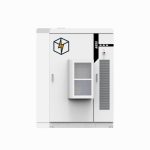
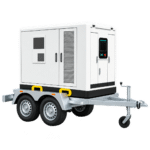
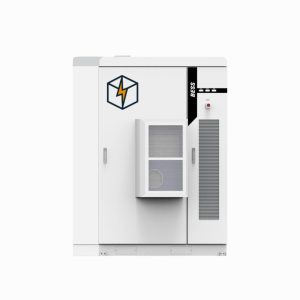
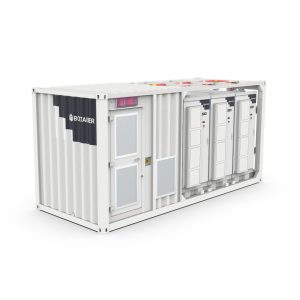
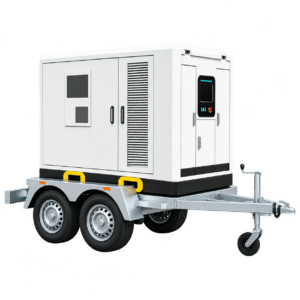
| Short spikes of several tens of kW | A 100 kWh battery or compact cabinet |
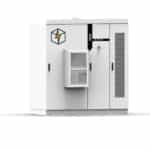
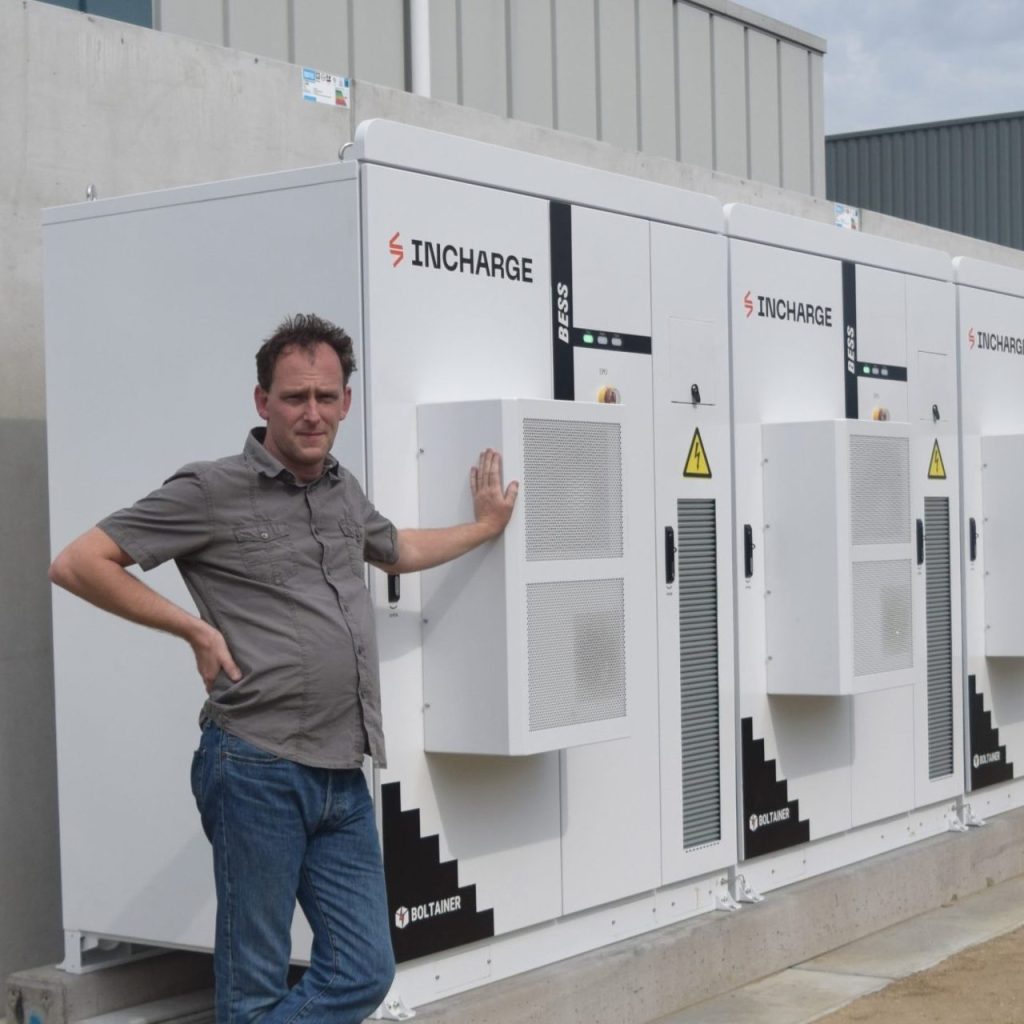
| 100 kW, several times a day | A 200 kWh battery or two units connected in parallel |
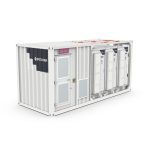
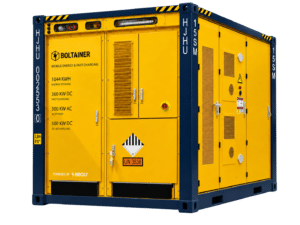
| Hundreds of kW for heavy-duty processes | An industrial battery |
| High power through charging | Storage behind a loading dock |
A typical characteristic of peak shaving is that it requires a relatively high amount of power and little capacity. That makes the system more compact than people expect.
Here's how to get started
- Request the quarterly readings for the past twelve months from your utility company.
- Check your grid operator's bill for your contracted transmission capacity.
- Mark the quarters in which you exceed your desired limit.
- Next to each peak, note what was playing at that moment.
- See how much you can eliminate through planning, and what remains for storage.
- Calculate how the remaining peak reduction affects your monthly and contract costs.
Steps four and five are often skipped, even though they can sometimes make the system a bit smaller and thus reduce the investment.
Frequently Asked Questions About Peak Shaving
Will I use less electricity with peak shaving?
No, you use the same number of kilowatt-hours. What changes is when you draw them from the grid and how even your consumption pattern is. So the savings don’t come from your consumption but from your capacity-based costs, and from the additional power you can draw within the same connection. A small portion is lost during charging and discharging, and that should be factored into the calculation.
How much can I save?
That depends on the magnitude and frequency of your peaks and on your grid operator’s rates. Any percentage figure you’re given without measurement data is just a guess. What is true, however, is that the sharper and shorter your peaks are, the more favorable the ratio between investment and savings will be, because you’ll need a lot of power but very little capacity.
Can I use this to reduce my contract value?
Often, yes, but only do so once you know exactly what margin you need. Lowering it without that information is a gamble: if you go over the limit, the grid operator can correct it and charge you additional fees. With a battery as a safety net and a calculated profile, it’s a controlled adjustment. Keep in mind that increasing your capacity in a congestion zone constitutes a new transmission request, which means you’ll be placed on a waiting list.
Does peak shaving work even if I already have solar panels?
Yes, and the combination is often more effective than either option on its own. You charge the battery during the day using your own generated power instead of grid power, so charging costs you nothing and your solar power is used at the right time. In an area with grid congestion, this also solves a second problem: you no longer have to feed your surplus power back into the grid at a low rate.
How fast can a system like that run?
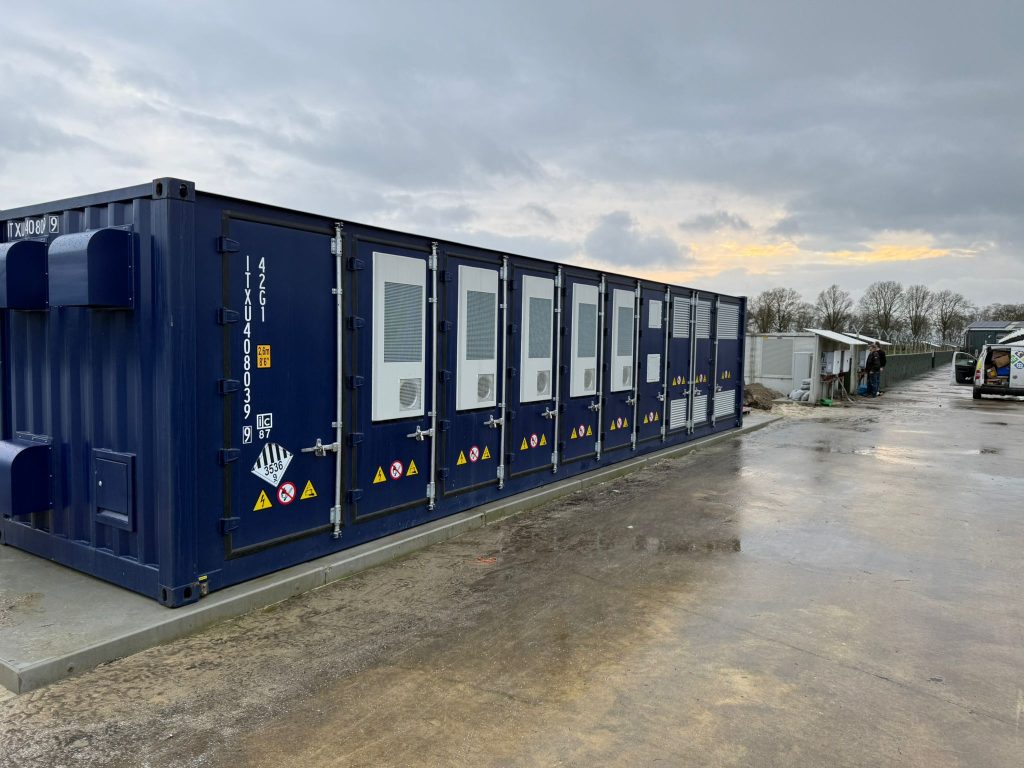
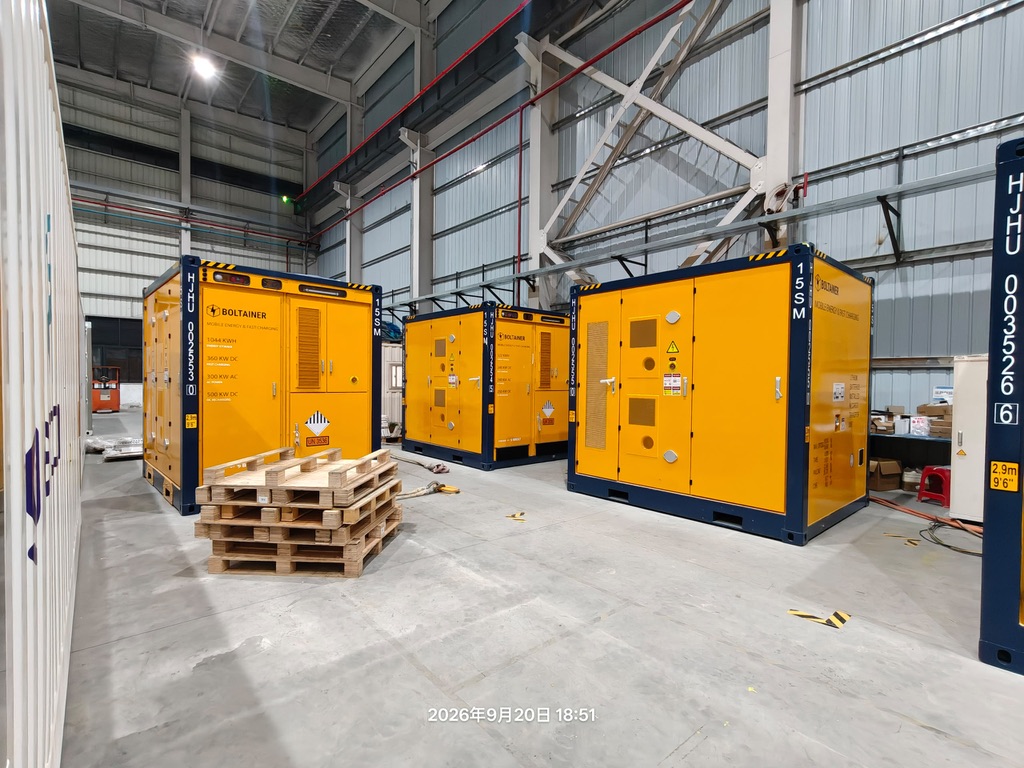
Cabinets are often available directly from stock and are typically operational within 6 to 8 weeks after approval of the project plan, including delivery, installation, and configuration. For containers and custom solutions, the lead time is longer. That’s why peak shaving is so often the quickest solution: you can solve a problem in weeks where grid reinforcement would take years.
Will this affect my insurance and license?
You must report a battery system to your insurer, and PGS 37-1 applies to storage systems with a capacity exceeding 20 kWh. Systems that comply with this standard and are professionally monitored generally do not raise any objections. Be sure to start this process early, as the installation site and the distances to buildings can sometimes dictate the entire design.
Does smoothing out daily spikes drain the battery quickly?
Not as fast as many people think. Peak shaving typically involves shallow cycles: you’re always using only a small portion of the capacity. This puts significantly less strain on the cells than fully charging and discharging them every day. In addition, degradation mainly affects capacity and much less so power, and it’s precisely power that you need for peak shaving.
What if my peaks are different a year from now?
Then you adjust the energy management system’s settings and, if necessary, expand it modularly with an additional unit. The system shows how often you reach your set limit—often before you even notice it yourself. When creating the initial design, take into account space, cable cross-section, and the capacity of your distribution panel, as this will make future expansion easier.
 />
 />