




More than 15,000 requests are in the queue for transport capacity. What determines your place in line, what changed on July 1, 2026, and which route will actually work within weeks?
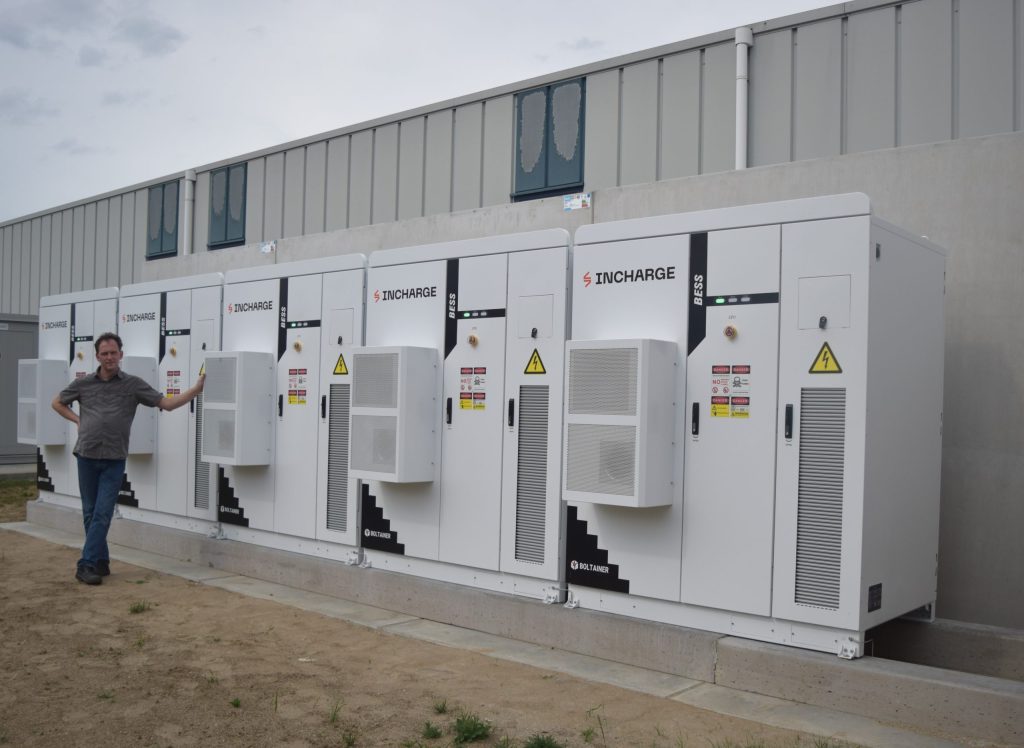
Key fact: According to the “Status of Implementation” report by Netbeheer Nederland, published in April 2026, there are more than 15,000 power purchase applications in the queue at regional grid operators, totaling 9,305 MW. A year earlier, there were approximately 12,000 such applications, totaling 6,739 MW. The waiting list is therefore growing faster than the grid is being expanded. A battery system connected to your existing service connection is typically operational within 6 to 8 weeks.
The Waitlist in Numbers
| Indicator | Last year | Most recent measurement |
|---|---|---|
| Applications for connection with regional grid operators | about 12,000 | well over 15,000 |
| Required power | 6,739 MW | 9,305 MW |
| Backlog at TenneT | higher | has declined, but demand remains structurally high |
What these figures show is not that grid operators are sitting idly by. The number of congestion management and alternative contracts is increasing. However, the impact of these measures on available capacity is not keeping pace with what is needed to reduce the queues. Demand is simply growing faster than supply.
This has practical implications for your planning. A new substation requires land, permits, materials, and technical staff. That process isn’t expedited by the urgency of your request, nor by the fact that your company is important to the regional economy.
What Has Changed as of July 1, 2026
Until July 1, 2026, grid operators in congestion areas reserved a portion of the capacity for small consumers—that is, connections up to and including 3×80 amps. As a result, households, stores, and smaller businesses were connected more quickly than large consumers, who have been on waiting lists for years.
The ACM found that this distinction could not be justified. As of July 1, 2026, that separate allocation has been eliminated, and everyone in a congestion area is now placed on the same waiting list: households, small businesses, and large companies.
A transition period will be in effect between July 1, 2026, and January 1, 2027. The capacity previously reserved for small-scale consumption will be gradually released and, during that period, will be allocated exclusively to parties that have been granted priority based on the social prioritization framework. If any reserved capacity remains on January 1, 2027, it will become available to applicants without priority who are on the waiting list.
For most business owners, this means, in practical terms, that even a modest increase is no longer a given, and the date you submit your application has become more important than ever.
What Determines Your Place in Line
- The region. In areas with identified structural congestion, there is no capacity until the network is expanded or existing users return capacity.
- The requested power. A request for a few hundred kilowatts can sometimes be accommodated, but a megawatt almost never can.
- The date your complete transportation request was submitted. Within the same priority category, requests are processed in the order in which they are received. Please note: this refers to the date your request was complete, not the date you first began discussing the matter.
- Your position in the social prioritization framework. Grid operators apply this framework in congested areas. You do not automatically receive priority: you must submit a substantiated request and you must already be on the waiting list.
Important to know: Social priority gives you a higher spot on the waiting list, but it does not give you priority when the work is actually carried out. Even with priority, it can take years before you actually receive capacity, simply because capacity must first become available before it can be allocated.
Waiting vs. Making Space for Yourself
| Waiting for the network upgrade | Battery within an existing connection | |
|---|---|---|
| Lead time | Depending on the region and financial resources, this often takes several years in practice | 6 to 8 weeks after approval of the project plan |
| Certainty Up Front | Limited; rescheduling | Set forth in the project plan |
| Investment | One-time connection fee plus a permanently higher standing charge | A business battery through purchase, lease, or service without a capital investment |
| Returns During the Term | None | Lower peak costs, more self-consumption, purchasing at favorable times |
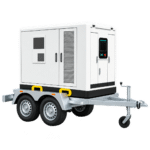
| Can be moved with you | No | Yes, for mobile systems |
What Waiting Really Costs You
The costs of waiting aren't listed anywhere on an invoice, which is why they're rarely factored in. Yet they're often higher than the investment they would prevent. Consider:
- A production line that starts a year later than planned, resulting in a corresponding loss of profit.
- Charging infrastructure that isn't being built, which means your fleet will continue to run on diesel while fuel costs keep rising.
- A solar roof that you don't expand, or for which you sell most of the electricity generated at unfavorable rates.
- A decision on a location that you keep putting off, with rent costs for a site that no longer meets your needs.
Compare those amounts before you decide to wait. In many cases, the question isn't whether you can solve your problem, but whether you can afford not to solve it.
What You Can Do Today
Go ahead and submit your transportation request anyway. There is no charge to submit it, and the date of your completed application is what counts. A solution within your existing connection does not preclude a later increase in capacity, and you will not lose your spot by taking measures on your own in the meantime.
Analyze your quarterly usage data. For many companies, the bottleneck lies in just a few dozen hours per year. Requesting a grid upgrade for those hours is rarely the most cost-effective option. Request at least twelve months of metering data from your utility.
Consider a flexible contract. In many congested areas, grid operators offer capacity outside of peak hours. With energy storage, you can bridge the hours when you need to reduce your consumption, turning such a contract from a risk into an opportunity.
Check out the subsidy options. RVO’s Flex-e program provides grants for flexibility measures that enable companies to grow within their existing utility connections. The 2026 application round ran from May 6 through October 15 and is now closed. Keep an eye on the RVO website for any future application periods, and start preparing your application now, as these programs are processed on a first-come, first-served basis.
Check whether you qualify for social priority. You can only do this if you are already on the waiting list and if you fall into one of the three categories. Keep in mind that the criteria for the congestion-relief category are strict: grid operators require a minimum of 1 MW of flexible capacity, and 10 MW for connections to the high-voltage grid.
Frequently Asked Questions About the Waiting List
Can I see where I am in line?
Grid operators do not provide an exact ranking number, in part because that position shifts as soon as others are assigned priority. However, you can ask your grid operator which category your application falls into and whether any expansion projects are planned in your supply area. The capacity map also shows, for each area, how many requests are in the queue and the total capacity involved. This provides a more realistic picture of your chances than a single color code.
Will I lose my spot if I go ahead and replace the battery in the meantime?
No. A battery installed behind the meter does not affect an active transmission request, and your application date remains the same. In some cases, however, your situation may change: if the battery reduces your power needs, you can lower your requested capacity, which can sometimes improve your chances. Make that decision based on your calculated profile, not on a hunch.
Does the waiting list also apply to feed-in?
Yes. Separate congestion studies and separate waiting lists apply to feed-in. In many rural areas with numerous solar farms and agricultural generation, feed-in capacity is allocated before off-take capacity. Therefore, always check both layers of the capacity map, even if you only want to feed in additional power.
How much does it cost to be on the waiting list?
Submitting a transmission request is free of charge. With some grid operators, you’re not formally placed on the waiting list until you’ve signed the quote, so be sure to ask about the exact procedure. The actual costs aren’t associated with the application itself, but rather with what you can’t do in the meantime: expand, electrify, or install charging infrastructure.
How quickly can a battery system be up and running?
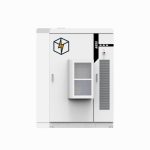
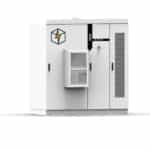
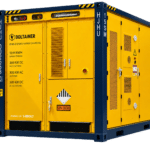
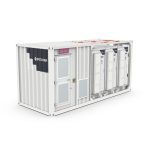
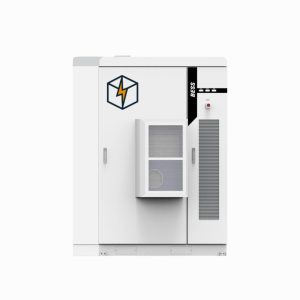
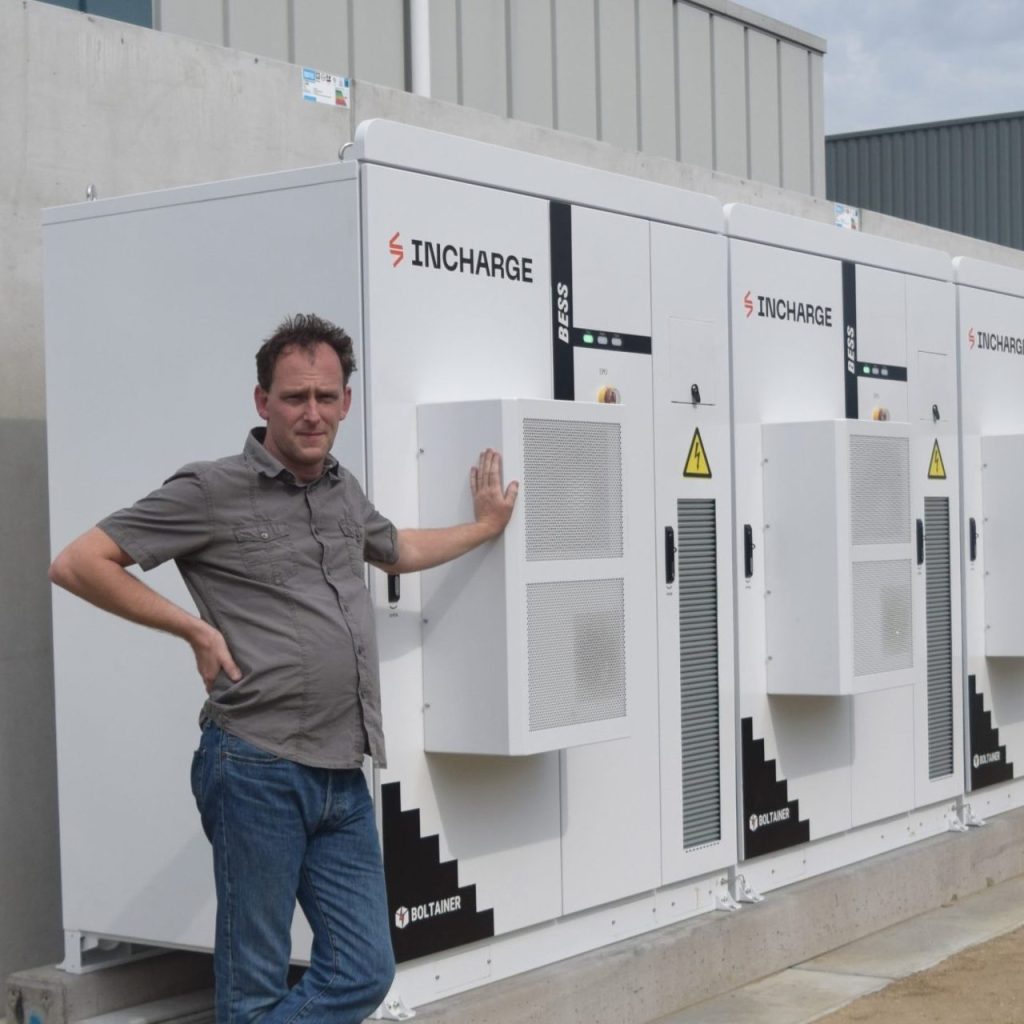
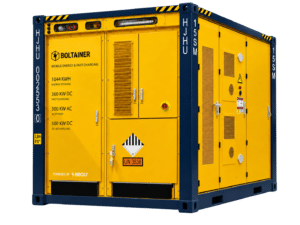
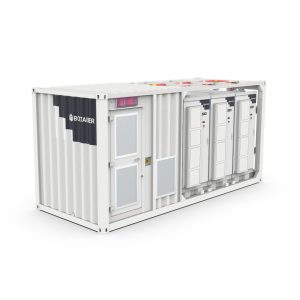
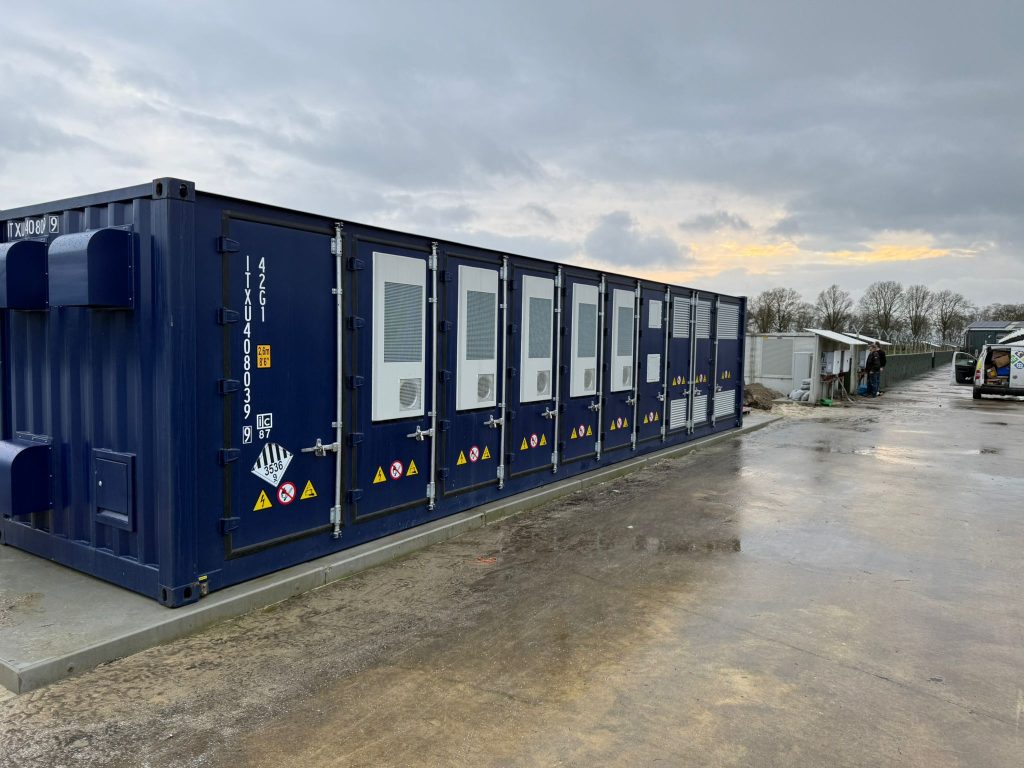
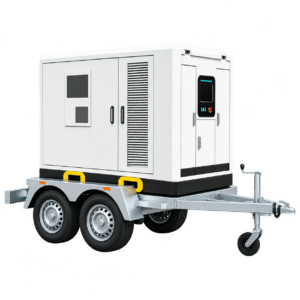
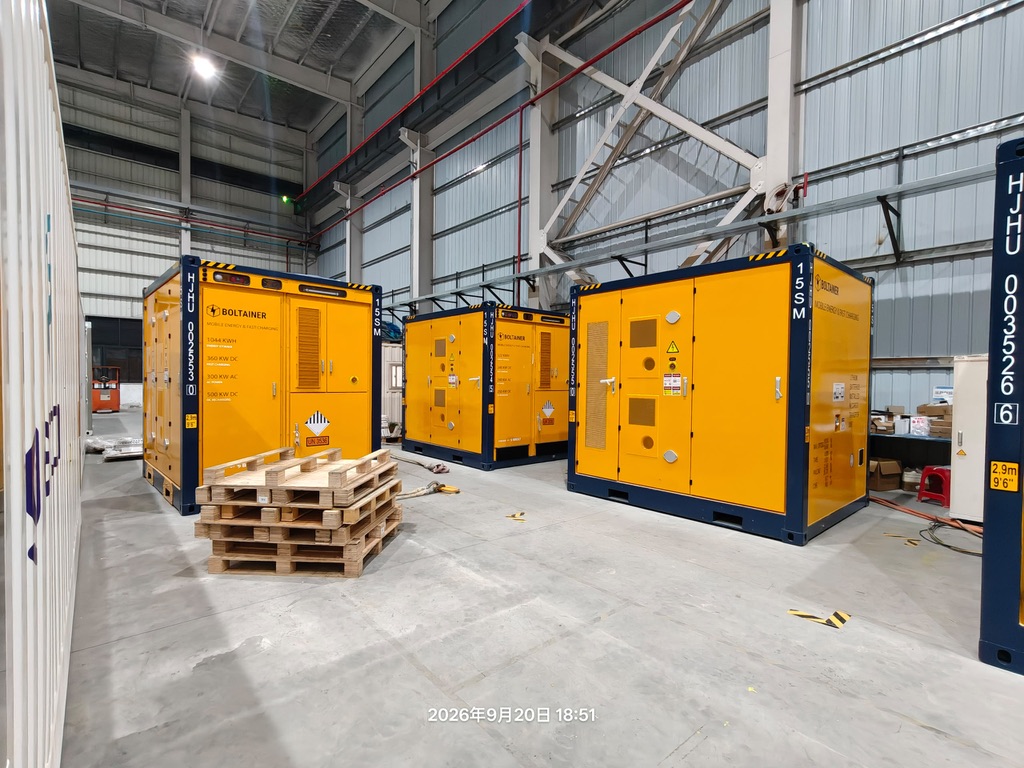
Cabinets are typically available directly from stock and operational within 6 to 8 weeks after the quote is finalized and the project plan is approved, including delivery, installation, and configuration. Containers have a longer standard lead time. For custom solutions, permit processes, or complex setups, we will provide advance notice of the exact timeline.
Does it help if my business is socially significant?
That depends on which category you fall into. The prioritization framework has three categories: congestion-reduction measures, safety, and basic needs. Safety includes, among other things, the fire department, police, the judiciary, water boards, drinking water supply, and emergency medical care. Basic needs include, among other things, education, public transportation, waste management, heat supply, and housing construction. If your business does not fall under these categories, the congestion-reduction category is your only option, and it imposes strict requirements.
Moving to a green area—is that a realistic option?
For some companies, this is now an option, but it is by far the most expensive way to solve a capacity problem. Be sure to factor in not only the cost of the move, but also the lead time for new construction, permits, and the possibility that the new site could still run into delays during the process. First, explore what’s possible within your current connection, because that process takes weeks instead of years.
What will happen after January 1, 2027?
Starting on that date, the remaining capacity from the former small-consumer reserve will be added to the joint waiting list and allocated according to the normal order. Grid operators also set aside a limited amount of capacity for unforeseen circumstances. The impact of this varies greatly by region, so base your planning on the situation in your service area rather than on the national picture.