





Learn the difference between energy capacity (kWh) and power (kW) in a commercial battery, and what this means for storage, charging, and discharging speeds.
You’re looking into a commercial battery system, but you’re confused by terms like energy capacity (kWh) and power (kW). What determines whether you can handle peak loads, store enough solar energy, or have enough charging capacity for your fleet? And how do you avoid investing in a system that’s too big—or, conversely, too small?
On this page, we clearly explain the difference between energy capacity and power, and how to use that information to select the right commercial battery for your business.
What is energy capacity in a commercial battery?
Energy capacity is the amount of energy that a commercial battery can store, similar to the capacity of a fuel tank. We express this amount in kWh (kilowatt-hours) or MWh (megawatt-hours).
- 1 kWh is a unit of energy.
- 1 MWh = 1,000 kWh.
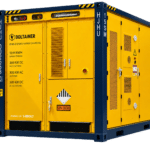
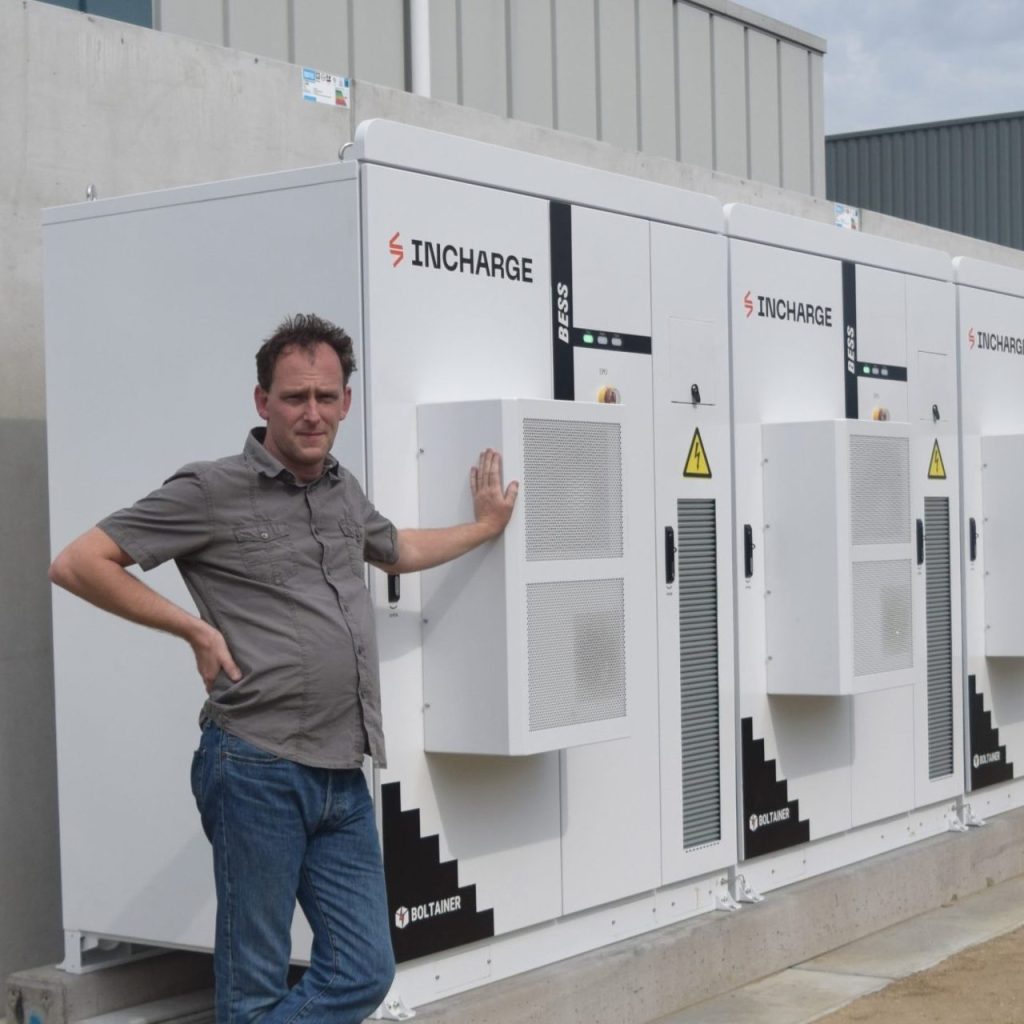
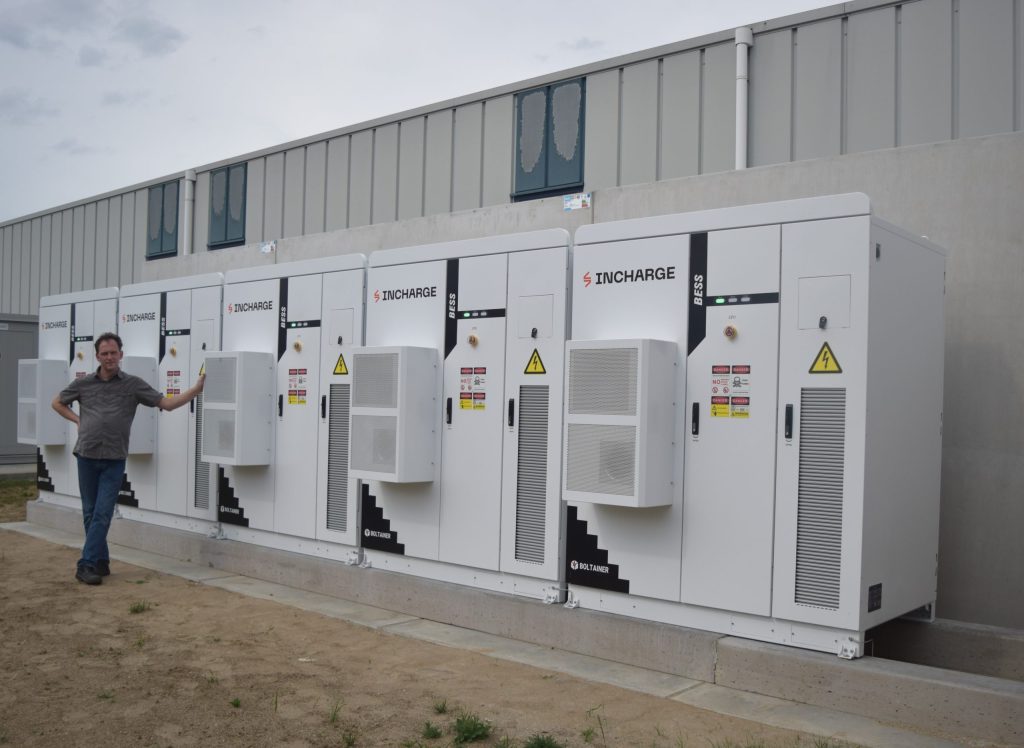
The higher the number of kWh or MWh, the longer you can cover a given energy consumption period. For example, a 500 kWh battery therefore has a smaller “tank” than a 1 MWh (1,000 kWh) battery. Boltainer often works with configurations of this magnitude in its projects; see also the explanation for the 500 kWh commercial battery. [Needs: engineer-reviewed calculation]
Examples for Your Business
- In a production facility, having more kWh allows you to keep machines running longer during power outages or for peak shaving.
- For cold storage and freezer facilities, the energy capacity determines how long you can run the cooling system on battery power without recharging.
- For charging infrastructure (e.g., for electric trucks), the kWh capacity determines how many consecutive charging sessions you can power from the battery.
Please note: The usable energy capacity is usually slightly lower than the theoretical capacity, because the depth of discharge and system settings are designed to protect the battery's lifespan.
What is power, and why is it different from capacity?
Power is the rate at which a battery can charge or discharge energy. It is expressed in kW (kilowatts) or MW (megawatts, 1,000 kW). While capacity (kWh/MWh) indicates the amount of energy in the “tank,” power (kW/MW) indicates the size of the faucet: how fast you can charge or discharge at any given time.
What determines wealth in practice?
Based on the available power, you can determine, among other things:
- how much of a spike in your consumption you can absorb (peak shaving);
- how many charging stations or machines you can power at the same time;
- how quickly the battery charges or drains.
A higher kW rating means faster charging and discharging, but the battery will also drain faster when operating continuously at full power.
Calculation Examples with Fixed Capacity
Consider a battery with the same energy capacity but two different power ratings:
- Option A: [Requires: engineer-reviewed calculation]
- Option B: [Requires: engineer-reviewed calculation]
The operating time in hours changes significantly: at higher power levels, you can handle a larger peak load, but for a shorter period of time.
In summary: kWh = amount of energy, kW = rate of delivery. For applications such as peak shaving, emergency power, or charging infrastructure using a commercial battery, the right combination of both is key to achieving the desired result.
How do I choose the right combination of kWh and kW for my business?
Start with the battery's purpose. The ratio between kWh (energy capacity) and kW (power) depends mainly on what you want to achieve:
-
Peak Shaving and Grid Congestion
- Collect: maximum 15-minute power (from your energy bill or metering data), profile of your peaks (times, duration, frequency).
- Guideline: Often, having sufficient kW capacity is crucial for smoothing out short, high peaks. The kWh capacity may be more limited if the peaks are short-lived, but it must be sufficient to handle multiple peaks per day.
-
Storing Your Own Solar Energy
- Collect: PV capacity (kWp), daily profiles of generation and consumption, and feed-in restrictions imposed by the grid operator.
- Direction: Here, a higher kWh capacity plays a more significant role, allowing you to store surpluses for a longer period of time. The kW capacity must be sufficient to accommodate the maximum simultaneous generation you wish to store.
-
Backup for flexible connection
- Collect: critical processes, maximum allowable power loss, desired backup time.
- Goal: a balanced combination of sufficient kW (to keep everything running) and sufficient kWh (to ensure it can keep running for as long as possible).
-
Charging Infrastructure (Logistics, Fleet)
- Collect: number of chargers, charging capacities per charger, charging windows (e.g., nighttime or shift work).
- Specifications: Often high kW to enable fast charging, with enough kWh to support many charging sessions within a limited grid capacity.
Typical Scenarios
- Farmer with milking robots and solar panels: relatively constant base load with peaks during milking; often needs more kWh to utilize excess solar power, with enough kW to support milking peaks and cooling systems.
- Industries with heavy peak loads: short, high inrush currents; emphasis on high kW for effective peak shaving, supplemented by kWh for multiple starts per day.
- Logistics center with chargers: concentration of charging peaks during shift changes; focus on high kW to the chargers, with sufficient kWh to avoid grid overload.
Would you like to know exactly which kWh/kW combination is right for your situation? Work with Boltainer to develop a calculation and business case for your commercial battery.
Frequently Asked Questions
You can make an initial estimate using the following formula: hours ≈ energy capacity (kWh) ÷ required power (kW). This is a theoretical approach that does not account for losses, power limits, or safety margins in real-world applications. Example: A 500 kWh battery discharged at 250 kW can, in theory, deliver full power for approximately 2 hours (500 ÷ 250 = 2). In a real-world project, we always factor in additional margins and your company’s specific charging and discharging profile.
Why do some suppliers offer the same capacity with a different power rating?
For the same kWh capacity, you can choose a higher or lower maximum power (kW), depending on your usage profile. High power is useful for short, heavy peaks, such as starting large motors or handling peak currents in charging infrastructure and peak shaving. A lower power rating is better suited for longer, steady discharge, such as utilizing your own solar energy for hours on end during grid congestion. This way, the same energy capacity can serve very different business applications.
Is more capacity always better for a commercial battery?
Higher capacity often means higher system and connection costs and isn’t always necessary for your actual peak load. The optimal choice depends on your load profile: how high are your peaks, how long do they last, and how often do they occur? Selecting too much power without matching capacity or peak demand can weaken the business case. Therefore, work with Boltainer to determine which combination of kWh and kW offers the best return on investment for your situation—for example, with a commercial battery.
Share your load profile or your plans for solar energy and charging infrastructure with us, and request a no-obligation consultation, during which Boltainer will calculate the optimal combination of energy capacity and power for your business.
 />
 />