








Myths vs. Facts: The Most Common Concerns
| Healthcare | Fact regarding a properly installed LFP system |
|---|---|
| “Lithium-ion batteries explode” | LFP cells do not explode. Their ignition threshold is >270°C. They may scorch if subjected to extreme abuse, but they do not pose an explosion hazard. |
| “A battery fire cannot be extinguished” | LFP fires can be extinguished with water or CO₂. The risk of a secondary explosion is minimal. |
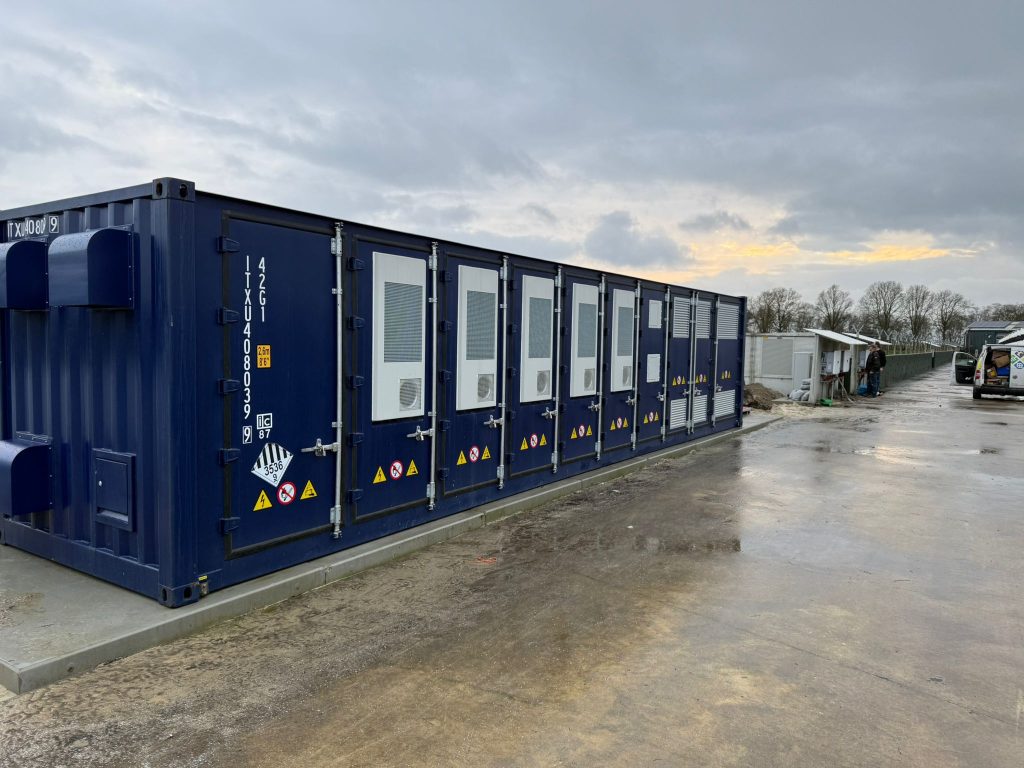
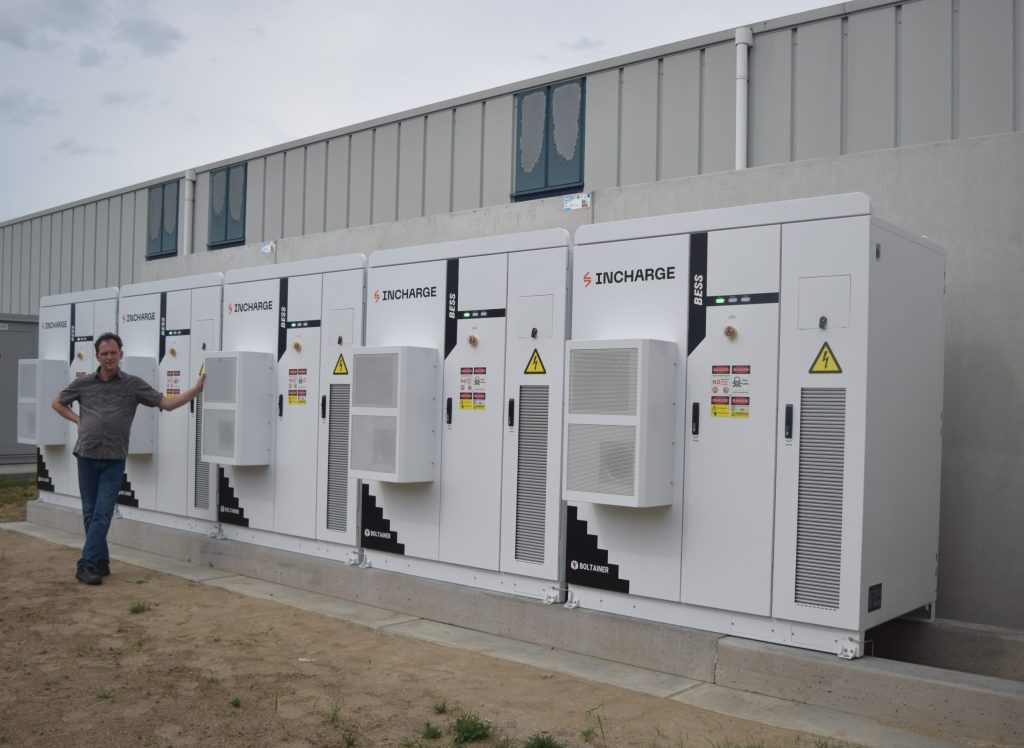
| “Dangerous near buildings” | Provided that the proper safety distances (in accordance with NEN/IEC standards) are maintained, installation next to buildings is permitted and safe. |
| “Local residents are at risk” | A properly installed LFP system has a risk classification comparable to that of other industrial electrical installations, such as transformers. |
Thermal safety: LFP vs. other chemistries
| Property | LFP | NMC | LCO (smartphones) |
|---|---|---|---|
| Onset temperature of thermal runaway | >270°C | 150–210°C | 130–150°C |
| Oxygen release due to overheating | At least | Significant | High |
| Cell-to-cell fire spread risk | Very low | Fair | High |
| Extinguishability with water | Good | Complex | Risky |
Mandatory certifications for commercial installations in the Netherlands
| Standard | What it covers | Mandatory? |
|---|---|---|
| IEC 62619 | Safety of lithium cells for industrial applications | Yes |
| IEC 62933 | Stationary energy storage systems | Best practice, partially mandatory |
| CE marking | European conformity | Yes |
| NEN 1010 | Safety of Low-Voltage Installations | Yes |
Multi-layered fire prevention: how the Boltainer system was designed
Layer 1 — Prevention: The BMS continuously monitors each cell for voltage, current, and temperature. The thermal management system maintains the temperature within the 20–35°C operating range. Overcharging and deep discharge are prevented.
Layer 2 — Early detection: multi-sensor fire detection (smoke, heat, gases). 24/7 remote monitoring by the Boltainer Operations Center. Alerts are triggered well before critical thresholds are reached.
Layer 3 — Containment: automatic fire suppression system inside the container. Firewall construction between modules. Automatic power shut-off upon alarm.
Layer 4 — Response: Immediate notification of the fire department via a connected alarm system. A Boltainer technician is available within 2 hours. A safety protocol for the fire department is included in the installation.
Permits: What do you need?
| System size | Permit type | Lead time |
|---|---|---|
| <500 kWh LFP buiten gebouw | Environmental Report | 4–8 weeks |
| 500 kWh – 5 MWh | Environmental Permit with Limited Environmental Review | 8–16 weeks |
| >5 MWh or on-site | Comprehensive Environmental Permit | 12–26 weeks |
Frequently Asked Questions About Battery Safety
Is an LFP battery system more dangerous than a substation?
No. The risk profile of a properly installed LFP system is comparable to or lower than that of a medium-voltage transformer. Grid operators have been installing transformers near residential and commercial areas for decades.
Which insurer covers a commercial solar power system?
Virtually all Dutch industrial insurers accept LFP systems that comply with current standards. Boltainer provides a complete technical dossier with every system, including the documentation required by insurers.
What does Boltainer do if an incident does occur?
All systems are connected to our monitoring center 24/7. If an alarm is triggered, a technician is immediately notified, and emergency services are contacted if necessary. We work closely with local fire departments to ensure they remain up to date on the systems.
Are there stricter requirements if I want to install the battery next to a warehouse containing hazardous materials?
Yes. In that case, the safety distances and the requirement to consult with the fire department are more stringent. Boltainer always conducts a site-specific risk analysis as part of the technical assessment.