


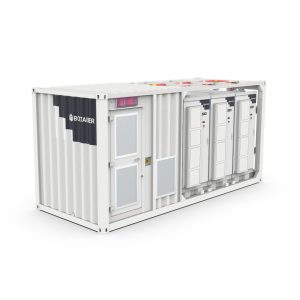
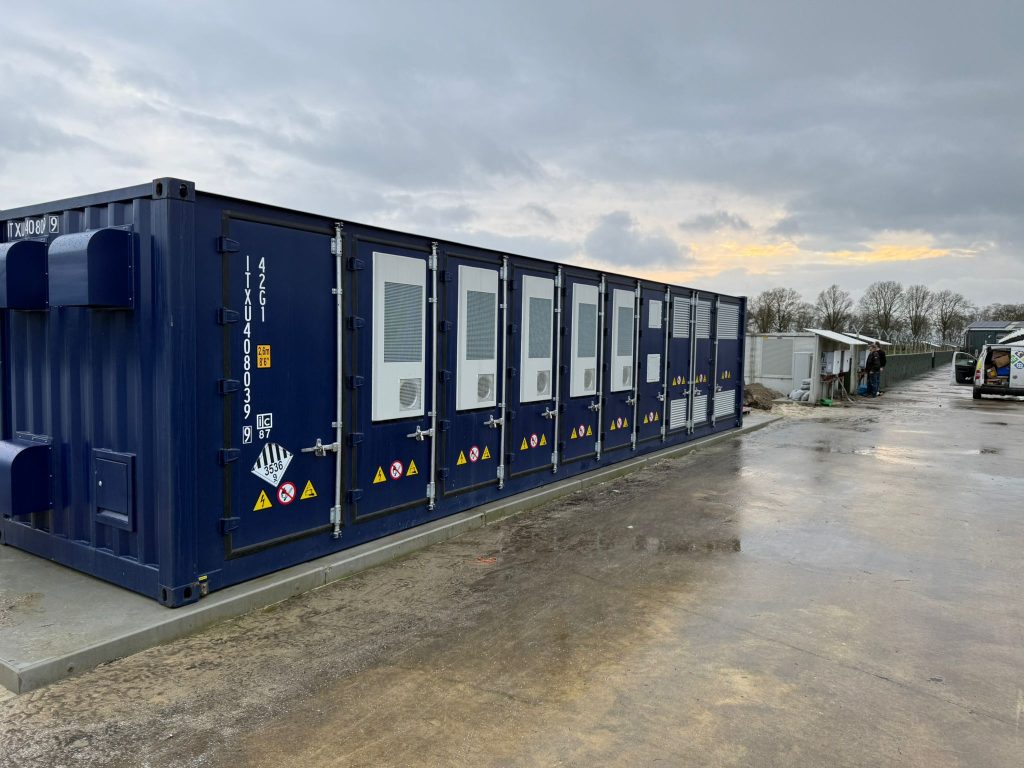
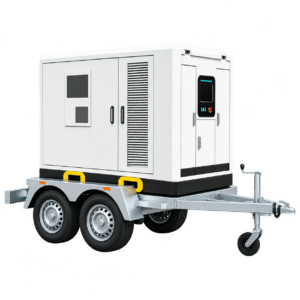
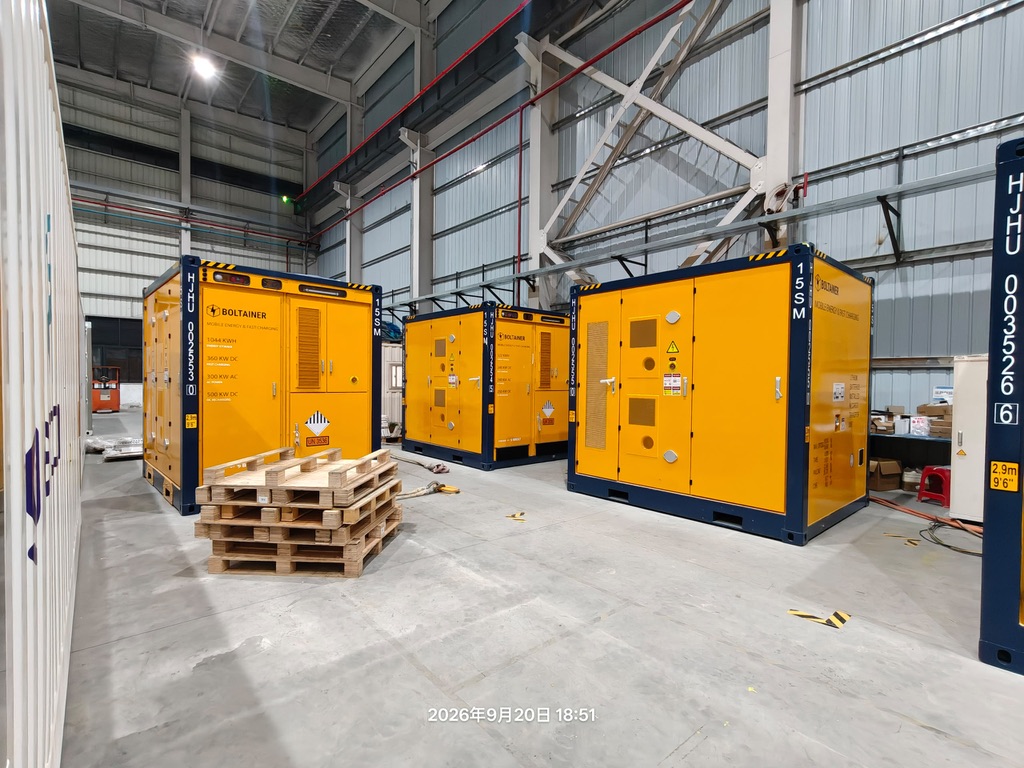


A higher-capacity connection requires a one-time fee plus higher ongoing transmission costs. This is how you weigh it against the business case for storage.
Key fact: upgrading the grid and installing a battery do not solve the same problem. An upgrade increases your maximum capacity and thereby structurally raises your fixed transmission costs. A battery does not increase your connection capacity, but ensures that your peaks remain within your existing contracted capacity. In congested areas, the first option is often simply not available.
What the costs of a grid upgrade consist of
| Cost item | Type | Explanation |
|---|---|---|
| Connection or Surcharge Fee | One-time | Depending on the connection capacity, distance to the station, and work required |
| Recurring Connection Fee | Recurring | Increases as the load on the connection increases |
| Rate for Contracted Transmission Capacity | Recurring | Per kW per month, based on the capacity specified in your contract |
| Monthly Peak Rate | Recurring | About the highest measured 15-minute value for the month |
| Internal Installation | One-time | Cables, distribution equipment, and sometimes a dedicated transformer |
| Lead time | Indirectly | Lost revenue and postponed plans during the waiting period |
The structural aspect is most often underestimated. With a high-volume consumer connection, you’re billed not only for kilowatt-hours, but also for your contracted transmission capacity and your monthly peak. Anyone who increases their contracted capacity to accommodate a peak lasting just a few hours a year pays for it twelve months a year, year after year.
The one-time cost varies greatly depending on the location. The distance to the nearest substation, the amount of excavation work required, and whether a dedicated transformer is needed mean that two similar companies may receive completely different quotes. Grid operators publish their rates for connection and transmission annually, but the project-specific portion is customized.
What Makes Up the Cost of a Battery
| Cost item | Type | Explanation |
|---|---|---|
| System and Installation | One-time payment, or monthly with Battery-as-a-Service | Battery, inverter, connection to the system |
| Energy Management System | Recurring | Management Focused on Peak Demand, Price, and Self-Consumption |
| Maintenance and Monitoring | Recurring | Service Agreement, Remote Monitoring |
| Permits and Safety Measures | One-time | Depending on system size, configuration, and PGS 37-1 |
| Space and Preparation | One-time | Subgrade, cable route, access for maintenance |
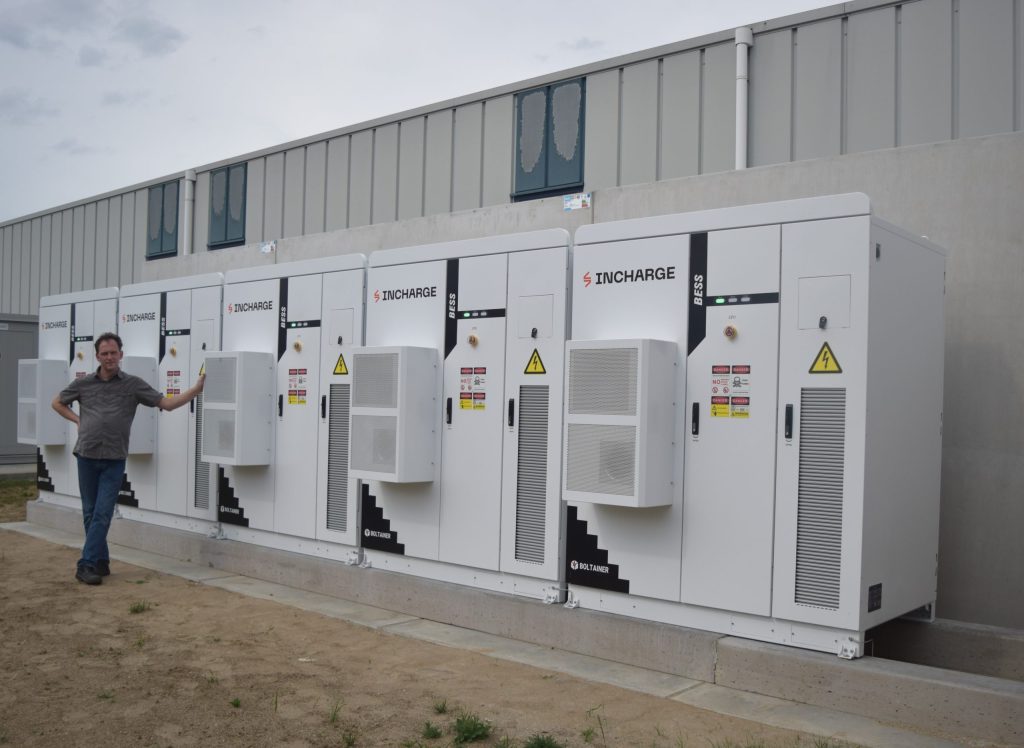
On the other hand, there are revenue considerations that a grid upgrade does not address. A higher-capacity connection costs money and only provides additional capacity. A battery provides both additional capacity and cost savings.
The revenue side of storage
| Source of value | Where It Comes From |
|---|---|
| Lower monthly peak | Lower costs for your utility provider's peak-rate tariff |
| Lower Contracted Capacity | Possibly a lower contract value, and therefore lower fixed costs |
| More self-consumption | Use self-generated electricity instead of purchasing it at the supply rate plus tax |
| Avoided network expansion | No connection fee and no permanently higher standing charge |
| Smarter Purchasing | Charging at low or negative prices under a dynamic contract |
| Avoided downtime | Continue working when benefits are insufficient or under a flexible contract |
In practice, a business case rarely hinges on just one of these items. It’s the combination of factors that matters, and that combination varies from company to company. That’s why any serious calculation starts with your quarterly figures, not a price list.
The two routes side by side
| Network Upgrades | Battery within an existing connection | |
|---|---|---|
| Availability in a congested area | Often not, waiting list | Well |
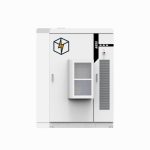
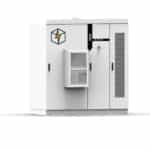
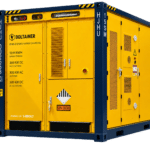
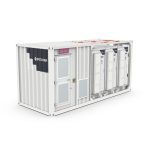
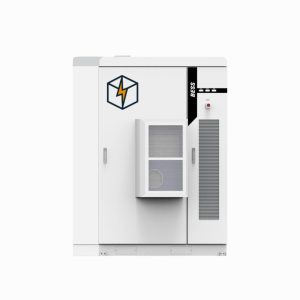
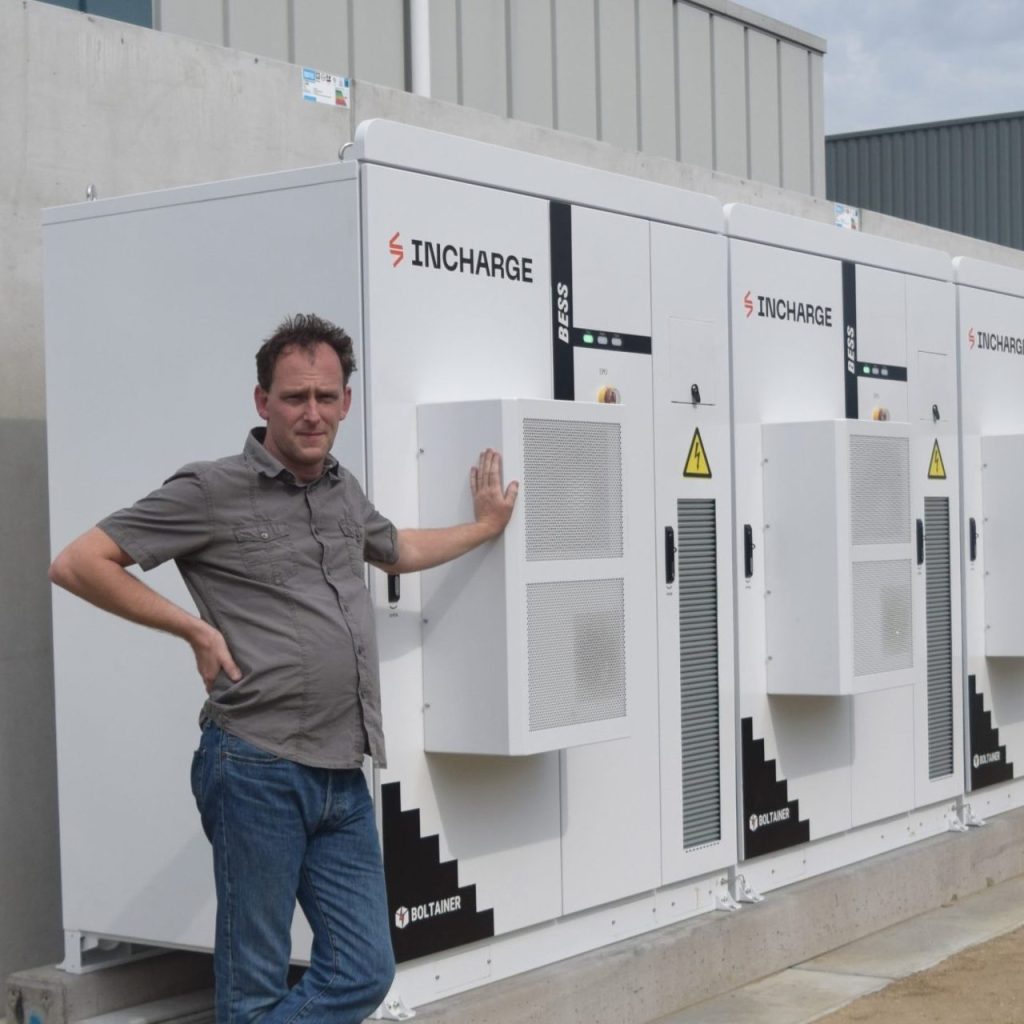
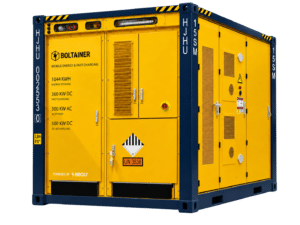
| Lead time | Several years | 6 to 8 weeks for cabinets, longer for containers |
| Impact on fixed costs | Structurally higher | Equal to or less than |
| Impact on peak costs | None | Lower—that's the essence of peak shaving |
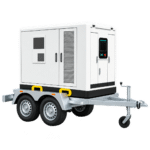
| Portable | No | Yes, for mobile systems |
| Growing Along with Plans | New application required | Modular and expandable |
| Resolves structurally higher base load | Yes | No |
When Upgrading the Grid Is the Better Choice
Be honest about the situations in which energy storage isn’t the answer. If your base load consistently exceeds your connection capacity—not just during peaks but for most of the day—then using a battery will only shift the problem elsewhere. Energy storage fills gaps; it doesn’t replace missing continuous power.
The practical dividing line comes down to how many hours per year you exceed your limit—and by how much. If those overages range from a few dozen to a few hundred hours, storage is almost always the cheapest option. If it runs into the thousands of hours, then the discussion involves both: a battery to bridge the downtime and smooth out the peak, and, in the long term, an increase in base load capacity.
Also consider the ratio between power and duration. If you need to supply hundreds of kilowatts for four consecutive hours, the system will be large and the business case will be less favorable. If, on the other hand, you’re dealing with short, high peaks, you’ll actually need little capacity but a lot of power, which is relatively favorable.
A Common Fallacy
Companies often compare the investment in a battery to the one-time connection fee for an upgrade. That’s an unfair comparison, and it usually works against the battery.
The connection fee is actually just one part of it. In addition, your recurring connection fee increases, and you’ll be paying for a higher contracted capacity every month for years to come. Add up those amounts over ten years, and the ratio shifts significantly.
Conversely, something similar happens on the battery side. There, the focus is solely on savings during monthly peak demand, while self-consumption, smarter purchasing, and avoided downtime are also factors. So be sure to fully calculate both approaches, including recurring costs and the time you gain or lose.
Here's how to do the math yourself
- Request your quarterly usage data for the past twelve months from your utility company.
- Determine your current contracted transmission capacity and your highest monthly peaks.
- Calculate how much additional power you'll need for your plans: charging infrastructure, heat pumps, and additional production lines.
- See how many hours per year those plans would cause you to exceed your current limit, and by how much.
- Ask your utility provider for an estimate of the capacity upgrade costs for your location, including the base rates.
- Compare the one-time and recurring costs of both routes over a ten-year period, and include the revenue generated from storage.
- Also calculate the scenario in which you do nothing, including the revenue you’ll lose during the waiting period.
Step seven is the one most often skipped, and it’s often the deciding factor.
What to Ask Your Utility Provider
- What is the one-time fee for the connection capacity I requested at this location?
- What are the associated recurring charges for connection, contracted capacity, and monthly peak usage?
- What is the expected turnaround time, and is my service area included in any expansion plans?
- Is there an offer for a flexible contract or congestion management in my area?
- What happens to my application if I lower my requested loan amount?
That last question surprisingly often yields results, because smaller requests are easier to accommodate than large ones.
Frequently Asked Questions About Grid Reinforcement and Battery Storage
Can I do both?
Yes, and that happens regularly. You keep the transmission request in place for the long term and install a battery now to bridge the gap in the intervening years. After the capacity increase, the system continues to deliver value through lower peak costs and higher self-consumption. In some cases, you can keep the capacity increase smaller than originally requested, precisely because the peaks are already being smoothed out.
How much does a grid upgrade cost, exactly?
That varies greatly depending on the situation. The one-time fee depends on the distance to the nearest substation, the work required, and the requested connection capacity, and can therefore vary significantly between two comparable businesses. The recurring costs are based on your grid operator’s annually published rates for connection, contracted capacity, and monthly peak load. Always request both components, because over a ten-year period, the recurring costs often have a greater impact than the one-time fee.
Does a battery also reduce my energy bill?
No, the energy tax is based on your consumption in kilowatt-hours, not on your power capacity. A battery primarily reduces your capacity-based grid costs and your average purchase price per kilowatt-hour if you have a dynamic contract. What you do save indirectly, however, is the tax on the kilowatt-hours you no longer need to purchase because you’re using your own generation.
Is it more expensive to get a business battery serviced than to buy a new one?
Over the entire term, you’ll pay more than you would with a direct purchase, just as you would when leasing other business assets. On the other hand, you don’t tie up capital, maintenance, monitoring, and warranty are included in the monthly payment, and we assume the residual value risk. For companies that prefer to allocate their investment capital to their core business—or that want to see if it works first—this is often the deciding factor.
How do I know what's actually causing my spike?
Based on the quarter-hourly values, combined with your operational schedule. In practice, these are often a handful of simultaneous processes: a compressor starting up while loading is also taking place, a cooling system running on a hot day, or the startup of multiple production lines at 7:00 a.m. Mark the days with the highest quarter-hourly values and note next to each peak what was running at that moment. This will let you know immediately whether control measures alone solve even part of the problem.
How much can I save on my peak-hour costs?
That depends on the magnitude and frequency of your peaks, as well as your utility provider’s rates. Quoting a percentage without knowing your profile is just a guess, and I would be wary of any figure presented to you without measurement data. What is true, however, is that the sharper and shorter your peaks, the more favorable the ratio between investment and savings.
Does a battery count as an investment for subsidy purposes?
There are programs for flexibility measures and for charging infrastructure, including RVO’s Flex-e and SPRILA for charging stations. The eligibility requirements, funding percentages, and application periods vary by round. The 2026 Flex-e round ran from May 6 through October 15 and is now closed. Check the current status with RVO before including a subsidy in your business case, and always run the numbers for the case without the subsidy as well.
What happens to the system at the end of its term?
With Battery-as-a-Service, we take the system back. Upon purchase, we, as the manufacturer, are responsible for collection and recycling in accordance with applicable battery regulations. Technically, a system does not stop working abruptly: its capacity gradually declines, which means it often remains perfectly usable for peak shaving, where power is more important than capacity.