

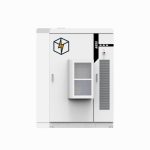
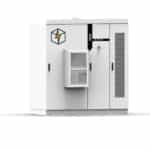
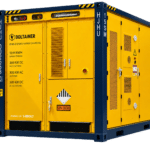
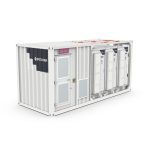

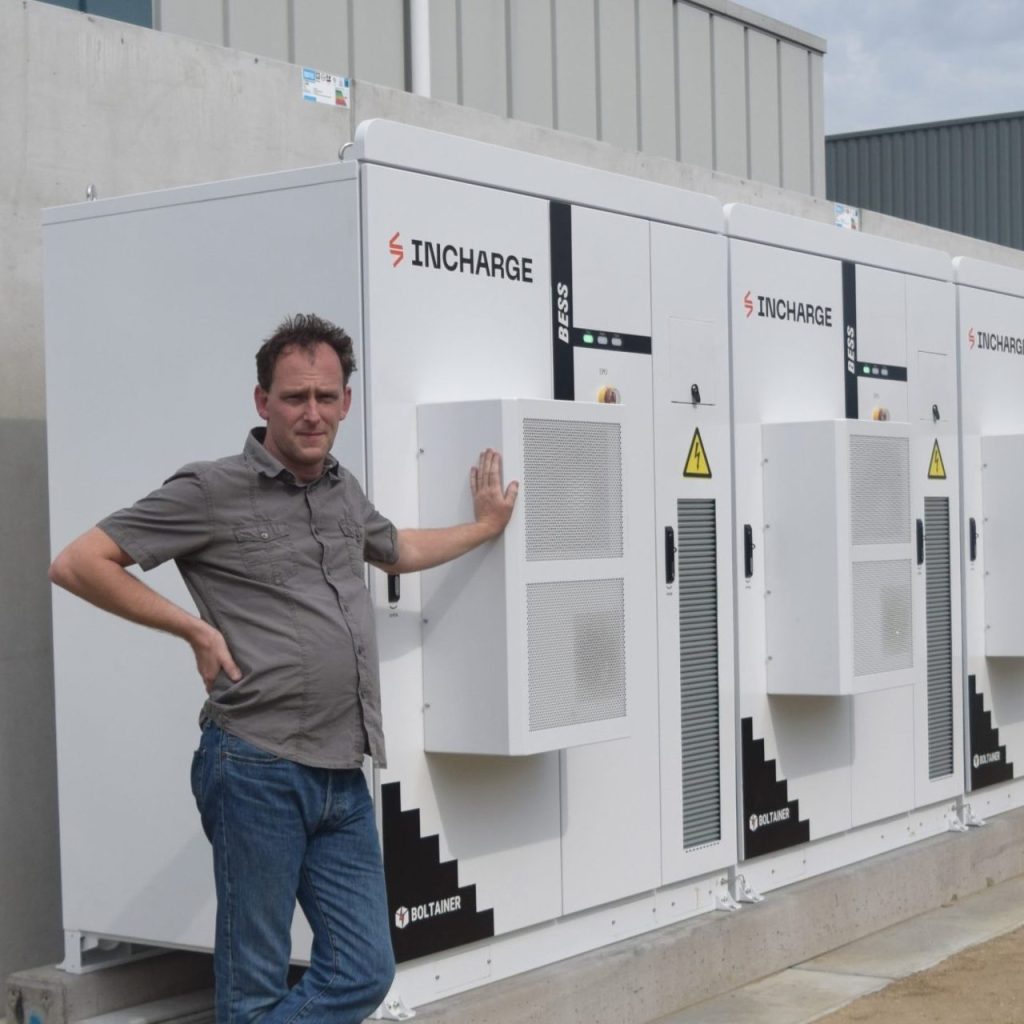
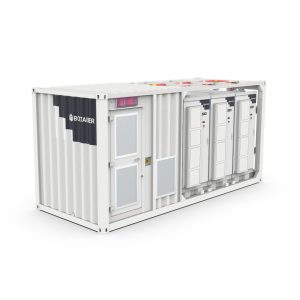
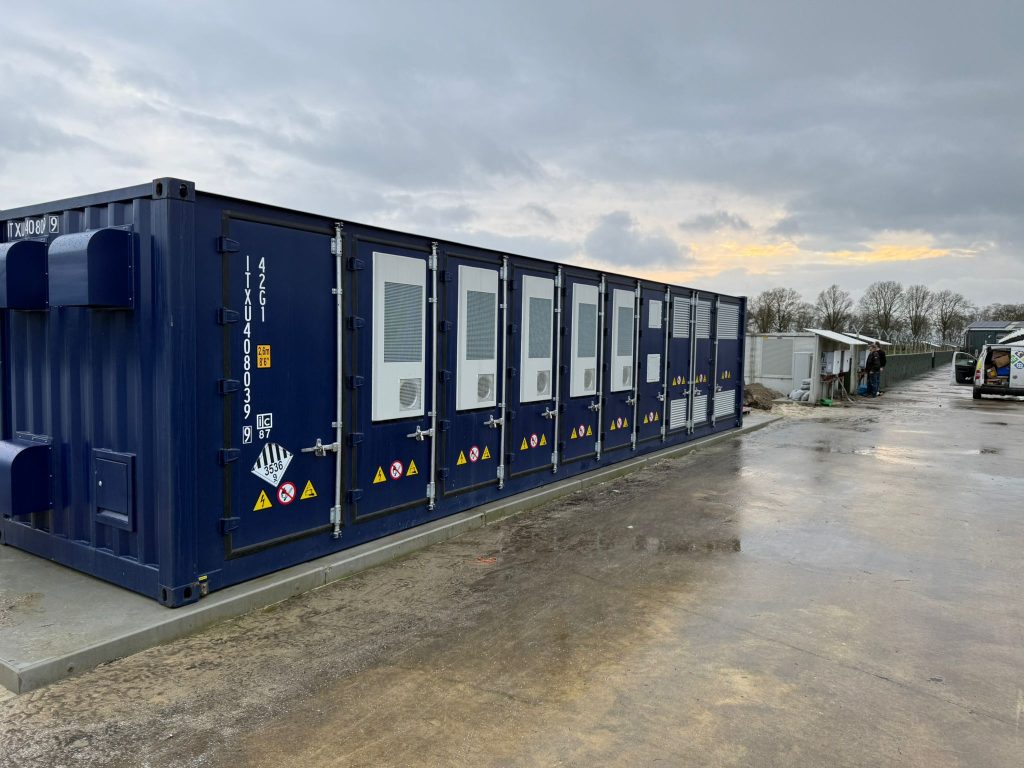
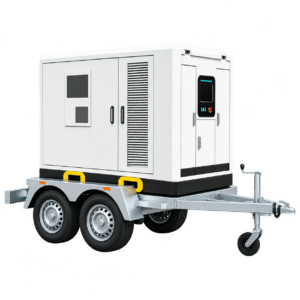
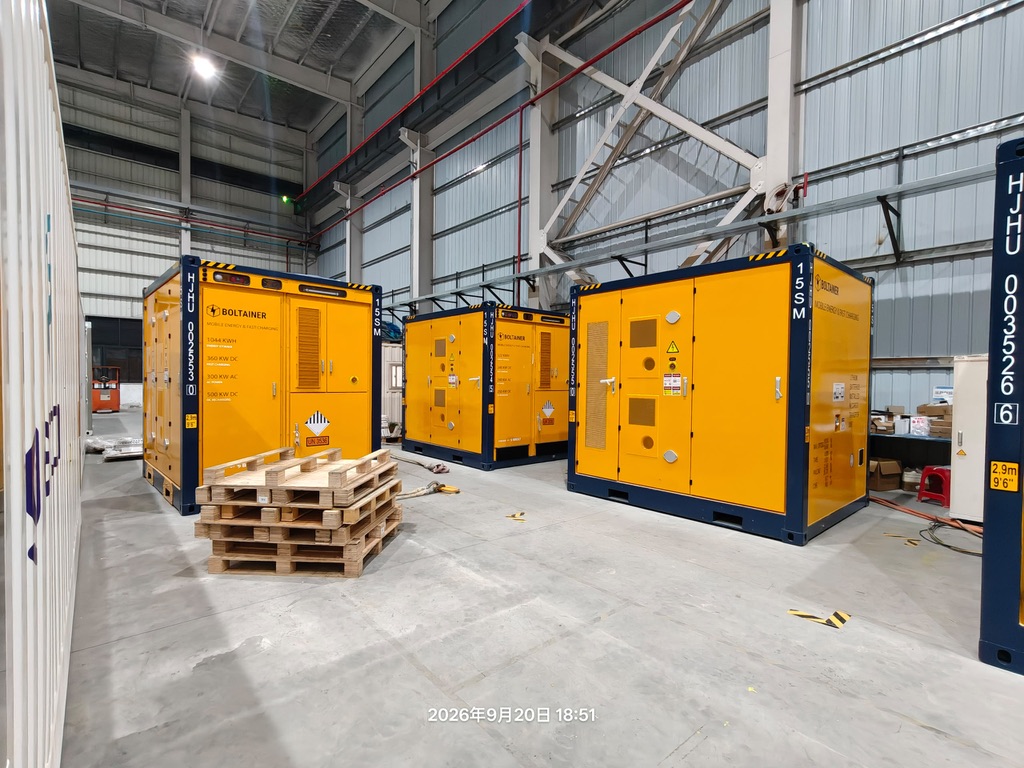
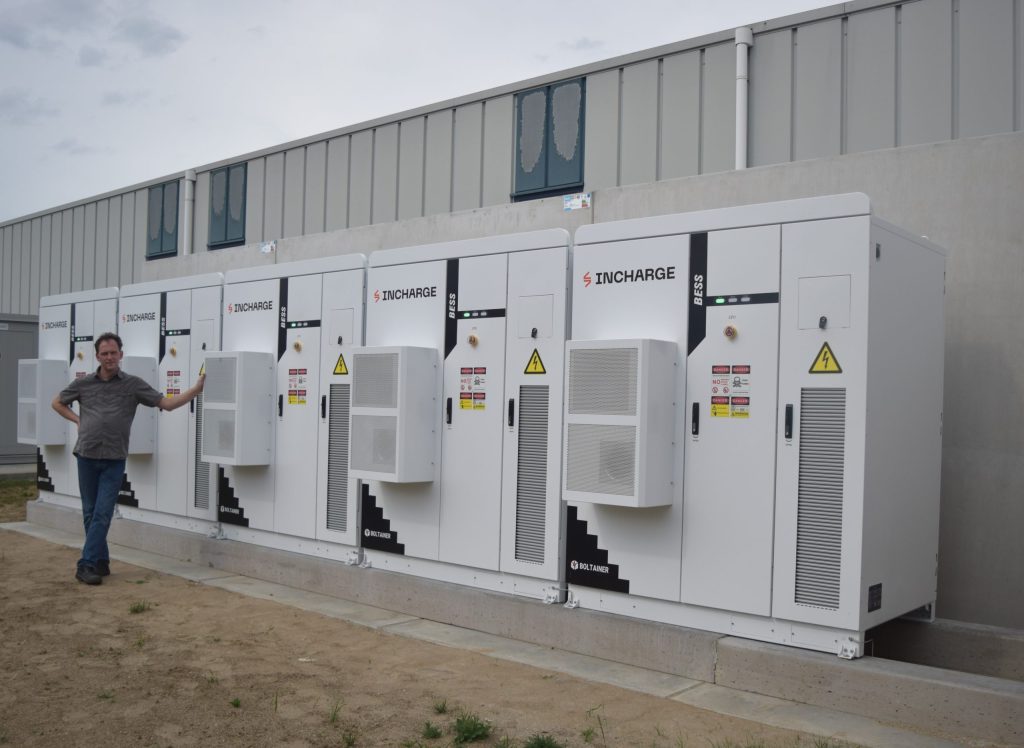
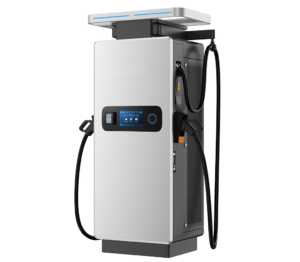

Explanation of how multiple battery containers (BESS) are connected in parallel and controlled centrally using an EMS or SCADA system.
Your energy demand is growing, but the grid is at capacity, peak loads are rising, and a single energy storage container simply doesn’t seem to be enough. How exactly does connecting multiple battery containers work—from a technical and operational standpoint, as well as in terms of the business case?
This page will help you with that. We’ll take a closer look at what happens when you deploy more than one battery container and want them to function as a single energy storage system. You’ll gain clarity on the roles of the BMS and inverter, how control and protection are organized, and when it makes sense to scale up modularly for peak shaving, grid congestion, off-grid power supply, or charging infrastructure. This will enable you to make an informed decision about whether and how you want to expand.
Why connect multiple battery containers?
Companies choose to link multiple battery containers together when a single energy storage container no longer meets their power requirements, the necessary kWh storage capacity, or the dynamics of their projects. Instead of a single, extremely large fixed system, this approach allows you to build a modular energy storage system that can grow along with your business.
Typical situations in which linking makes sense
- Growing Power Demand: Will it start with peak shaving only, and later include additional charging infrastructure for forklifts, trucks, or construction equipment? By deploying multiple battery containers in parallel, you can gradually increase both power and energy capacity.
- Phasing by Project or Location In construction or industry, demand can vary by project phase. Multiple battery containers can be easily moved and rearranged between projects or business locations.
- Grid Congestion and Expansions Farmers and industrial users who implement a grid congestion solution or peak shaving can add additional containers later if production (such as PV) or consumption increases.
- Charging Infrastructure and Off-Grid Power Supply For larger charging stations or (temporary) off-grid applications in construction and transportation, it is often more practical to use multiple interconnected containers than a single fixed mega-battery.
- Flexible Deployment and BAAS Models In a Battery-as-a-Service arrangement, you can add or remove containers depending on contracts and seasonal demand; this ensures that the commercial battery remains a flexible business asset rather than a fixed installation.
You can find more background information on the use of battery containers in business environments on the product page.
How does the technical process of connecting battery containers work?
When multiple battery containers are connected, the system appears from the outside to be a single large “black box,” but internally, it actually has a highly modular design. This is advantageous for the design, management, and expansion of professional energy storage systems for peak shaving, grid congestion, off-grid power supply, and charging infrastructure.
Assembly within a single container
Each energy storage container or battery container consists internally of:
- Battery modules: the smallest repeatable units consisting of cells.
- Racks: a frame in which multiple modules are connected in series or in parallel.
- A local BMS (Battery Management System) per rack or per container that monitors voltage, current, and temperature and balances the cells.
The BMS ensures that each rack remains within safe limits and transmits status and error messages to the higher system level.
From DC in the container to AC in the system
The battery modules supply direct current (DC). To connect them to your grid or system, each container (or cluster of containers) requires its own:
- Power converter / PCS (Power Conversion System) installed, which converts DC to AC;
- Safety devices (switches, fuses, measuring equipment) have been installed.
Typically, these inverters:
- With their AC terminals connected in parallel to a common AC busbar.
- From that rail via a transformer linked to:
- the public power grid, or
- an on-site power system or microgrid.
In this way, a set of interconnected battery systems forms a single scalable energy storage system, while each container functionally remains its own “block.”
Role of Engineering: Stresses, Short-Circuit Currents, and Selectivity
In commercial and industrial systems, all electrical parameters are deliberately designed. Examples include:
- the selected voltage level on the DC and AC sides;
- the calculated short-circuit currents in various operating and fault scenarios;
- the selectivity of the protective devices, so that in the event of a fault, only the necessary section is de-energized.
Specific diagrams of a typical Boltainer configuration with multiple containers require project-specific engineering and validation. [Needs: engineer-reviewed calculation]
BMS, Inverter, and EMS: How They Work Together as a Single System
In every battery container or energy storage container, control begins with the Battery Management System (BMS). The BMS continuously monitors the individual cells—voltage, temperature, and current. This prevents overcharging and excessive discharge, and it intervenes in the event of anomalies. In addition, the BMS calculates the State of Charge (SoC) and often the State of Health (SoH) as well. This means you know exactly how much energy is available per container and what a safe power level is.
The inverter, or Power Conversion System (PCS), is located between the battery and your AC system. It converts the direct current (DC) from the battery to alternating current (AC) for your grid, or vice versa during charging. The inverter controls:
- the loading and unloading capacity per container
- Power Factor and Power Quality
- Switch between on-grid and off-grid operation (depending on the configuration)
While the BMS monitors “the battery” and the inverter monitors “the grid,” the Energy Management System (EMS) monitors the entire energy storage system as well as your business processes. When multiple battery containers are used, the EMS aggregates all BMS and inverter data into a single virtual corporate battery. This means you’re not controlling five separate battery containers, but rather a single, integrated system.
An EMS makes decisions based on, among other things:
- Current and Future Energy Rates
- network load and available connection capacity
- PV Generation and Weather Forecast
- consumption profiles (machinery, cooling, charging infrastructure, construction sites, etc.)
This allows the system to automatically optimize for applications such as peak shaving, energy arbitrage, and congestion management, in line with the strategy you set. The same architecture integrates seamlessly with solutions such as battery containers for commercial energy storage.
For Boltainer solutions, standard EMS features and integrations are available or can be integrated, even when multiple containers are linked: [Needs: an engineer-reviewed description of standard EMS features and integration options for Boltainer systems]
Practical Considerations, Safety, and the Next Step
When dealing with multiple battery containers, there’s more to it than just stacking capacity. You want to be sure that the big picture is right—technically, organizationally, and in terms of safety—both now and as you expand in the future.
Coordination: Grid Operator, Installer, and Grid Capacity
Always start by conducting a joint assessment with your installer and, if necessary, the utility company. Important questions include:
- What connection capacity is currently available under your contract for your site?
- What is the maximum allowable feed-in or off-take capacity?
- How does the planned battery capacity relate to your peak shaving, charging infrastructure, and generation facilities?
This will help you avoid having to scale back the design of your energy storage system later on.
Space, Logistics, and Safety on Site
For multiple energy storage containers, you'll need more than just square meters:
- Logistics: delivery and removal routes for containers, accessibility for cranes or trucks, ground conditions, and load-bearing capacity.
- Infrastructure: cable routes, MV/LV cabinets, inverter locations, access for maintenance.
- Safety:
- Fire Detection and Alarm Transmission
- clear emergency stops and markings
- fencing, access control, and clear escape routes
- agreements with the emergency response team and the fire department regarding scenarios and assembly points
Depending on the municipality and configuration, notification or permitting requirements may apply; discuss this with your advisor and the relevant authority well in advance.
[Requirements: an engineer-reviewed checklist with standard prerequisites for projects involving multiple battery containers]
The Next Step: Scenarios and Sizing with Boltainer
Boltainer helps you design scenarios: from one to multiple battery containers, with scalability options for additional capacity or Battery-as-a-Service. We also align this with your energy goals: peak shaving, congestion management, energy arbitrage, or charging infrastructure using a commercial battery.
Would you like to know how many containers you’ll actually need and which configurations make sense for each phase? Request a no-obligation consultation or project simulation so you can make an informed decision about your investment and rollout schedule.
Frequently Asked Questions
Many questions about connecting battery containers relate to configuration, scalability, and permits. Below are brief, practical answers to help you make the right choices for your installation.
Can you also connect battery containers in series instead of in parallel?
Commercial battery containers are almost always designed so that the internal cells and modules are already set to the correct voltage level. At the system level, multiple containers are typically connected in parallel on the AC side via the inverters and the utility grid or microgrid connection point. The exact configuration is customized and depends on power ratings, application, and safety requirements. Boltainer provides project-specific advice on a safe and efficient configuration for your energy storage system.
How easy is it to add additional battery containers to an existing system later on?
Battery containers are designed to be modular, which often allows for expansion if the design takes into account space, grid connection, and power reserve in the infrastructure. This includes the capacity of cables, transformers, and inverters, as well as space for additional containers and fire compartmentalization. Boltainer can anticipate future growth as early as the initial design phase. Each expansion is then reassessed from both a technical and installation perspective before it is implemented.
Does the grid operator always allow multiple battery containers to be connected in series?
Projects involving significant power capacities and multiple battery containers often require coordination with the grid operator. Depending on the location, capacity, and usage profile, reporting requirements, connection studies, or permitting processes may apply. Boltainer has experience with projects in areas with grid congestion and can help clarify the conditions, procedures, and timelines with the grid operator, though we cannot guarantee a specific outcome in advance. If you’d like to know what’s possible at your location, request a no-obligation consultation or project simulation so that Boltainer can develop the optimal configuration and business case for a setup with multiple battery containers.