


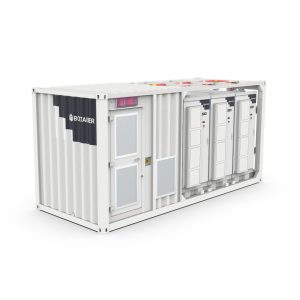
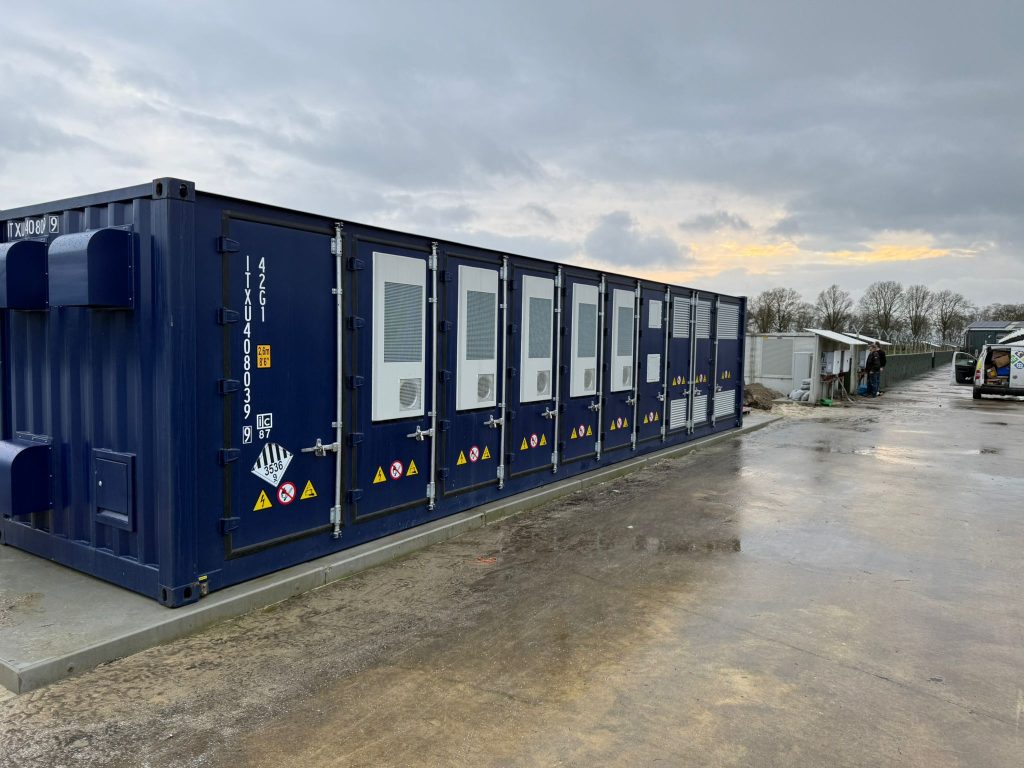
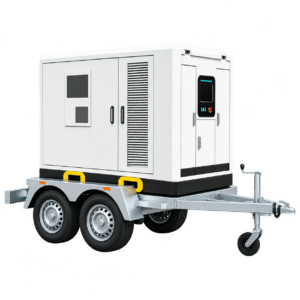
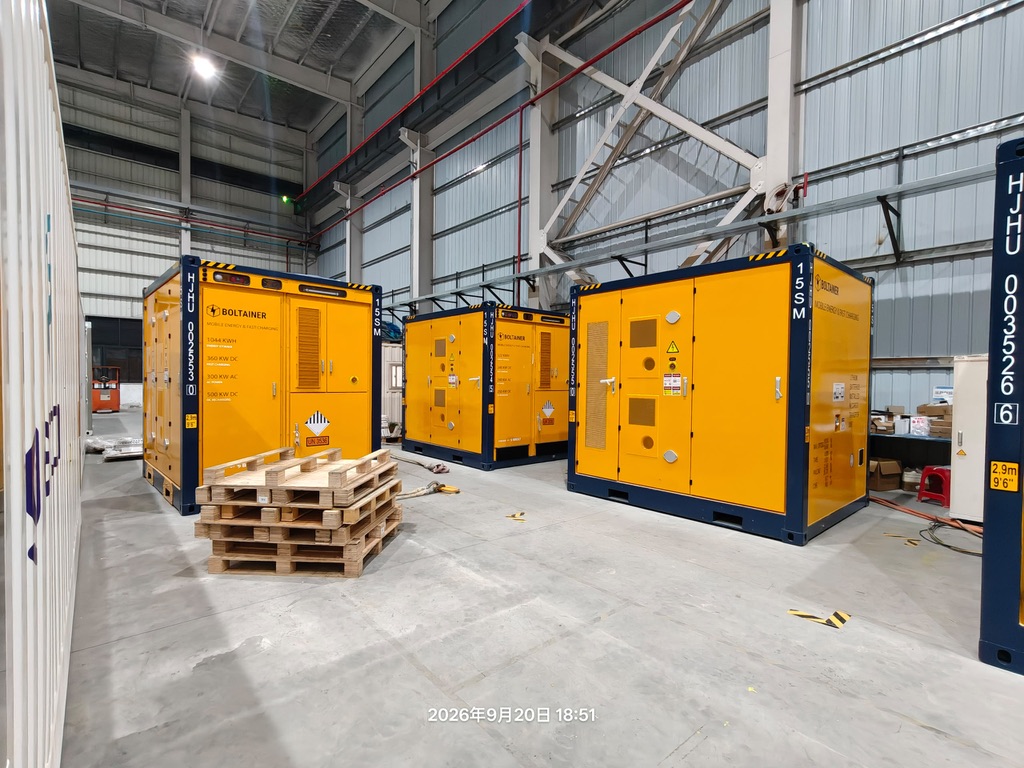
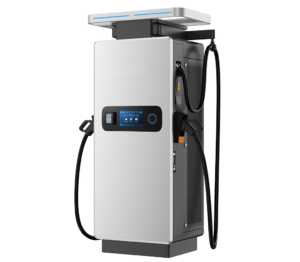
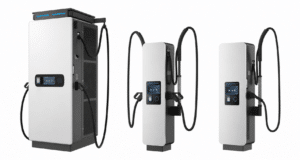
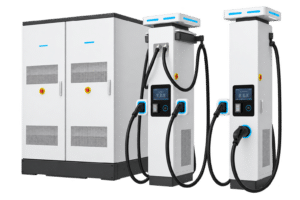


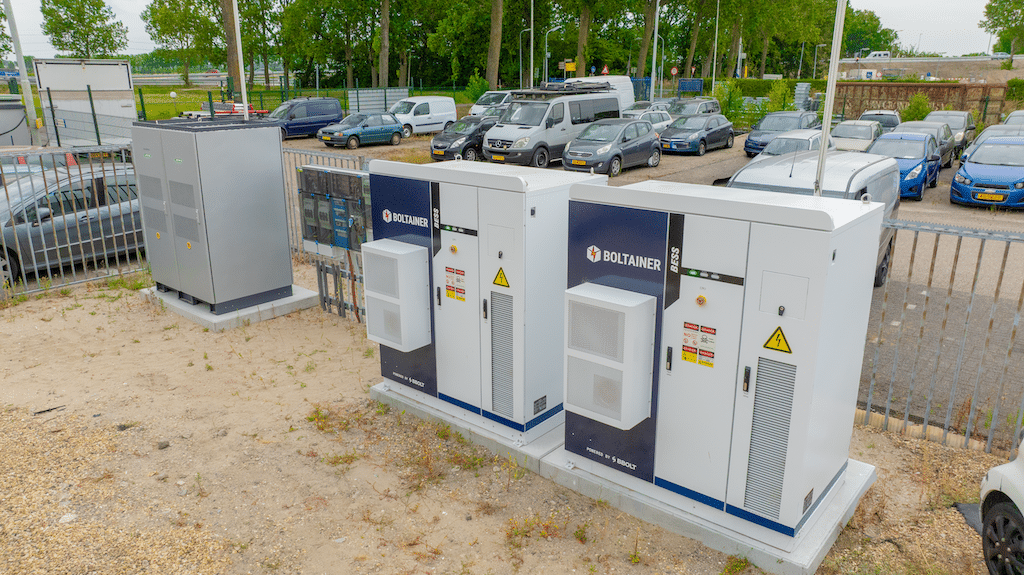
Charging infrastructure requires a lot of power in short bursts. With energy storage and smart charging management, you can install charging stations within your existing electrical connection.
Key fact: Charging infrastructure doesn’t require much energy, but it does require a lot of power—and that’s exactly what limits your connection. A battery supplements the power supply during charging sessions, keeping the draw from the grid steady. This allows you to install charging points within your existing contracted power capacity, even in a congestion zone where increasing capacity isn’t an option.
Why Your Data Plan Fills Up So Fast
An electric delivery van uses a modest amount of energy overnight. The problem lies in the moment: if five vehicles are plugged in at the same time, it immediately affects your quarterly bill.
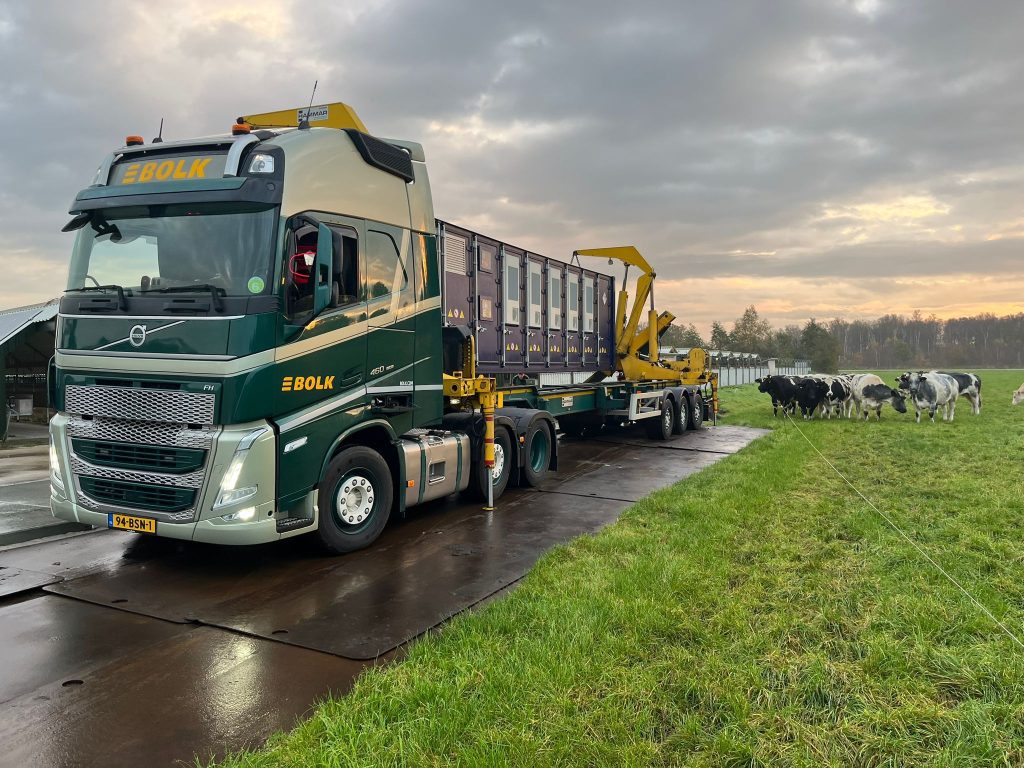
With trucks and fast chargers, the difference is even greater. A single DC fast charger can draw more power than your entire production facility, and two consecutive charging sessions account for the peak consumption for the entire month.
| Charging Status | Feature | Risk to Your Connection |
|---|---|---|
| Charging Commercial Vehicles Overnight | Low power, long duration | Limited, provided it is outside the production peak |
| Charging AC vehicles during the day while production is underway | Low power, poor torque | Adds to your existing peak |
| DC Fast Charging for Passenger Cars | High intensity, short sessions | Significant impact on the monthly peak |
| Fast-charging trucks | Very high power | Determines your contract value all on its own |
| Multi-point charging station | Concurrency | A peak that is well above your average |
Three Ways to Solve It
1. Smart Charging Management
The charging stations distribute the available power among themselves and scale back when you approach your limit. This costs very little and is often sufficient when charging commercial vehicles overnight.
The limit is the point at which the vehicles actually need to be ready. Charge management distributes power; it does not generate additional power.
2. A heavier connection
The traditional approach—and one that’s often simply not available in areas with high demand. Even when it is an option, you pay a one-time fee and then ongoing charges for a higher contracted capacity, 12 months a year, even if your charging stations only run for a few hours at night.
3. Storage behind the charging stations
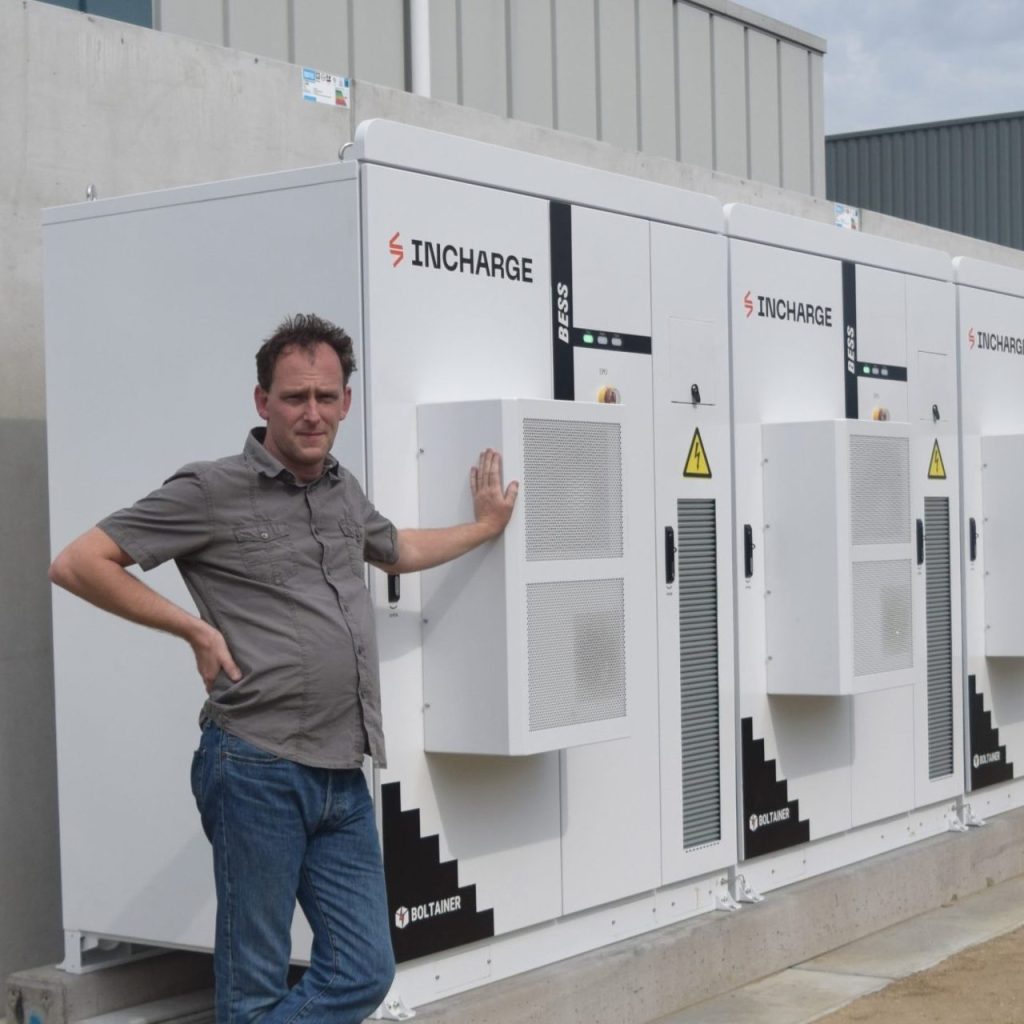
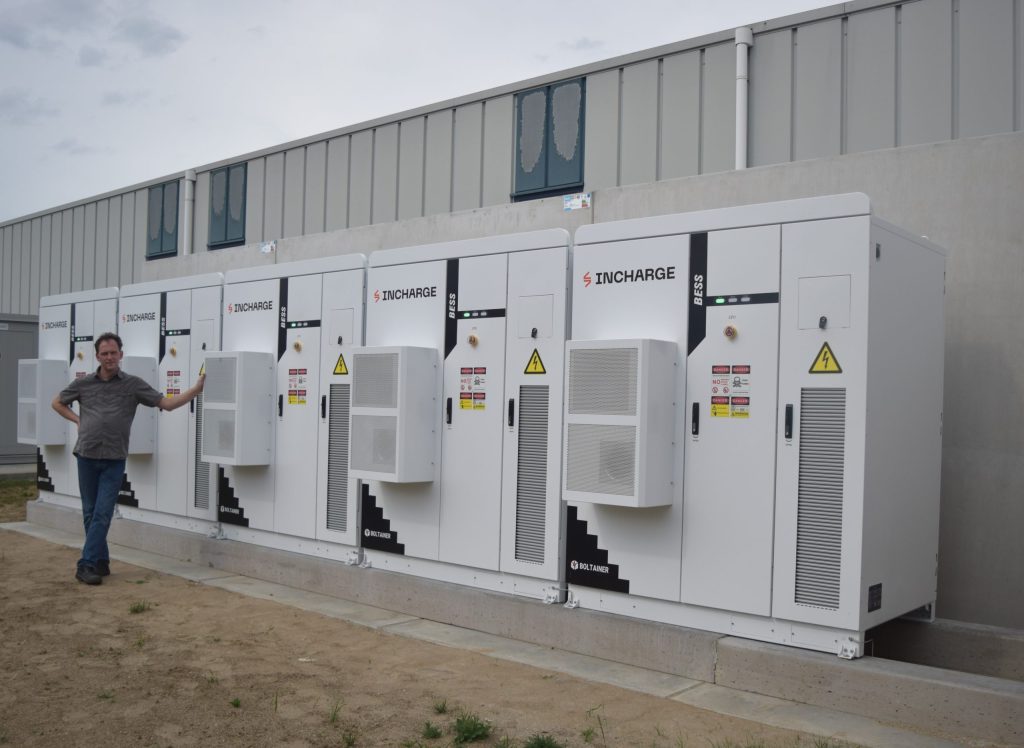
The battery charges when demand is low and supplies power during charging sessions. You see a flat profile; your charging stations receive the power they need. That’s peak shaving applied to charging infrastructure, and it’s usually the fastest route: weeks instead of years.
The three are not mutually exclusive. In practice, the combination of charge management and storage works best, because you need less storage that way than if you were to rely solely on the battery.
How to Determine What You Need
- Add up the total load capacity of the items you want to place.
- Determine the concurrency: How many processes can realistically run at the same time, and at what times?
- Compare that to your current profile and your contracted transport capacity.
- Calculate the shortfall in kW; that is the power the battery must be able to supply.
- Multiply that deficit by the duration of a typical charging session, and you'll get the capacity in kWh.
- Add consecutive sessions together if there isn't enough time in between to recharge.
Step two is where things most often go wrong. Companies base their calculations on the maximum power consumption of all points at the same time, even though that rarely happens in practice. Conversely, they underestimate the clustering effect: at 7:00 a.m., everything is indeed turned on at the same time.
What kind of system is suitable for this?
| Situation | Direction |
|---|---|
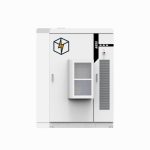
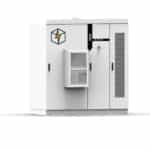
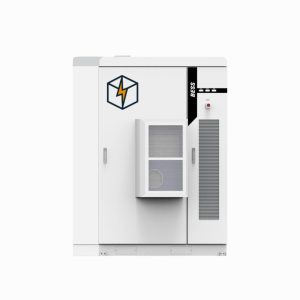
| A Few AC Tips for Company Vehicles | A 100 kWh battery or compact cabinet |
| A mix of AC and a single DC charger | A 200 kWh battery |
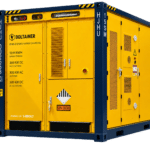
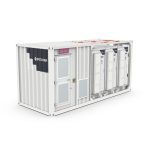
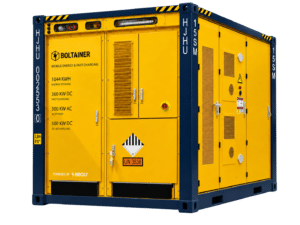
| Charging plaza with multiple fast chargers | A high-capacity battery container |
| Fast Charging for Trucks | A 2 MWh battery, or multiple units |
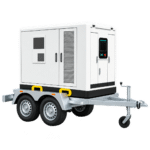
| Location without adequate connectivity | An off-grid battery with integrated charging |
A key characteristic of charging applications is that you need both power and capacity. This makes the system larger than in traditional peak shaving, where you can get by with a lot of power and little capacity.
The combination with sunlight makes it stronger
Charging needs often arise in the evening or at night, while solar power is generated in the middle of the day. Without storage, these are two separate worlds. With storage, they become a single system: your surplus power from midday goes into the battery and is released again when charging.
In areas with grid congestion, this solves two problems at once. You don’t have to feed your solar power back into the grid at a low rate, and your charging stations don’t draw extra power from the grid during peak times.
A sample calculation
Suppose you’ve contracted for 300 kW and your daytime usage is around 220 kW. You want to install two 150-kW fast chargers for delivery vans, which will be recharged in the afternoon between trips.
- Power required for simultaneous charging: 300 kW in addition to your 220 kW, resulting in a shortfall of approximately 220 kW.
- Typical session: 20 minutes per charger. Two sessions together use about 100 kWh from the battery.
- If there are three rounds in the same afternoon, without enough time to recharge, the required capacity increases to about 300 kWh.
- With charge management that ensures the two chargers never operate at full power simultaneously, the required power drops significantly and the system becomes smaller.
That last point is the reason to combine both measures rather than choose between them.
What You Need to Arrange in Advance
- Measurement data. Twelve months of quarterly figures, so you know where you stand right now.
- Loading Plan. Which vehicles, what capacity, and when will they be ready?
- Installation location. Space for the battery, distance to your distribution panel, and distance to the charging points.
- Permit. PGS 37-1 applies to storage systems with a capacity exceeding 20 kWh.
- Grant. There are programs for charging infrastructure, such as SPRILA, with conditions that vary by round. Be sure to also run the numbers for your plan without a grant.
Who benefits most from this
Transportation and logistics. The vehicle fleet is becoming electrified faster than the grid can keep up. Storage behind the charging stations is often the only thing that keeps scheduling feasible.
Construction and infrastructure. Changing locations, often without a reliable power connection. In these situations, mobile storage with integrated charging comes closest to a viable solution, and charging using self-generated or stored power is often cheaper than using a generator.
Retail and real estate. Charging stations as a service for visitors or tenants, with peaks occurring at unpredictable times. Battery storage protects the building’s electrical connection from that unpredictability.
Production using our own fleet. This is where loading conflicts most severely with existing production peaks. It is precisely there that rescheduling loading sessions in combination with storage yields the fastest results.
Frequently Asked Questions About Charging and Peak Shaving
Can I install fast chargers without a higher-capacity electrical connection?
In many cases, yes—by powering the chargers from a battery that recharges between sessions. The grid then supplies a steady, lower current while the charger briefly delivers a high amount of power. Whether this works depends on how many sessions occur in a row and how much time there is in between for recharging. That’s exactly what we calculate before placing an order.
Isn't charging management enough?
This is often the case when charging commercial vehicles overnight: the vehicles have hours to charge, so distributing the power works just fine. As soon as there’s a strict deadline—for example, a truck that has to leave at six o’clock—or as soon as you install fast chargers, you run up against a limit that charge management can’t overcome. That’s when you need power from another source.
How much battery capacity do I need per charging station?
That’s not a fixed number per point, because it depends on concurrency and session duration. Two fast chargers that never run at the same time have very different power requirements than two that are both on every morning. Therefore, base your calculations on the power demanded simultaneously and the time you need to cover, not on the number of points.
Does this also work at a rental location?
Yes, and in that case, a portable system is often a good idea. You avoid having to invest in permanent foundations and a fixed cable route, and you can take the system with you if you move. Be sure to coordinate the setup with your landlord in advance, because even temporary setups are subject to installation and safety requirements.
What if my charging needs increase?
Start with what you demonstrably need right now and choose a modular design. Cabinets can be expanded in parallel, and containers are modular in terms of capacity and power. Make sure that space, cable cross-section, and the capacity of your distribution system are already calculated to accommodate future growth in the initial design, because that will make expansion later on simply a matter of adding more units.
Does charging count toward my monthly data limit?
Yes, charging is simply consumption and counts toward the 15-minute intervals your grid operator uses to determine your monthly peak. That’s why it’s so important to know when you’re charging in relation to your other consumption. A charging session that falls in the middle of your generation peak is twice as expensive as the same session at night.
Can I use the battery for other purposes as well?
That’s exactly the point. The same system smooths out your production peaks, increases your self-consumption of solar power, and allows you to purchase electricity at favorable times under a dynamic contract. The energy management system evaluates which factor is most important at any given moment. That combination usually makes the business case work.
How long will the project take to complete?
Cabins are often available directly from stock and are typically operational within 6 to 8 weeks after the project plan is approved. Delivery times are longer for containers and custom-made units. Also, be sure to factor in the time required for permits and coordination with the safety region, as this is often the slowest part of the process.
 />
 />