









The power grid is at capacity in many parts of the Netherlands. You may have already noticed this. You can’t expand your connection, the feed-in of solar energy is being limited, or growth plans are coming to a standstill.
Meanwhile, your business continues as usual. Or at least it should. Demand for electricity is rising, but grid capacity isn’t.
The Flex-e subsidy is designed to address exactly that problem. Not by waiting for the grid to be expanded, but by making smarter use of the capacity you already have.
What is the Flex-e subsidy?
Purpose of the regulation
The Flex-e subsidy encourages companies to make their electricity consumption more flexible. This means that you don’t necessarily need more electricity, but rather manage when and how you use energy more effectively.
The goal is simple: get more out of your existing connection—without relying on network upgrades.
Key Features and Terms
The program is aimed at businesses with high-volume connections in areas experiencing grid congestion. You can receive a grant for measures that increase flexibility, such as battery storage or smart control systems.
- Up to 40% subsidy on investment costs
- Grant between €25,000 and €300,000
- Only for businesses in congestion zones
- Application period: May 6 through October 15, 2026
The subsidy is therefore not a standalone program, but a targeted incentive to organize energy use more efficiently.
Why Flex-e is particularly relevant right now
Network Congestion in the Netherlands Explained
Grid congestion means that the power grid has reached its limits. There simply isn't enough capacity to draw or feed back additional power.
This has direct consequences for businesses:
- You cannot upgrade your connection
- You'll have to wait for the network upgrade
- You may be able to feed less electricity back into the grid, or none at all
- You run the risk of facing operational constraints
This is not a temporary problem. In many regions, this issue will continue for years to come.
Impact on growth and electrification
For businesses, this means that plans are put on hold. The electrification of processes, the expansion of production, and the development of charging infrastructure are now in doubt.
That makes network congestion not a technical problem, but a strategic risk.
The Flex-e program aims to change that. Don't wait—take control.
What does flexible electricity consumption mean?
Real-world examples
Flexibility means adjusting your energy use to what is feasible and smart. Instead of always consuming or feeding energy back into the grid immediately, you take control.
Consider:
- Store energy when supply is high
- Use it when you're at your peak
- Feed power back into the grid when prices are favorable
From peak demand to smart management
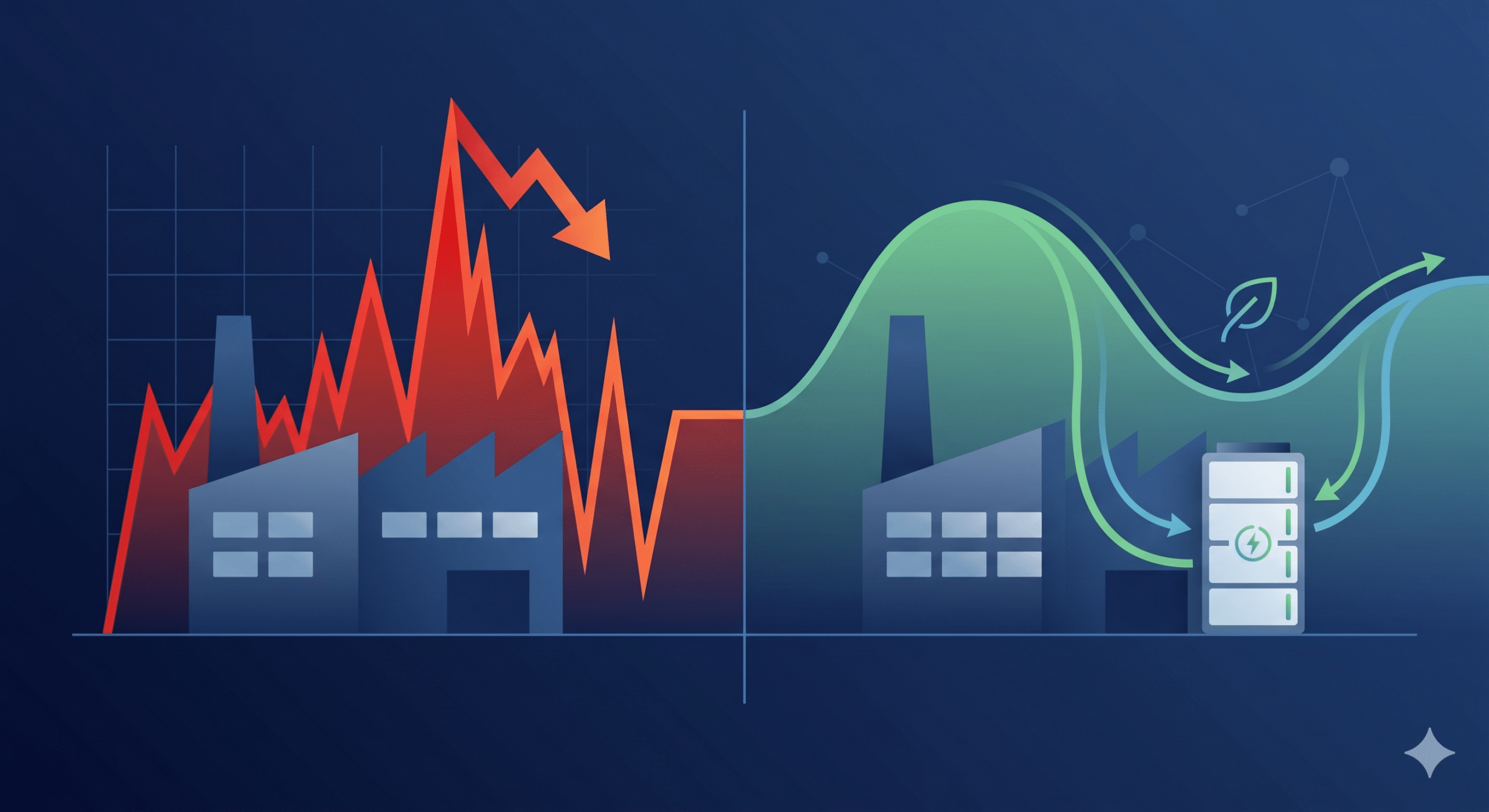
Many companies experience spikes in their energy consumption. These spikes often determine the maximum load on your connection.
By smoothing out those peaks, you create space. Not by doing less, but by distributing your efforts more effectively.
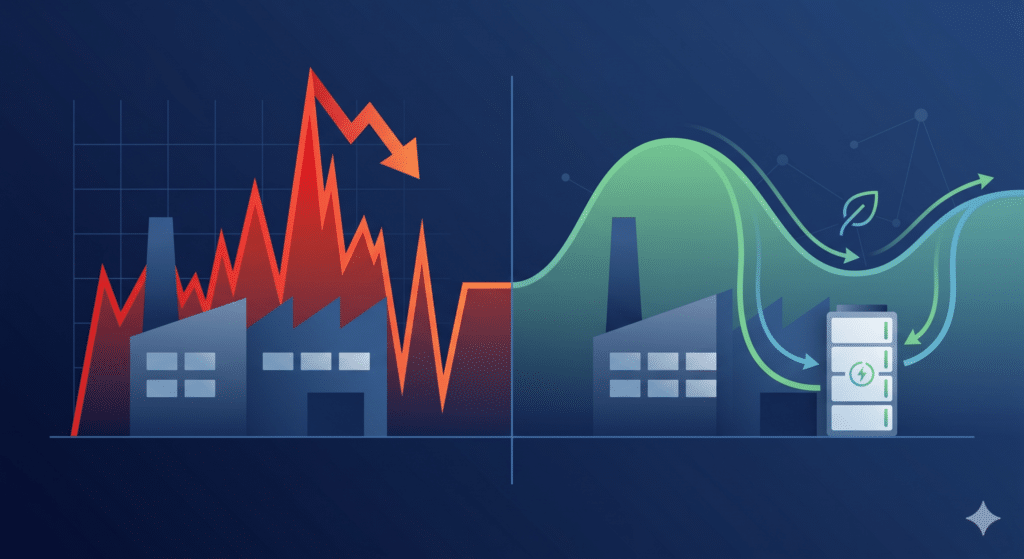
The role of battery storage within Flex-e
How Battery Storage Creates Flexibility
A battery acts as a buffer between generation, consumption, and the grid. You store energy when possible and use it when needed.
This allows you to do more with your existing connection.
Application with the BOLT-241
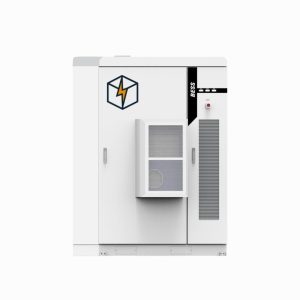
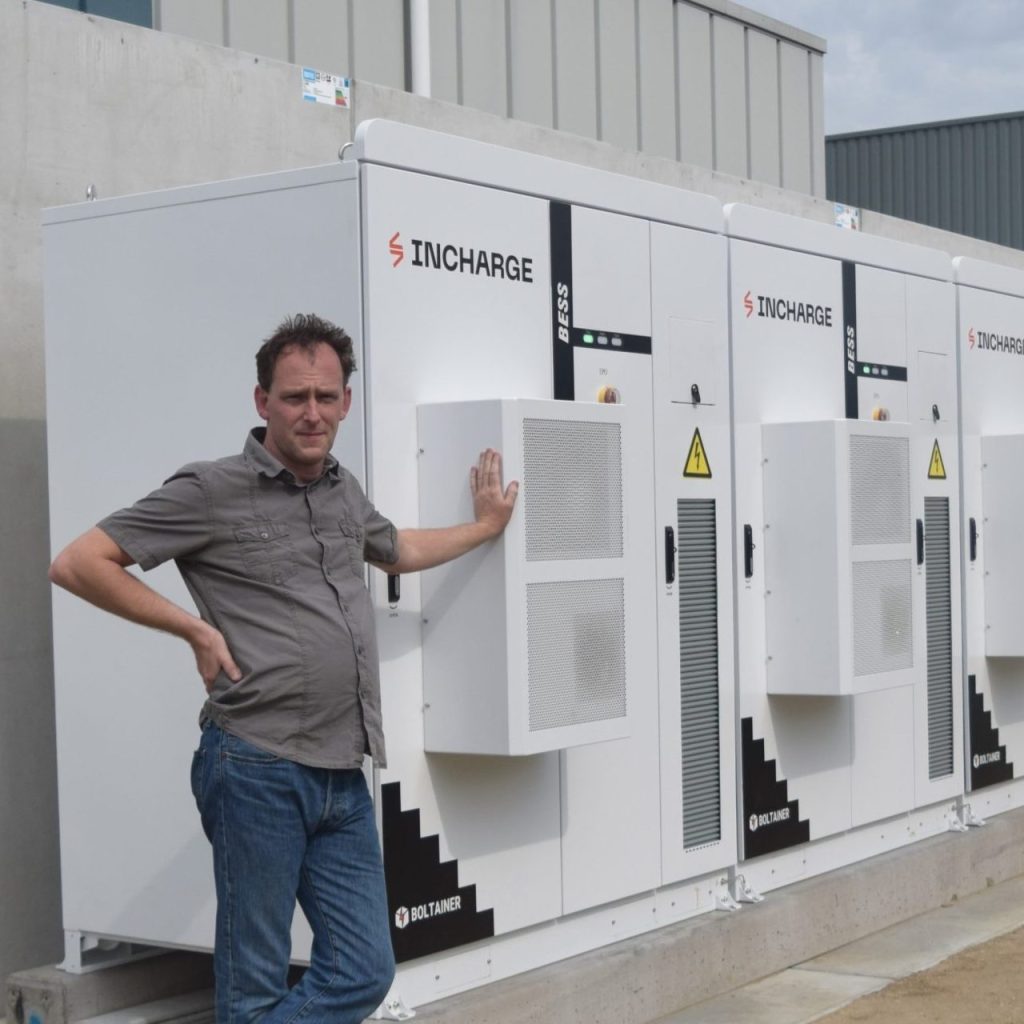
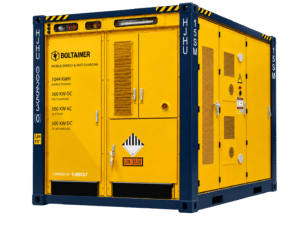
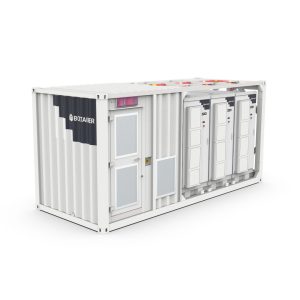
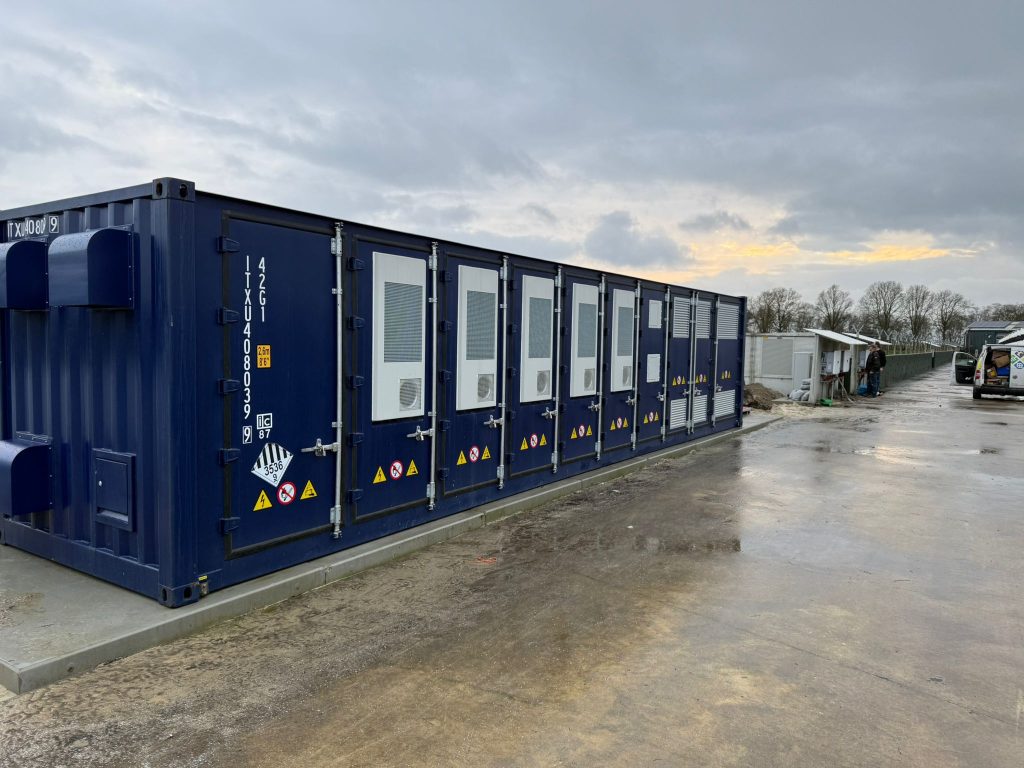
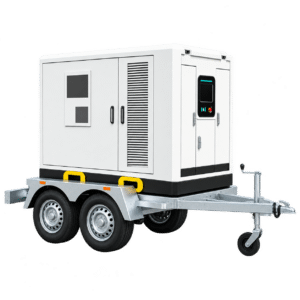
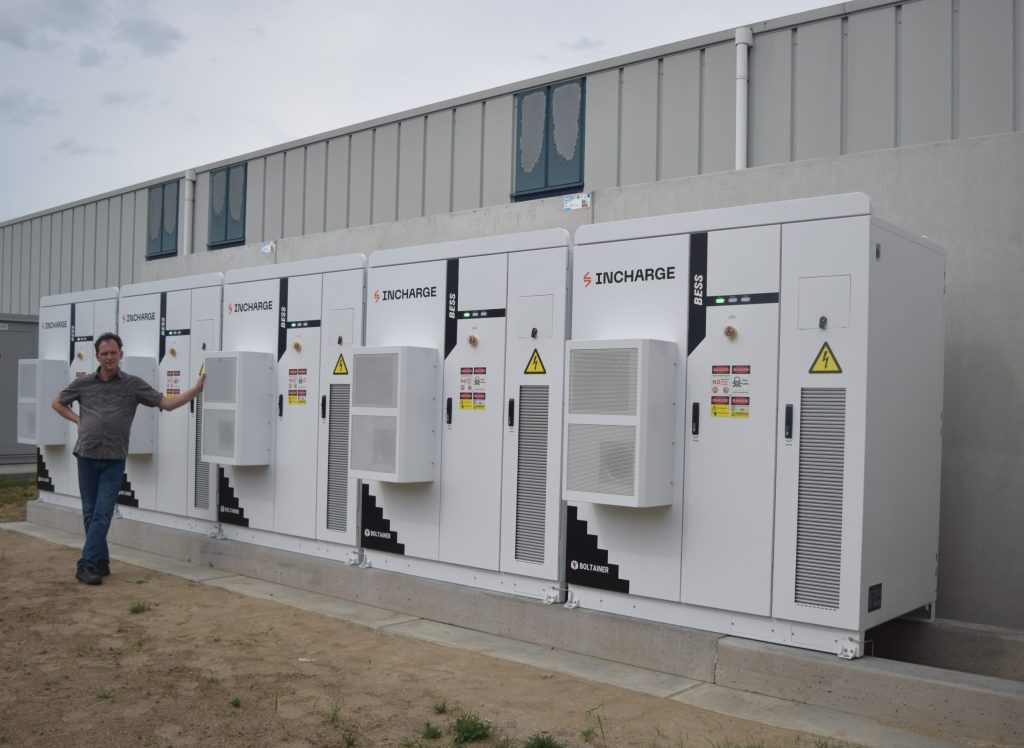
One example of such a solution is thecompact battery solution for Flex-e applications. It falls into the 100 kW category and is therefore designed for quick and practical deployment.
You can achieve flexibility without having to immediately embark on a large-scale, complex project. That makes it a logical first step for many companies.
Under 100 kW vs. over 100 kW: here's the difference
A less complex process for systems under 100 kW
Below 100 kW, the process is relatively straightforward. You don’t need a congestion management contract and are less dependent on external parties.
That means:
- Faster turnaround time
- Less complexity
- More control over the process
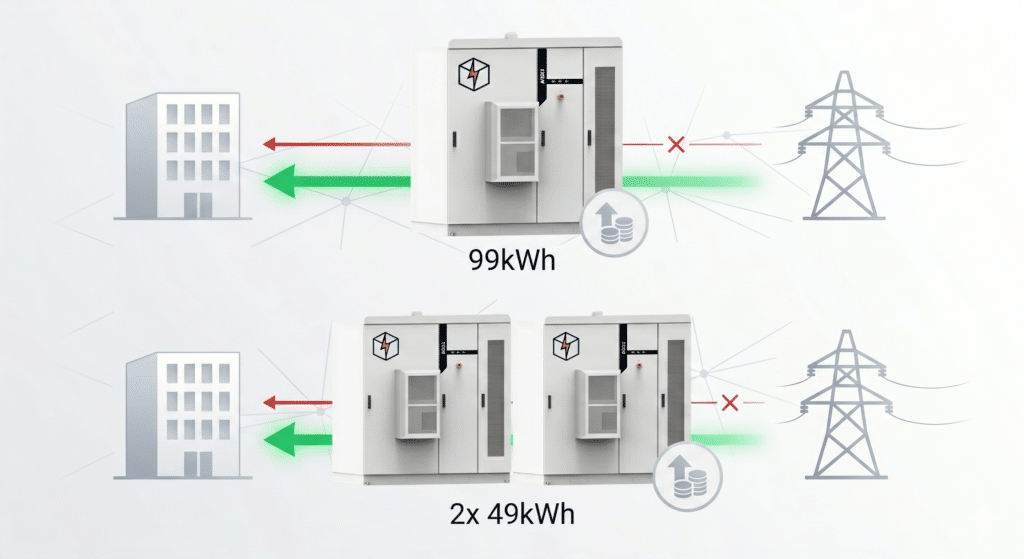
When larger systems are relevant
Above 100 kW, the process becomes more involved. This includes technical studies, contracts, and more coordination. That doesn’t make it impossible, but it does make it more intensive. For many companies, it therefore makes sense to start small at first.
Who might be interested in the Flex-e subsidy?
- Industry and manufacturing: Where energy directly impacts output. If you can’t scale up, you’ll notice it right away.
- Logistics and transportation: Distribution centers and loading areas where energy demand is growing rapidly.
- The agricultural sector and solar energy: Businesses with high generation and feed-in limitations. There is often immediate potential here.
- Companies with charging infrastructure or growth ambitions: Where connectivity is the limiting factor, not ambition.
How does the application process work?
Steps from application to payment
The application process for the Flex-e grant is straightforward, but it does require thorough preparation. In practice, you’ll go through four steps:
1. Submit an application
You must submit the application along with the required documents and a justification for your initiative. In this justification, you should explain how you are creating flexibility and what the impact is on your energy consumption.
2. Review (8–16 weeks)
The application will be reviewed for its merits. This usually takes between 8 and 16 weeks. If approved, you will receive 90% of the grant amount as an advance payment, so you can get started right away.
3. Implementation
Once approved, you will implement the measure. You have up to two years to do so. During this phase, the solution is actually implemented and made operational.
4. Approval and Payment
After completion, you must submit a final report with proof of completion and costs. Once the report has been reviewed, you will receive the remaining 10% of the grant.
Processing time and points to consider
Although the process is straightforward, the complexity often lies in the preparation. A solid rationale makes all the difference.
What documents do you need to submit with your application?
Required documents and supporting evidence
To be eligible for the Flex-e subsidy, you must demonstrate how your initiative contributes to flexible electricity consumption.
In practice, this means that you will need to provide, among other things:
- Insight into your current electricity usage (such as peaks and total demand)
- Explanation of the measure and how it creates flexibility
- Expected impact on your energy consumption and grid load
- For larger systems (>100 kW): a conceptual technical design
- A de minimis declaration (required for state aid)
The bottom line: you need to demonstrate that you’re not just using energy, but also managing it more efficiently.
Practical tips for a strong application
The quality of your application largely determines how quickly and smoothly the process goes.
Important to keep in mind:
- Explain the impact in concrete terms (how will your usage change?)
- Keep it logical and consistent; don't make it unnecessarily technical
- Focus on results: flexibility and grid relief
In practice, the challenge usually isn't the technical aspect, but explaining clearly what you're going to do and why it works.
Real-world examples of flexibility
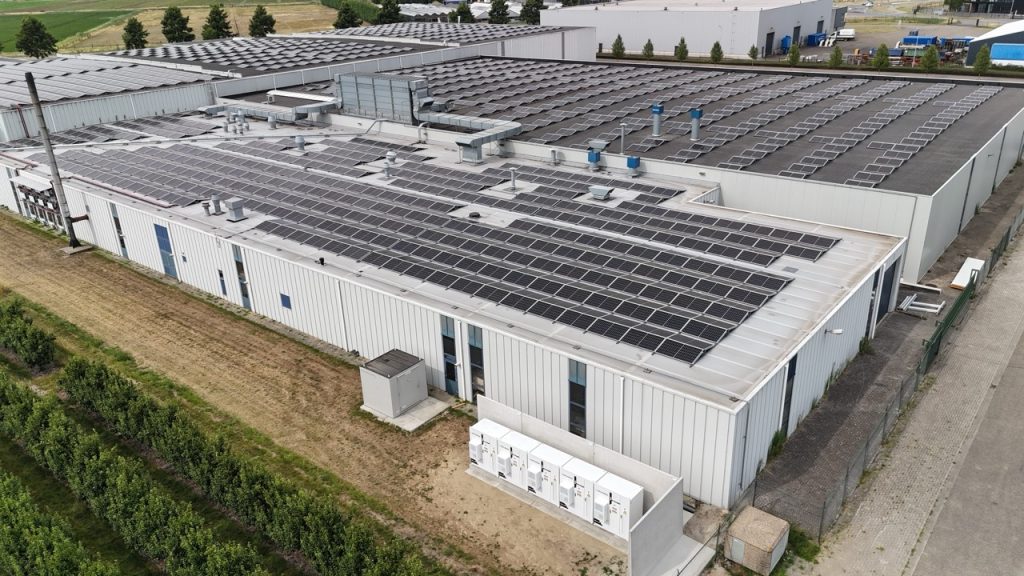
Battery storage at solar farms
In practice, we see that companies using solar energy often encounter issues with feeding excess power back into the grid. By adding storage, energy can be used or sold at the right time.
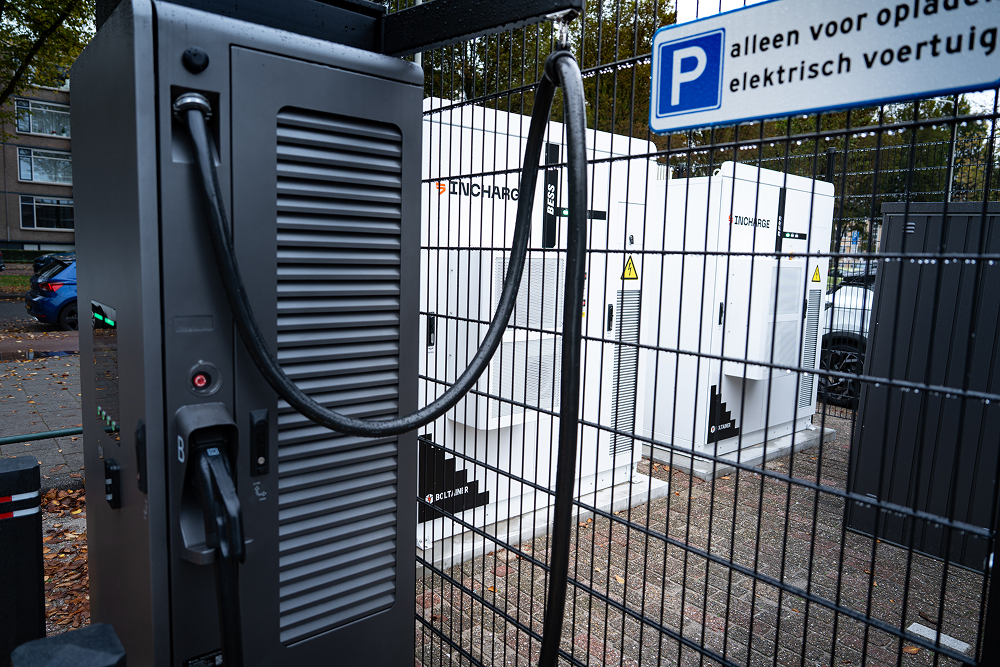
Charging infrastructure with battery solutions
At charging stations, battery storage ensures that multiple vehicles can charge without placing an additional load on the grid.
Frequently Asked Questions About the Flex-e Grant
What exactly is the Flex-e subsidy?
The Flex-e subsidy is a government program designed to encourage businesses to make their electricity consumption more flexible. You can receive a subsidy for measures that help you use energy more efficiently, such as battery storage or energy management systems.
How much funding can I receive?
You can receive a grant of up to 40% of the costs associated with flexibility measures. The grant amount ranges from €25,000 to €300,000, depending on the scope of your project.
Who is the Flex-e subsidy intended for?
The program is intended for businesses with a high-volume connection (GV) located in an area experiencing grid congestion. In addition, your business must use energy as part of its operations and not be primarily engaged in energy trading or generation.
When am I eligible for the grant?
You are eligible if you meet the requirements, such as having a grid connection, being located in a congestion zone, and implementing a measure that creates flexibility. In practice, this can often be quickly assessed with a brief analysis of your situation.
What is meant by flexible electricity consumption?
Flexible electricity consumption means adjusting your energy usage over time. For example, by storing energy when there is capacity on the grid and using it when you have peak loads. This allows you to use your connection more efficiently.
Which measures are covered by the Flex-e scheme?
The subsidy applies to measures that promote flexibility, such as battery storage, energy management, and systems that reduce peak demand. These often involve a combination of technologies that together help ensure more stable energy consumption.
Is battery storage required to qualify for the subsidy?
No, battery storage is not mandatory. However, in practice, it is often an effective way to achieve flexibility, because it allows you to directly control when you use or store energy.
What is the difference between systems rated below and above 100 kW?
For systems under 100 kW, the process is simpler. You do not need a congestion management contract and can get started more quickly. For systems over 100 kW, the process becomes more complex and requires additional requirements and coordination.
How long does the application process take?
Once the application has been submitted, the review process usually takes between 8 and 16 weeks. Upon approval, you will receive an advance payment of 90% of the grant amount. You can then begin implementation.
Do I have to take care of everything myself?
No, in practice, the application process is often guided. This includes assistance with drafting the justification, gathering the necessary documents, and implementing the measure.
What documents do I need to submit with my application?
You must provide an overview of your current electricity consumption and explain how you will achieve flexibility. For larger projects, a technical design is also required. In addition, you must submit a number of standard declarations.
What are the concrete benefits of flexibility for me?
It depends on the situation, but it often leads to lower energy costs, less reliance on the grid, and greater control over your energy usage. In some cases, you can also generate additional income by taking advantage of energy prices.
Is the process complex?
That depends on the scope of the initiative. Smaller solutions are often relatively easy to implement. Larger projects require more preparation and coordination, but can be managed effectively.
Can I combine this grant with other programs?
In some cases, you can combine the Flex-e subsidy with other programs, such as the EIA (Energy Investment Allowance). This depends on your specific situation and the applicable conditions.
When is the Flex-e subsidy less appealing?
The scheme is less relevant if you consume little energy, do not experience grid congestion, or have no plans for growth or electrification. In those cases, flexibility often provides less immediate value.
What is a logical first step?
The first step is to gain an understanding of your situation. What are your limitations, what does your energy consumption look like, and where is there potential for flexibility? Based on that, you can determine whether and which measures are worth considering.
Many questions concern suitability, complexity, and returns. In practice, it turns out that many situations can be assessed more quickly than expected.
Conclusion
The Flex-e subsidy is changing the way you think about energy. Whereas capacity used to be the focus, flexibility is now the priority. For businesses, this means a shift from dependence to control. Instead of waiting for the grid to expand, they can now take the reins when it comes to consumption, storage, and timing.
The combination of subsidies and battery storage now makes this a practical reality. Not for everyone, but for far more businesses than expected. So the question isn’t just whether you qualify, but above all whether you can recognize the moment when it makes sense to take action.
Would you like to learn more? Please contact us.