

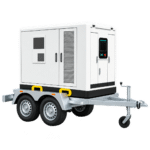
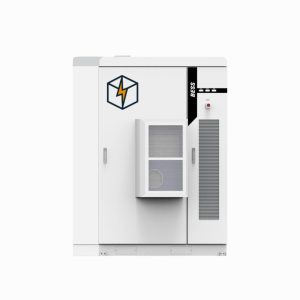

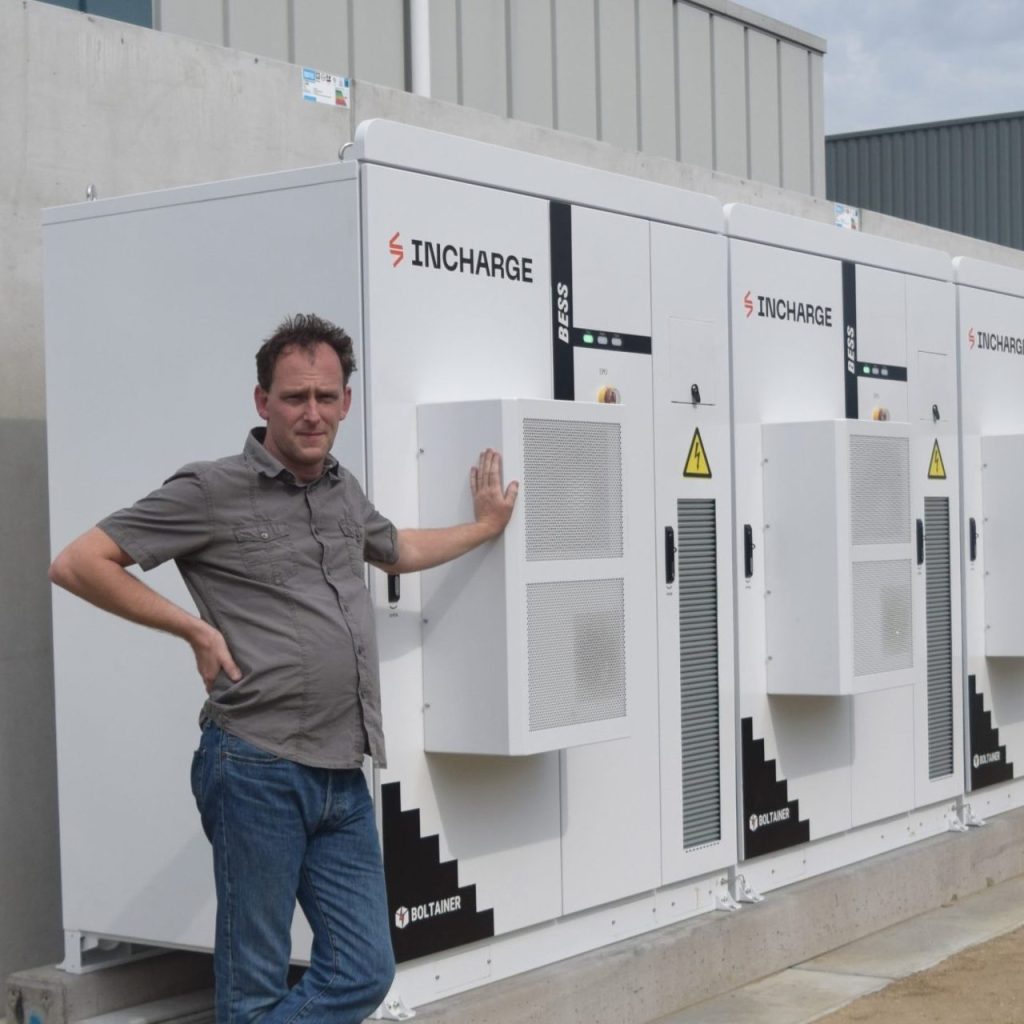
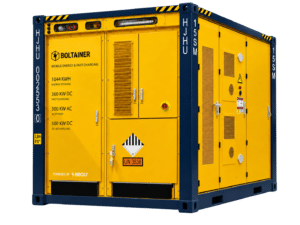
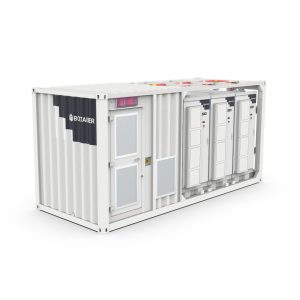
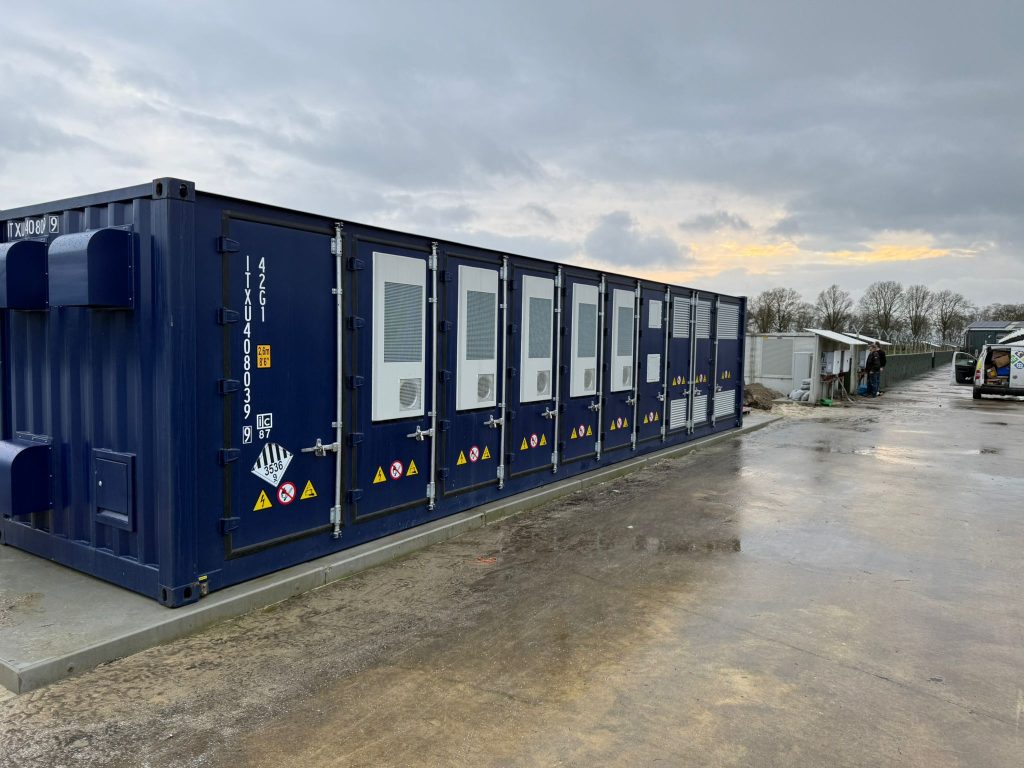
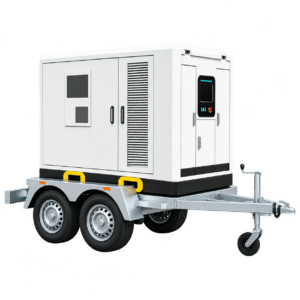
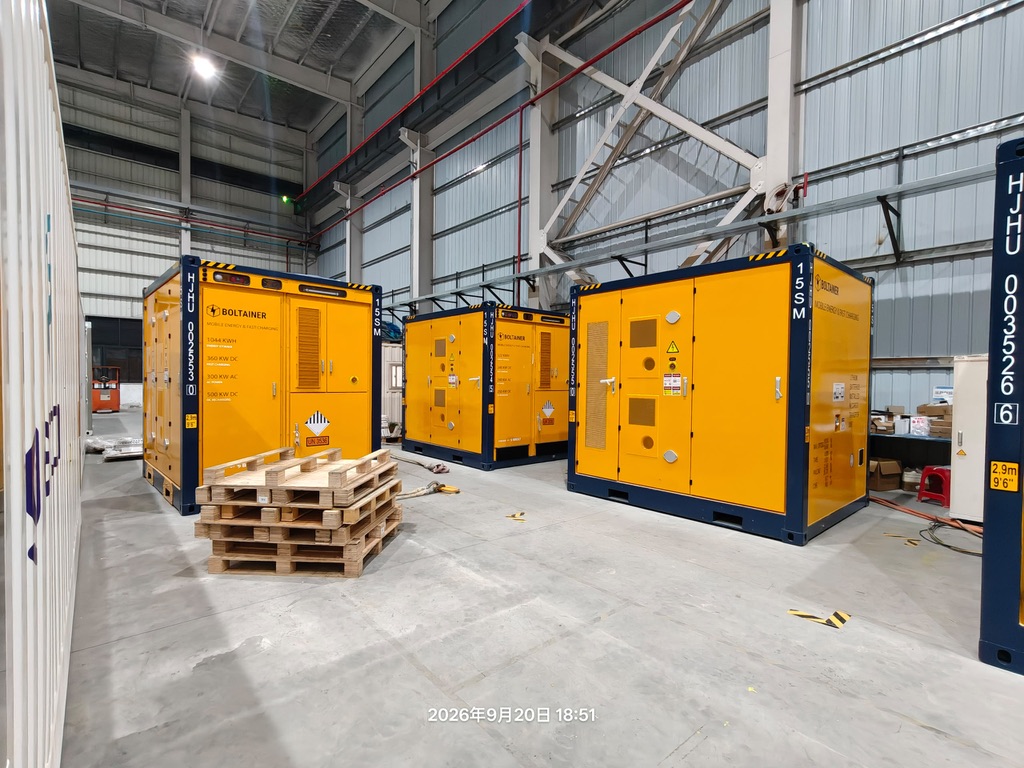
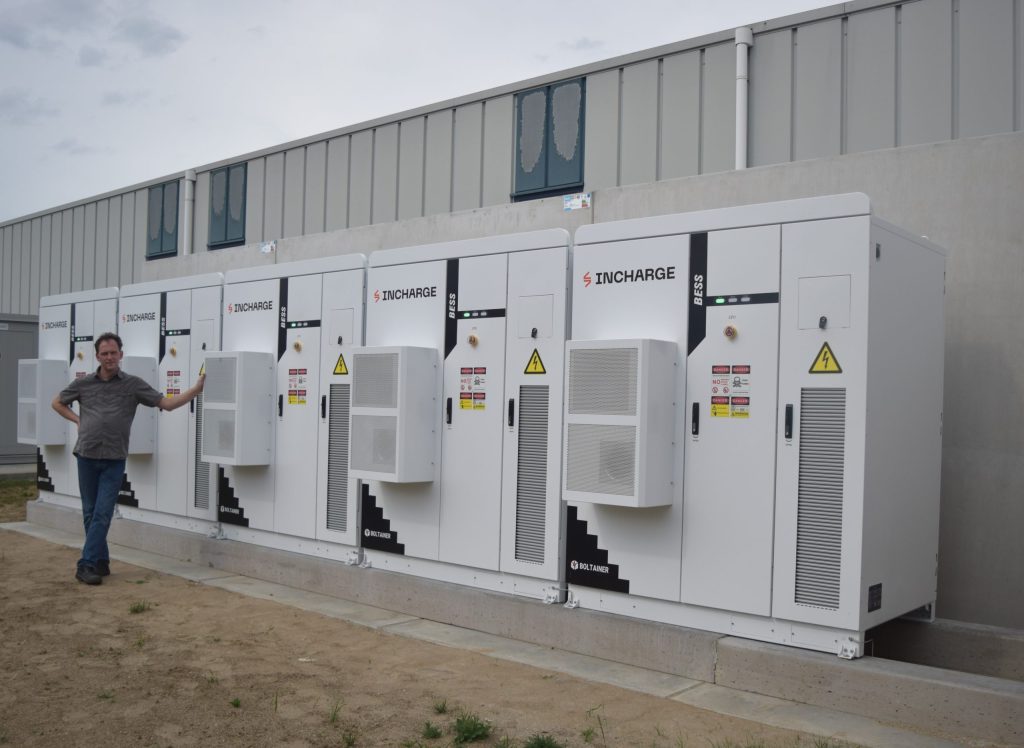
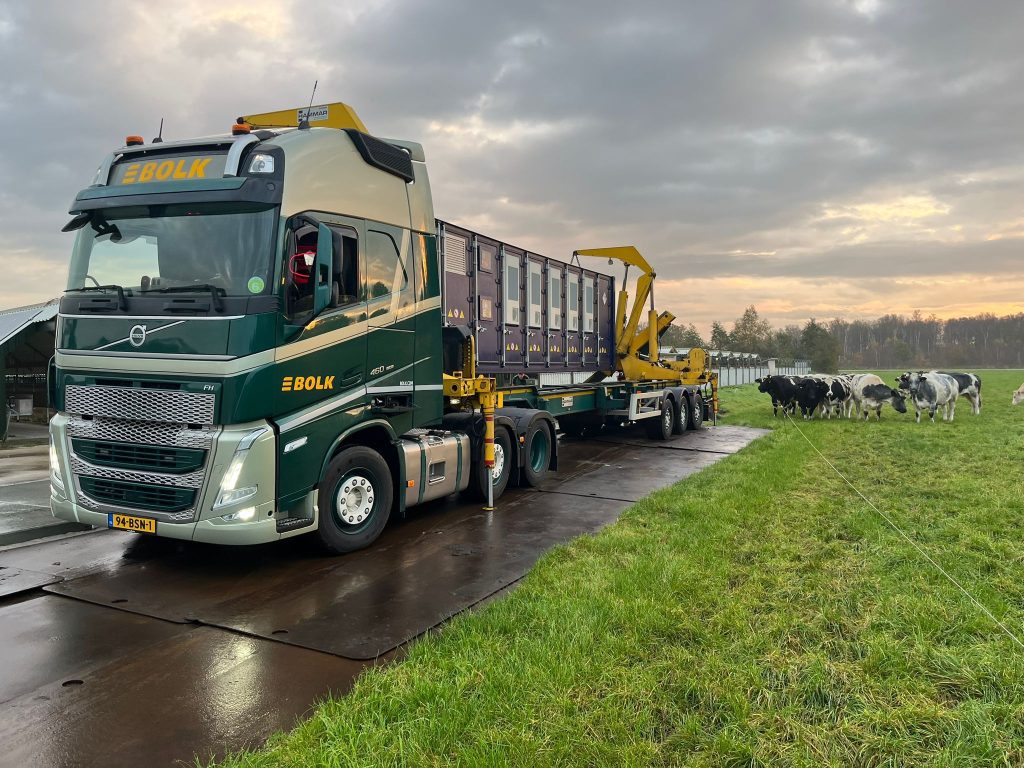


No power connection, but power is needed. How a portable battery provides construction site power, how much fuel it saves, and what its limitations are.
Key fact: On a construction site, the problem rarely lies in total energy consumption but rather in the power demand during peak periods. A mobile battery provides that power without fuel, noise, or on-site emissions, and can be recharged using solar power, a low-voltage outlet, or a generator that is then operating efficiently.
Why Generators on Construction Sites Are Inefficient
A generator is sized to handle the heaviest peak load: the crane hoisting a load, the elevator starting up, the construction heater kicking in. That moment is brief. The rest of the day, that same machine runs at a fraction of its capacity.
That costs money in three ways. Fuel consumption per kilowatt-hour is high at low loads. The machine wears out faster when it’s consistently underloaded. And you pay rent and logistics costs for capacity that you don’t use most of the time.
Added to this are the requirements that clients are increasingly imposing: emission-free operations within built-up areas, noise restrictions in the evening and early morning, and reporting on project emissions.
What a battery is doing on a construction site
- Provides the peak power that cranes, elevators, and tools require for short periods of time.
- Meets the daily demand for lighting, power strips, charging stations, and hand tools.
- Charges using solar panels, a low-power grid connection, or a generator that is then operating at optimal load.
- Carry over to the next phase or the next project.
An off-grid battery is therefore not a stopgap solution but the primary power source, with a generator serving as a backup—rather than the other way around.
What You Need to Determine the Dimensions
| Question | Why It Matters |
|---|---|
| What equipment is in operation, and when? | Determines the simultaneous power |
| What is the starting power of the crane, elevator, and pumps? | The starting current is a multiple of the rated power |
| How many kWh do you use per workday? | Determines the required capacity |
| How can you charge it, and for how many hours a day? | Determines whether you can make it with one unit |
| How long will this project phase last? | Renting vs. Buying: Which Is Better? |
| What are the client's requirements? | Zero Emissions, Noise, Reporting |
Most errors occur in the first two steps. If you base your calculations on the crane’s rated capacity, you’ll run into problems during the first lifting operation. If you assume that everything is operating at full capacity at the same time, you’ll end up buying a system that’s twice as large as it needs to be.
"Hybrid" is usually the honest answer
For a short-term project in the spring with a roof full of solar panels, you can run it entirely on electricity. For a nine-month project starting in November, with a crane operating daily, a hybrid setup is more realistic.
In this setup, the battery meets peak and daily demand, and the generator starts up only to recharge the battery. It then runs at optimal load—which is more efficient—and only for part of the day. That is precisely the difference from the traditional situation, in which the generator runs continuously.
Calculate this in advance. The number of operating hours avoided is the figure your client will use to evaluate you, and it is also the figure you’ll use to compare costs.
Power Requirements at a Construction Site
It helps to divide consumption into three groups, because each group has different needs.
Continuous and low-power. Power distribution, lighting, communications, video surveillance, and frost protection. These systems run day and night and primarily determine your capacity in kWh, not your power output.
Intermittent and heavy-duty. Crane, construction elevator, concrete mixer, pumps. Brief periods requiring multiples of the rated power. This determines your power in kW and is the reason why generators are selected with such a wide margin.
Planned and flexible. Charging electric equipment, construction heating, drying. Here’s what you can control: charging at night, heating during off-peak hours, and scheduling drying when there’s spare capacity.
That third group is your flexibility. The more of it you shift to quieter hours, the smaller the system you’ll need. Make sure to include those arrangements in the construction site layout plan; otherwise, on a busy day, convenience will take precedence.
From the construction site to the completed site
A system that starts on the construction site doesn't have to end there. After completion, the same unit can be used on-site while connected to the grid, for example, for peak shaving or to power charging stations.
For a developer or contractor with multiple projects, the system simply moves along to the next location. That’s what makes the comparison to renting interesting: you don’t pay per project; you own an asset that’s used across projects.
| Project Profile | A logical choice |
|---|---|
| One-time, short | Rental of a mobile system |
| Multiple projects per year | Own mobile system or lease |
| Long-term project, high daily demand | Hybrid with battery container |
| Land that remains in use after completion | System that continues to operate on the grid afterward |
On-Site Safety and Permits
Even a temporary installation exceeding 20 kWh is subject to PGS 37-1. This entails requirements regarding the installation site, distances to power lines and storage areas, and information for emergency services. On a construction site, there are additional practical considerations: the unit must be accessible, protected against being struck by vehicles, and placed on a surface with sufficient load-bearing capacity.
Take care of this at the same stage as the construction site layout plan—not afterward. The documentation should be included with the system, so be sure to explicitly request it from your supplier.
Three phases, three different questions
Phase 1, the rough start. Earthwork and foundations; no utility connections yet; often heavy equipment that runs on diesel. The demand for electricity here is limited but sporadic: the site office, lighting, tools, and the occasional pump.
Phase 2: Construction. The crane and construction elevator are in operation every day; the site is being dried and heated, and there is an increasing amount of electrical equipment on site. This is the most demanding phase and generally determines the scope of the system.
Phase 3: the ramp-down. Many small consumers, hand tools, and HVAC systems being tested. Lower power, but a longer daily demand curve.
Choosing a system in Phase 2 means it’s oversized for Phases 1 and 3. That’s not necessarily a bad thing, but it’s a good time to consider whether a modular setup would work: start with one unit and temporarily add a second one in Phase 2.
What You Can Show Your Client
Emissions-free operations are increasingly becoming a criterion for awarding contracts, so you’ll want to be able to demonstrate this. Three things can help with that:
- Avoided operating hours. The number of hours the generator did not operate, compared to a reference scenario.
- Consumption by phase. The monitoring data shows how much energy was supplied and the sources from which it was drawn.
- Noise at the property line. This is relevant when working in built-up areas, especially during early or late working hours.
Agree in advance on what data you will provide and in what format. It’s easier to work this out at the start of the project than to figure it out later.
Frequently Asked Questions About Construction Power
Can a battery power a faucet?
Yes, provided the system is sized for the starting power and not just the rated power. When a crane is started up, it briefly draws a multiple of its rated power, and that’s exactly where a battery shines: it can deliver short, high power spikes without the system having to be permanently designed to handle them. However, you do need to know that starting power in advance, so be sure to check with the equipment rental company.
How much fuel will I save?
That depends on your load profile and how often the generator is currently running at below capacity. The savings come mainly from the hours when power was supposed to be available but there was hardly any demand for it. So first, measure how many operating hours your generator logs and at what load, because that number determines the savings.
What do I do in the winter when there's not much sun?
In that case, a hybrid setup is almost always the answer, or a system that can be recharged from a low-power grid connection. Another option is swapping: a second unit that is charged elsewhere and replaces the empty one. Which option is best depends on the project duration and the availability of a charging station nearby.
Do I still need a temporary power connection?
Not necessarily, and that’s often precisely the reason to choose a battery. In congested areas, even a low-power connection may end up on a waiting list, while the project continues as usual. If a low-power connection is available, it’s often sufficient when combined with storage, even if it’s too weak on its own.
What about noise in built-up areas?
A battery only makes noise from its cooling system, which is well below the noise level of a running generator. This makes it easier to start early or continue working in the evening and prevents complaints from neighbors. With a hybrid setup, you can deliberately schedule charging times within a window when noise is permitted.
How does the cost compare to renting a generator?
On a daily basis, the rental cost of a battery system is often higher than that of a comparable generator, but the total project costs are frequently lower due to savings on fuel, refueling trips, and maintenance. Another factor to consider is whether your client requires emission-free operation, because in that case, it’s no longer a matter of comparison but a requirement.
Can I also use it to load construction equipment?
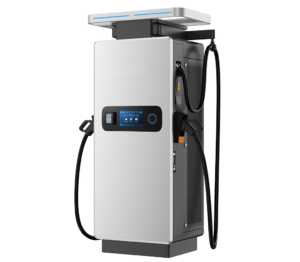
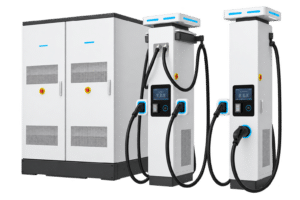
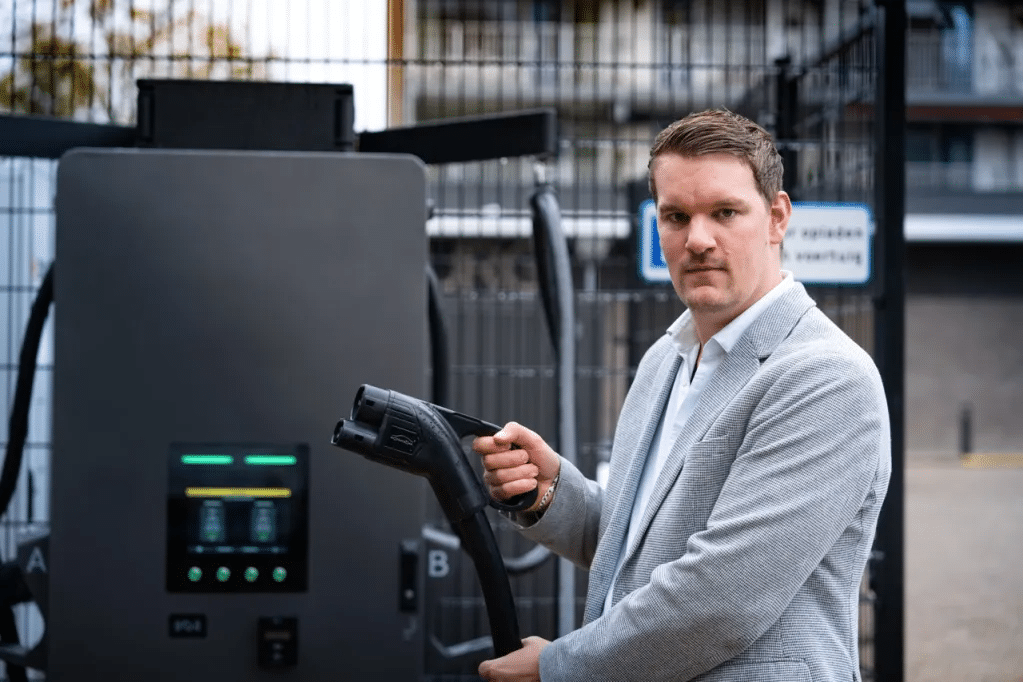
Yes, and that’s becoming an increasingly important application. Electric excavators and delivery vans require a lot of power in short bursts—exactly what a construction site power connection cannot provide. A system with integrated charging combines construction power and charging infrastructure into a single unit.
How quickly can this be arranged?
Mobile systems can generally be deployed quickly because they do not require any connections or foundations. The lead time mainly involves availability, transportation, and coordination regarding setup and safety. Factor this into your construction site schedule, and it won’t be a delaying factor.
 />
 />