




Learn step by step how to calculate the required battery power (kW) and battery capacity (kWh) for your business based on your energy profile and goals.
You’re wondering: “How do I determine the battery capacity my business needs?” Perhaps you’re experiencing grid congestion, want to smooth out peak loads, or are looking for a robust off-grid power supply for a construction site, greenhouse, or logistics center. Without a good understanding of kW and kWh, it’s difficult to compare quotes, run the numbers for a business case, or build a smart revenue model around energy storage.
This page provides practical guidance on how to use raw consumption data and plans to arrive at an initial, well-founded estimate of battery power (kW) and battery capacity (kWh), tailored to your application and industry.
What do we mean by battery power (kW) and capacity (kWh)?
When determining the battery power your business needs, you’ll frequently come across two terms: power (kW/MW) and capacity (kWh/MWh). They seem similar, but they mean different things.
Capacity: how quickly the battery can charge and discharge
Power, expressed in kilowatts (kW) or megawatts (MW), indicates how quickly a battery can supply or draw power from the grid or your system.
Business examples:
- Peak shaving / grid congestion: You need enough kW to cap your peak power.
- Charging electric vehicles: Battery capacity determines how much charging power you can support at one time.
- Whether on a construction site or off-grid, the power output must match the maximum simultaneous load of your machines.
Capacity: the total amount of energy you can store
Capacity, measured in kilowatt-hours (kWh) or megawatt-hours (MWh), is the total “storage capacity” of the battery.
A 500 kW / 1,000 kWh battery can, in theory, discharge at full power for about 2 hours (1,000 kWh ÷ 500 kW = 2 hours).
- Flattening short peaks often requires fewer kWh than kW.
- To store solar energy over several hours or day and night, you'll need a relatively larger amount of kWh.
No one-size-fits-all rule of thumb
Profiles vary greatly by sector, grid connection, and type of production. A farm with milking robots has a different consumption profile than a DC charging hub or a factory. That is why, in practice, a customized simulation is often created—for example, in the form of a simulation report—based on your actual consumption and generation data.
What operational data do you need to determine battery capacity?
A realistic calculation of the required battery capacity starts with good data. Without reliable operational data, a battery can quickly end up being too small (always on standby) or, conversely, unnecessarily large and expensive.
Key Information About Your Usage
Collect at least the following energy data:
- At least 12 months of consumption data, preferably as 15-minute intervals (15-minute profile) per connection.
- Current contracted capacity (kW) with your energy supplier or program manager.
- Historical peak loads: when and how often you approach your contracted capacity.
- Any flexible contracts or market signals (such as time-of-use rates or imbalance management).
Future Plans and On-Site Assets
In addition, the following are essential for sizing:
- Planned expansions: new machinery, cold storage facilities, processes, or production lines.
- Charging infrastructure: number of (future) charging stations, charging capacities, and usage patterns for electric vehicles.
- Solar panels or other power generation sources: installed capacity (kWp) and overall yield profile.
- Grid congestion or flexible connection: restrictions imposed by the grid operator, time windows with limited capacity, temporary construction connections. See also the explanation of grid congestion.
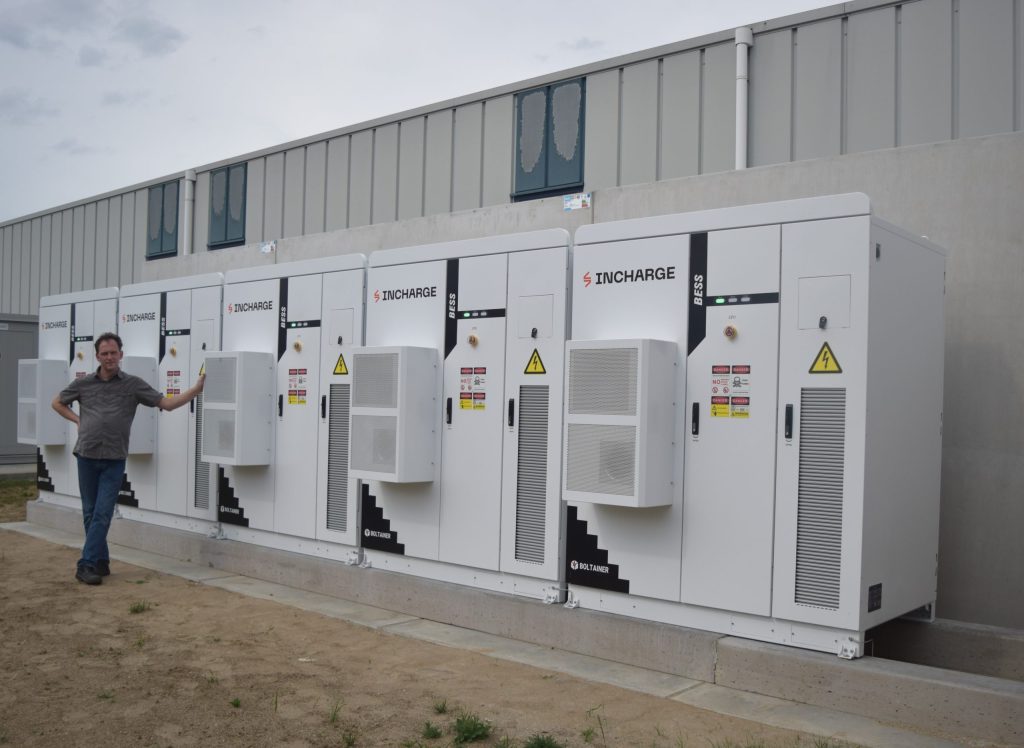
In Boltainer's simulation report, this data is used to simulate the battery's charge and discharge profiles, smooth out peaks, and run simulations for scenarios with and without expansions.
This list is still being validated: [Needs: engineer-reviewed calculation]
Step-by-Step Guide: 4 Steps to an Initial Estimate of kW and kWh
You may be wondering: How do I determine the battery power my business needs? The step-by-step guide below will help you make an initial estimate, so you can have a more focused discussion with your advisor and a Boltainer specialist.
Step 1 – Determine Your Main Goal
Choose one primary purpose for your commercial battery:
- Peak shaving: delaying grid reinforcement or reducing transmission capacity.
- Storing Solar Energy: Feed Less Back into the Grid, Use More of the Energy You Generate.
- Supporting charging infrastructure: providing sufficient charging capacity with limited grid connection.
- Managing grid congestion: generate or charge when it's convenient for you, not just when the grid has capacity.
- (Temporary) off-grid: for example, to power a construction site, event venue, or remote business location.
Your primary goal determines which metric is more important: power (kW) or capacity (kWh).
Step 2 – Analyze Your Peaks (First-Order kW)
Check out:
- your maximum quarter-hourly or hourly average power demand;
- the limit you would ideally like to set on your grid consumption (for example, your current contracted capacity).
The difference between your maximum peak and that desired limit indicates the order of magnitude of the required battery power in kW.
In practice, we see a wide range of kW/kWh combinations, for example, at companies with heavy machinery or multiple fast chargers. [Needs: engineer-reviewed calculation]
Focus on recurring patterns in your measurement data, not on one-time incidents.
Step 3 – How much additional power will you need? (kWh)
Answer the following question regarding your main goal:
- How long do your typical peaks or surpluses last?
- Are they minutes or hours?
- How often do they perform each day or week?
Mentally multiply the order of magnitude in kW by the duration for which you want to be able to supply or store that power continuously. This will give you an initial idea of the required battery capacity in kWh.
Step 4 – Test in Practice and Grow
Compare your kW/kWh estimate with:
- your daily and weekly production or loading schedule;
- expected growth (increased production, electric vehicles, refrigeration systems);
- your desire to be able to scale up in the future.
Please consider this a preliminary indication, not a final design. With acustomized simulation report, Boltainer can accurately analyze your profile and objectively compare scenarios such as peak shaving, grid congestion, off-grid systems, and charging infrastructure.
How does battery sizing vary by application and industry?
Many companies look for a single “right” battery size, even though battery capacity (kWh) and battery power (kW) vary greatly depending on the application. In some cases, kW is the primary factor; in others, it’s kWh—and often a combination of both.
Industry: Peak Shaving and Process Reliability
For industrial companies, the goal is to smooth out short, sharp spikes in consumption.
- Key factor: primarily kW, enough power to handle peaks.
- kWh: enough to cover multiple peaks per hour/shift.
- Crucial: alignment with actual investment profiles, for example through a simulation report.
Farmers and Logistics Real Estate: Shifting to Solar Energy
The goal is often to make greater use of one's own solar energy and to compensate for differences between day and night.
- Key unit: usually kWh (how many hours you want to cover).
- kW: enough to handle both PV feed-in and consumption peaks at the same time.
- Take into account the seasons and how they interact with cooling, ventilation, or charging stations.
Transportation and Charging Infrastructure: High Power and Concurrency
For transportation companies and loading yards, it's all about payload capacity and turnaround time.
- Key factors: kW (charging speed and number of vehicles at once) and kWh (how long you can sustain that).
- Charging sessions often occur during peak hours; the battery then acts as a buffer on a limited connection.
- More background information on yields can be found on the page about transportation and HBE certificates.
Grid Congestion and Flexible Connections
Here, the battery acts as an additional layer on top of a limited connection.
- Lead: kW to stay within the contract limit, kWh to cover congestion hours.
- Often, a hybrid optimization of both kW and kWh is required, tailored to local restrictions and rates. See also the page on grid congestion.
Off-grid construction sites: autonomy measured in hours or days
At construction sites (possibly with a generator or solar panels), the most important factor is how long you want to operate independently.
- Key factor: primarily kWh, determined by hours/days of autonomy.
- kW: sufficient starting power for cranes, elevators, and pumps, plus simultaneous use.
Overview by Sector
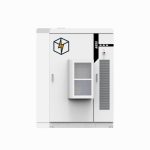
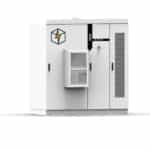
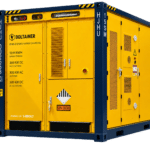
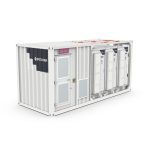
Determining which Boltainer solution (e.g., cabinet, container, or specific type of system) is best suited for each situation requires a custom design based on your profile data. [Needs: engineer-reviewed calculation]
Common Mistakes and When It's Best to Have a Custom Calculation Done
Ultimately, it’s not just about “installing a battery,” but about finding a solution that truly fits your business operations. In practice, things often go wrong here, resulting in costly or limiting choices.
Common Mistakes in Sizing
- Focusing solely on the lowest purchase price: A smaller battery may seem like an attractive investment, but it often has insufficient power (kW) or capacity (kWh). As a result, you cannot sufficiently smooth out peaks, charging points must be scaled back in power, and the business case falls short due to missed savings.
- Confusing kW and kWh: Companies sometimes focus solely on kWh (“how full is the tank?”) or solely on kW (“how fast can I charge?”). When it comes to peak shaving and charging infrastructure, however, both are crucial. A battery with enough kWh but too little kW results in charging bottlenecks and operational limitations; the reverse leads to significant downtime and underutilized investment.
- Failing to Account for Growth If you size your system today based on current consumption or your current fleet of electric vehicles, without looking 3–5 years ahead, your system will become “too small” sooner than planned. This limits expansions in production, vehicle electrification, or the addition of solar panels.
- Incorrect Size in the Event of Grid Congestion In the event of grid congestion, a battery that is too small will be insufficient to compensate for your connection constraints; a battery that is too large without a suitable revenue model will result in a significant amount of unused capacity and a long payback period.
When a Custom Simulation Report Is Useful
Acustomized simulation report is especially necessary when:
- you combine multiple objectives (peak shaving, charging, solar energy, and possibly energy trading);
- your consumption profile is complex (multiple locations, seasonal peaks, shift work);
- this is a substantial investment that you need to justify internally;
- you are dealing with (future) grid congestion or expansion plans.
Would you like to know what battery capacity is right for your business? Request a report or consultation—with no obligation—and have your scenarios analyzed. [Needs: engineer-reviewed calculation]
Frequently Asked Questions
By following the steps described above, you can come up with your own initial, well-founded estimate of the required battery power and capacity. However, the exact specifications depend on detailed measurement data, pricing scenarios, and specialized simulations; with a no-obligation simulation report, your profile will be accurately calculated and tailored to your business situation.
Is there a standard rule of thumb for kW and kWh for commercial batteries?
There is no universal rule of thumb, because consumption and generation profiles vary greatly by sector, location, and application. This article is primarily designed to help you understand the key factors, while Boltainer uses data to calculate a customized configuration and a smart revenue model.
What role does my utility company play in determining battery capacity?
Your contracted capacity, grid congestion signals, and options for flexible or temporary connections determine the parameters for battery sizing. In the explanation of grid congestion, you’ll see how a battery can absorb peaks and how you can coordinate your strategy with your grid operator.
Request a no-obligation simulation report to have an exact calculation based on your consumption and generation data to determine which battery power and capacity will provide the best return on investment and the most flexibility for your business.