




Didn't get any shipping capacity? Here are the seven remaining routes, along with transit times, costs, and when each option is or isn't available.
Key fact: A rejection of your transportation request means there is currently no capacity in your area—not that your plans have to be scrapped. There are seven routes. Four of them work within your existing connection and can therefore be implemented in weeks rather than years.
First: Read the letter carefully
A rejection is rarely just one thing. What it actually says determines which options are still open.
| What the letter says | What It Means |
|---|---|
| No transport capacity available | You will be placed on the waiting list; the date of your completed application will remain the same |
| Congestion zone designated for reduction | It is not possible to purchase additional power. Feed-in is assessed separately. |
| Congestion zone designated for feed-in | Feed-in will be capped. Off-take may still be possible. |
| Area under investigation | The grid operator is investigating whether congestion management can free up capacity |
| Offer for a flexible contract | There is capacity outside peak hours, subject to certain conditions |
Always check to see if there’s a congestion management offer or a flexible contract available. This isn’t always offered proactively, and it’s often the quickest way to get started. Also ask if your service area is included in any expansion plans, because that determines whether waiting is even a viable strategy.
A Comparison of the Seven Options
| Option | Lead time | Costs | Works when |
|---|---|---|---|
| 1. Waiting for network upgrades | Several years, depending on the region and net worth | Connection fee plus a structurally higher standing charge | You can delay your growth |
| 2. Flexible Transportation Contract | Weeks to months | Lower shipping rates, but with restrictions | You can reduce your usage outside of peak hours |
| 3. Make Better Use of Contracted Capacity | Immediately | Advice and measurement data only | Your peak is just a few hours a year |
| 4. Battery Storage with Energy Management | 6 to 8 weeks at law firms | Buy, Lease, or Battery-as-a-Service | Almost always, even as a stepping stone to the other options |
| 5. Energy hub with neighboring companies | 1 to 3 years | Joint investment, legal process | There are companies nearby with a complementary profile |
| 6. Off-grid or hybrid power generation | Soaking | Higher per kWh than utility power | Temporary locations, construction sites, no connection available |
| 7. Relocate to another location | Years | Highest Costs and Risks | All other routes have been examined and ruled out |
An Explanation of the Seven Routes
1. Waiting for network upgrades
The route that requires the least effort and the most time. Grid operators continue to build, but expansion requires land, permits, materials, and technical personnel. The backlog at regional grid operators has now grown to more than 15,000 connection applications, totaling 9,305 MW. That is significantly more than the previous year.
Waiting is a reasonable option if your growth won't take effect for several years and you won't miss out on anything in the meantime. In any case, leave your transfer request as is: submitting it is free, and the date will count later on.
2. Flexible Transportation Contract
In areas where congestion management is implemented, grid operators offer capacity outside of peak hours. You are then given capacity, but with the obligation to scale back at certain times. Without such measures, this means shutting down machines at times you do not choose yourself.
When combined with storage, this turns a risk into an opportunity. The battery bridges the hours during which you need to reduce your consumption, allowing your process to continue uninterrupted. Ask your utility provider which contract types are available in your area and what the corresponding rates are.
3. Make Better Use of Your Contracted Capacity
Many companies have more capacity than they realize. Not everything has to happen at once: start up high-power consumers in phases, schedule charging outside of peak production hours, and spread energy-intensive batches throughout the day. This requires no investment, just agreements and discipline on the shop floor.
Start with your 15-minute time values for a 12-month period. This usually reveals that the bottleneck lies in a few dozen hours per year, caused by a handful of concurrent processes. These insights also form the basis for every subsequent step.
4. Battery Storage with Energy Management
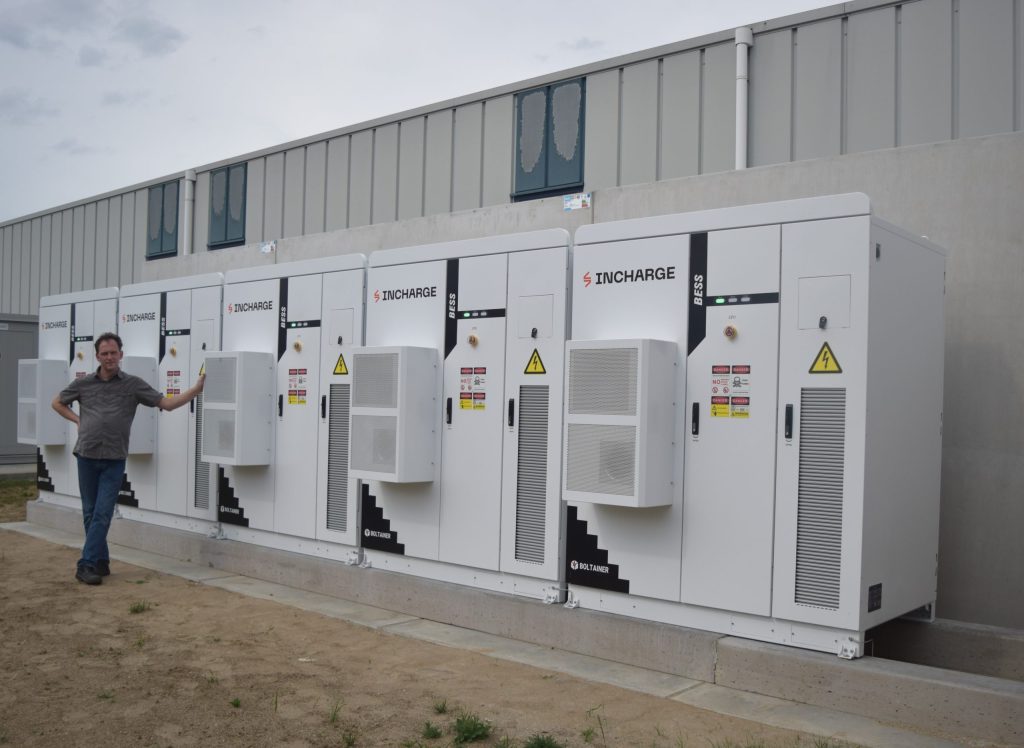
A battery absorbs the peak demand, keeping your grid draw steady. Within the same contracted capacity, you can run heavier equipment, install fast chargers, or add a production line.
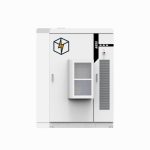
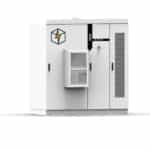
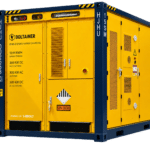
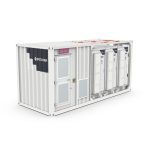
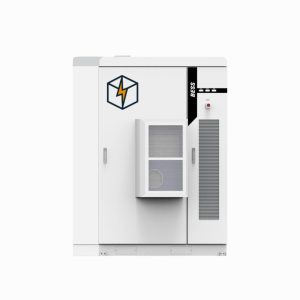
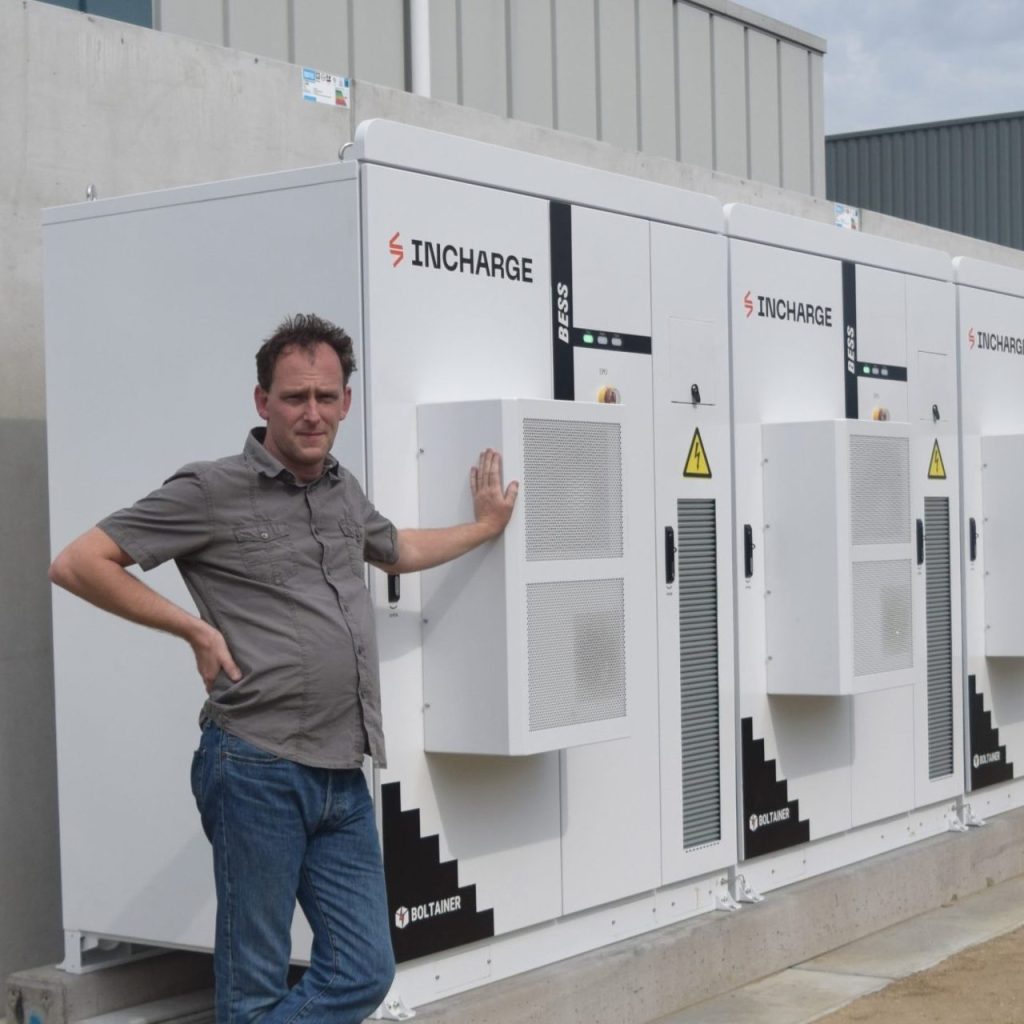
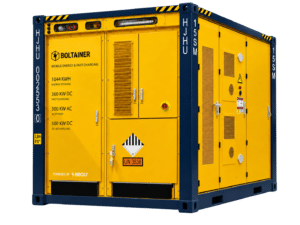
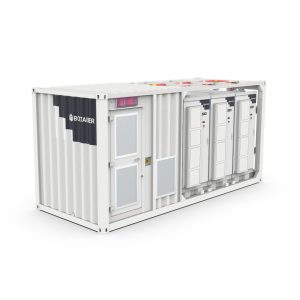
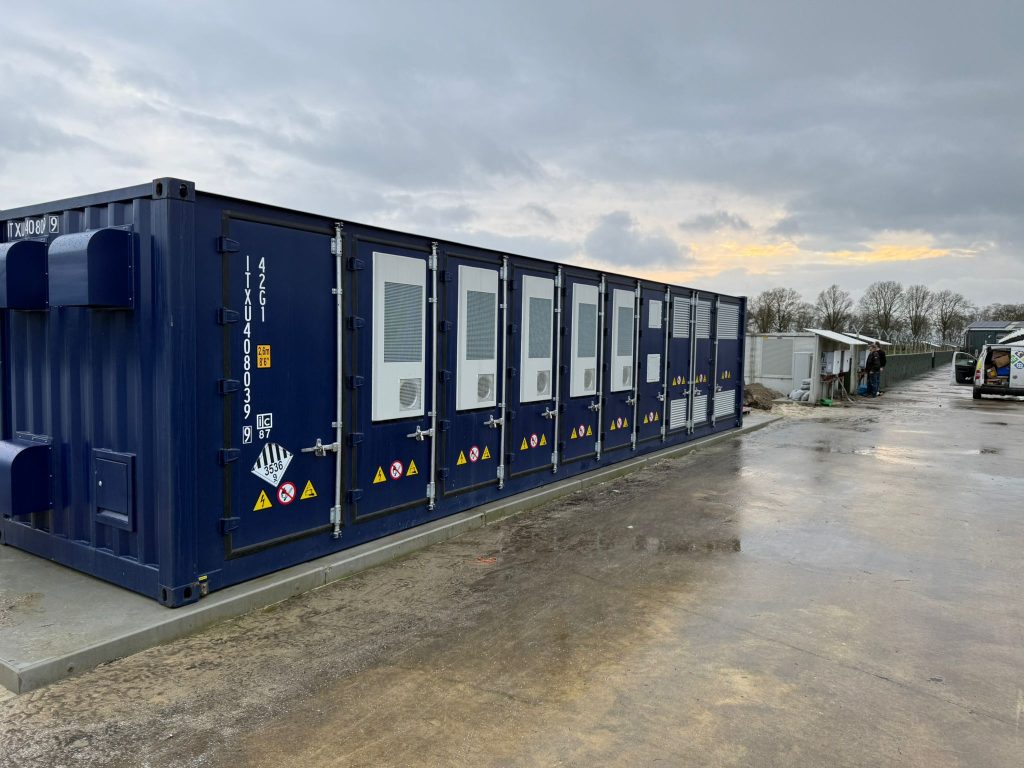
In most cases, this is the quickest route to space, and it also serves to reinforce options 2 and 3. Cabinets are often available directly from stock and are typically operational within 6 to 8 weeks after the project plan is approved. Containers have a longer lead time.
5. Energy hub with neighboring companies
In business parks where companies’ profiles complement each other, it can be worthwhile to share capacity. One company experiences peak demand in the morning, the other in the afternoon, and together you can make better use of the connection. This does, however, require a legal structure, agreements on how to share capacity, and a long-term commitment. Expect it to take years rather than months.
6. Off-grid or hybrid power generation
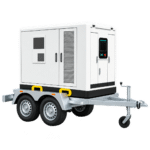
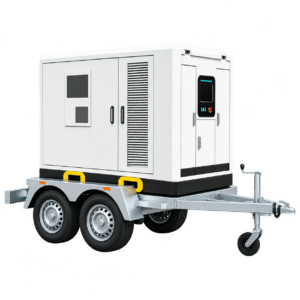
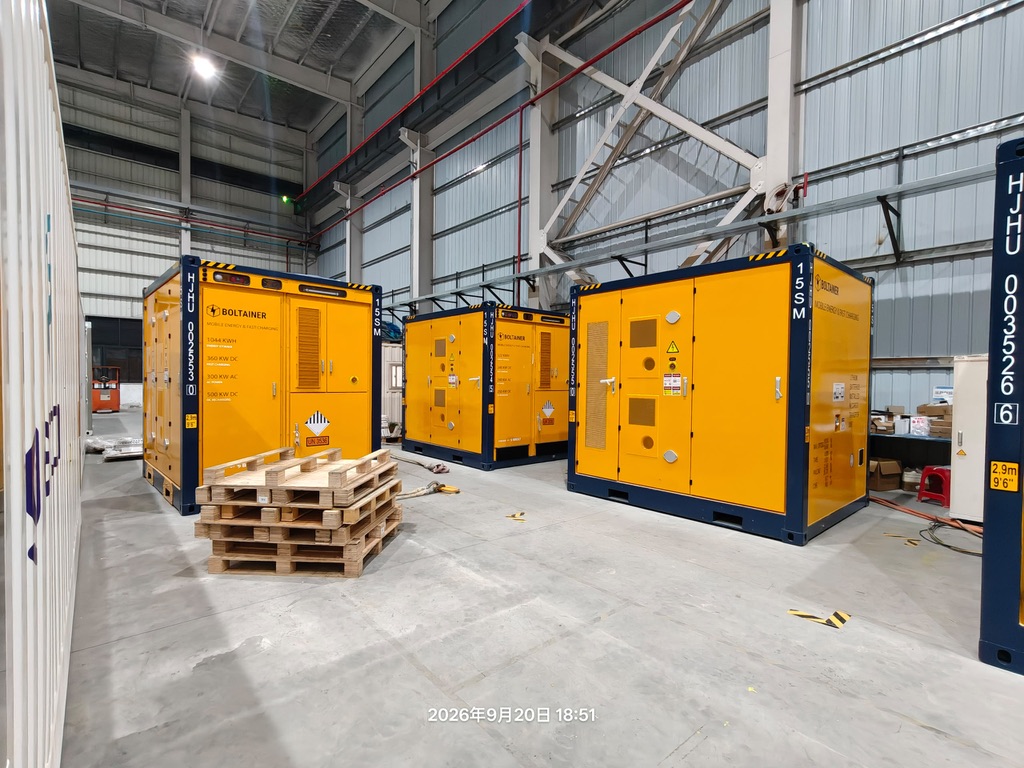
On construction sites, temporary locations, and sites without a power connection, this is often the only viable option. A mobile battery, with or without a generator, provides power where the grid doesn’t reach and, in many cases, replaces some of the diesel generators. The cost per kilowatt-hour is higher than that of grid power, but for projects with no alternative, that isn’t the relevant comparison.
7. Relocate to another location
Relocating to an area with available space has become a realistic option for some companies. However, it is by far the most expensive way to solve a capacity problem. Be sure to factor in not only the cost of the move itself, but also new construction, permits, staffing, and the risk that the new location could still run into delays during the process.
Which route is best for which bottleneck?
| Your situation | Most logical route |
|---|---|
| Short, high peaks; otherwise, plenty of room | Options 3 and 4 |
| I was offered a flexible contract | Option 2, combined with Option 4 |
| Limits on Feed-in | Option 4, focused on self-consumption |
| A structurally higher base load is needed | Option 1, with Option 4 as a stopgap measure |
| Temporary location or construction site | Option 6 |
| Business park with complementary neighbors | Option 5, in addition to Option 4 |
Which solution goes with which bowl?
| Required power | Appropriate form |
|---|---|
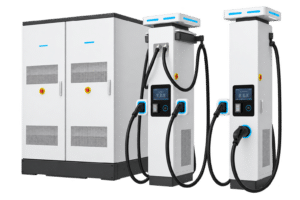
| Up to several hundred kW | An energy storage cabinet that can be expanded in parallel |
| Hundreds of kW to well over one MW | A battery container with integrated inverters |
| Heavy-duty industrial processes | A megawatt-class industrial battery |
| Charging stations on a single site | Storage behind a loading dock, so your connection remains the same |
The type of plan you'll get depends on your profile and your location, not on the price per kWh.
Things You Can Do This Week
- Request your quarter-hourly readings for the past twelve months from your utility company.
- Look for the contracted transmission capacity and connection capacity on your grid operator's bill.
- Check your location on the capacity map, both for consumption and for generation.
- Call your grid operator and ask three questions: Is there an offer for a flexible contract? Is my area included in an expansion plan? And what is the status of the congestion study?
- Have them calculate how much power and capacity you'll need to stay within your current limits while accommodating your plans.
By following these five steps, you'll have a clear idea within a week of which of the seven paths is realistic for you.
Frequently Asked Questions After a Rejection
Can I appeal the rejection?
You can ask the grid operator to provide a justification for the refusal, and in the event of a dispute, you can file a complaint with the ACM. In practice, this rarely speeds up the process, because the refusal is usually not unjustified but stems from a physical shortage. A request for priority or a discussion about a flexible contract typically yields results more quickly. Reserve the legal route for situations in which you suspect that the procedure was not followed correctly.
Do I need to cancel my shipping request if I'm installing a battery?
No, leave the request as is. The date of your complete application determines your place in line, and a higher connection capacity may still come in handy later, for example, if your base load grows over time. If the calculation shows that you’ll need less additional capacity with the surcharge, you can adjust your request downward if necessary. Sometimes that improves your chances, because smaller requests can be accommodated sooner.
Is a battery still cost-effective if I end up upgrading anyway?
That’s often the case. Even after scaling up, the system continues to deliver value through lower peak costs, higher self-consumption, and smarter purchasing under a dynamic contract. In addition, you may be able to scale up to a lesser extent because you’re already smoothing out the peaks. Furthermore, a mobile system can be moved to another location or project.
What if I don't want to invest any capital?
A commercial battery is also available without an upfront investment, through a service plan. You pay a fixed monthly fee, and Boltainer retains ownership of the system, including maintenance, monitoring, and warranty. Over the entire term, you’ll pay more than you would with a direct purchase—just as you would when leasing other business assets—but you don’t tie up capital, and you shift the residual value risk.
How long will I remain on the waiting list?
That depends on your service area, the requested power, and whether capacity becomes available. Grid operators do not make any commitments in this regard, precisely because the release of capacity depends on grid expansion and on users returning capacity. On the capacity map, you can see, for each service area, how many requests there are and how much power is involved. This provides a more realistic picture than a general waiting time.
Does this also apply to smaller connections?
That has been the case since July 1, 2026. Until that date, grid operators reserved capacity for connections up to and including 3×80 amps, which allowed small consumers to be connected more quickly. That reservation has expired, and everyone in a congestion area is now placed on the same waiting list. Therefore, even a modest increase in capacity is no longer guaranteed.
Can I upgrade the battery later?
Yes. Cabinets can be expanded in parallel, and containers are modular in terms of capacity and power. It’s wise to take space, cable routing, and infrastructure capacity into account right from the initial design phase, so that adding a second unit doesn’t turn into a whole new project. If you grow faster than expected, you can simply add more units instead of replacing the existing ones.
How do I know which option will be most beneficial for my situation?
That depends on your consumption profile and your plans, not on a rule of thumb. In a simulation report, we calculate your quarter-hourly rates, contract type, and contracted capacity, and we compare the different options side by side—including the scenario in which you take no action. This also provides you with the supporting data you need internally to make an investment decision.
 />
 />