What is network congestion, and why is it a problem?
Grid congestion occurs when the power grid can no longer meet the demand for electricity. This is because more and more businesses and households are switching to renewable energy, electric vehicles, and the electrification of processes. As a result, the grid’s capacity becomes overwhelmed, and energy cannot always be drawn from or fed back into the grid when needed.
Grid congestion hinders growth, increases operational costs, and makes businesses dependent on an unstable grid. A smart battery solution helps optimize energy usage and circumvent grid constraints.
"Companies are increasingly losing control over their energy and efficiency"
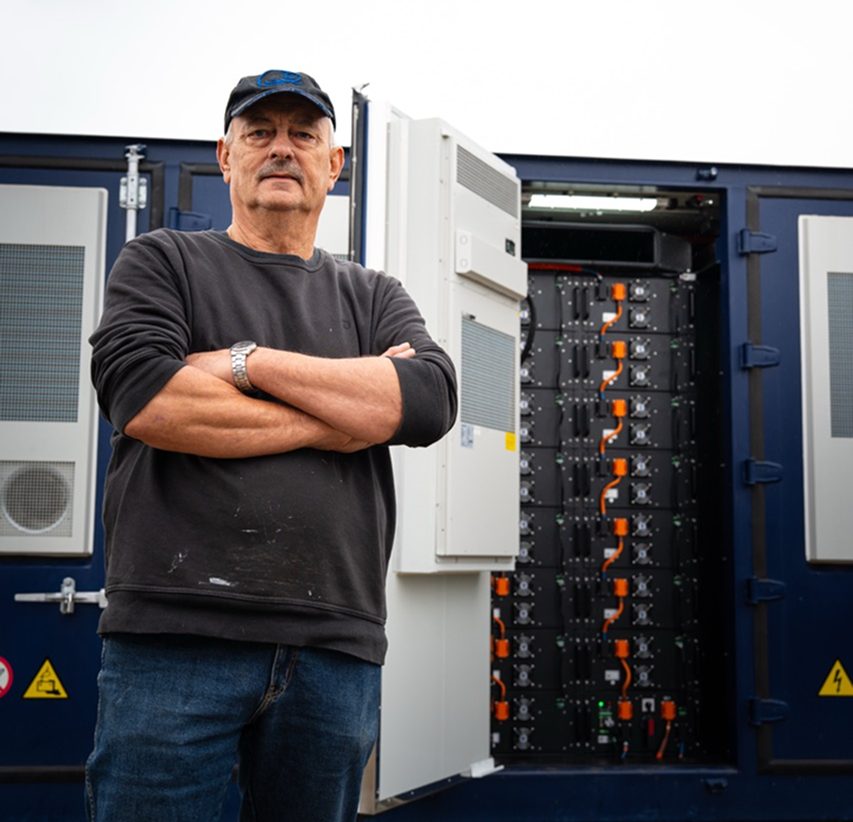
“Grid congestion and rising energy costs are forcing companies to adopt a different approach. Without control over your energy supply, it’s becoming increasingly difficult to operate efficiently. Using energy wisely is no longer a choice, but a necessity.”

Orlando
Co-founder of Boltainer
Limited network capacity is holding back growth
The power grid was not designed to handle large-scale local generation and consumption. Due to limited grid capacity, businesses are unable to obtain additional connections, which brings expansion or electrification to a standstill. This hinders growth and forces businesses to seek alternative solutions to ensure their energy security.
Overload caused by feed-in costs money
On sunny and windy days, more energy is sometimes generated than the grid can handle. This means that companies cannot feed their surplus solar energy back into the grid or must sell it at low rates. As a result, investments in renewable energy become less profitable and opportunities for savings are lost.
Growing demand for energy
Demand for electricity continues to rise due to the electrification of industry and transportation. Because of limited grid capacity, peak periods are becoming increasingly expensive, resulting in higher fixed charges and additional grid surcharges. Inefficient energy management thus leads to unnecessarily high costs and dependence on expensive grid connections.