Smart battery with Dutch software
Can be installed in any room
No more negative energy hours
Take control of your energy usage

DC fast chargers: Charge in minutes, even with limited grid capacity

For drivers of electric vans, buses, or trucks, a charging station that takes hours to charge is of little use. A DC fast charger can charge a vehicle during a break or while loading and unloading, ensuring that vehicles remain operational throughout the day.

The challenge rarely lies with the charger itself, but rather with the utility connection. Fast charging requires a high amount of power for a short period of time—often more than a commercial connection can supply at once. Which fast charger is right for you therefore depends on your vehicles, the number of charging points, and the capacity of your utility connection.

DC fast chargers: Charge in minutes, even with limited grid capacity

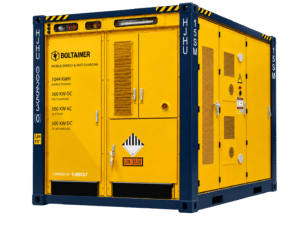
A DC fast charger converts the alternating current from the grid into direct current and supplies it directly to the vehicle’s battery. The on-board charger, which limits power output during AC charging, is bypassed in this process. This allows a vehicle to charge at hundreds of kilowatts, rather than the 11 to 22 kW of a standard AC charging station. Boltainer offers three DC fast chargers, each designed for a different power level.

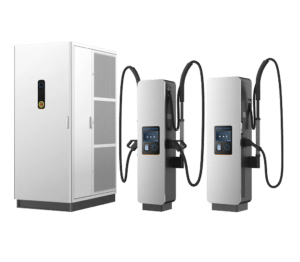
The BOLT-DC180 is designed for businesses, fleets, and public charging stations where vehicles stop briefly. With a maximum output of 180 kW and the ability to support two simultaneous charging sessions, you can charge two vehicles at the same time—for example, during a break or between trips.

Where multiple vehicles are charging at the same time, the BOLT-DC480 is the logical choice. This fast charger dynamically distributes up to 480 kW across a maximum of four charging points. It is designed for logistics hubs, charging plazas, and intensive commercial use.

For heavy-duty transport and large-scale charging stations, there’s the BOLT-DC1000 MCS. It delivers up to 1,000 kW per cabinet—expandable to 3,500 kW—across up to twelve charging points. Passenger cars, vans, and e-trucks can all charge on a single system, and thanks to MCS, the charger is ready for megawatt charging.

Which fast charger is right for you depends on four factors:

  • how many vehicles need to be charged at the same time
  • how long a vehicle is stationary and how much fuel it needs during that time
  • the capacity of your current utility connection
  • the peaks that fast charging adds to your existing energy consumption
Get a free simulation report

From a single fast charger to a charging plaza

Most companies start with one or two fast chargers for their first fleet of electric delivery vans or trucks. Each additional vehicle requires extra charging stations and more power.

When installing your first fast charger, therefore, be sure to plan for expansion: allow for space in the installation, prepare cable routes, and use software that automatically incorporates new charging points into the power distribution. This way, you can expand step by step—from a BOLT-DC180 to a BOLT-DC480 or a BOLT-DC1000—without having to start over.

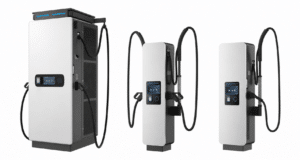
BOLT-DC180 Charging Station

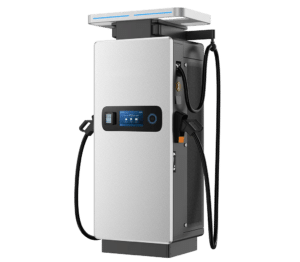
The BOLT-DC180 is a DC fast charger designed for businesses, fleets, and public charging stations where vehicles stop briefly and need to be back in service quickly. It delivers up to 180 kW and can charge two vehicles at the same time, so you can use a break or a stop between trips to recharge.

Discover the charging station

Dynamic power distribution automatically directs the available power to the vehicle that needs it at that moment. Management is handled via OCPP, ensuring that the BOLT-DC180 integrates with the charging software you already use. The housing is suitable for both indoor and outdoor installation.

  • Maximum DC charging capacity of 180 kW
  • 2× CCS2, two vehicles at a time
  • Dynamic Power Distribution
  • OCPP 1.6J, ready for OCPP 2.0.1
  • IP65 and IK10 for heavy-duty outdoor use
  • Manage it through your existing charging software

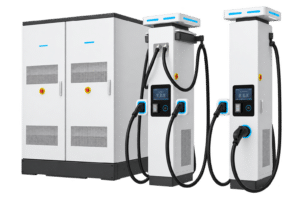
BOLT-DC480 Charging Station

The BOLT-DC480 is a DC fast charger designed for charging plazas, logistics hubs, and locations where multiple vehicles charge simultaneously. It delivers up to 480 kW, distributed across a maximum of four charging points. This allows you to charge a larger portion of your fleet at the same time, without vehicles having to wait for one another.

Discover the charging station

Power is distributed among the charging points in 40-kW increments, depending on each vehicle’s current demand. Real-time monitoring lets you see how charging is progressing at each charging point. If more vehicles are added, you can expand the configuration without replacing the existing setup.

  • Maximum DC charging capacity of 480 kW
  • Up to 4 charging points
  • Dynamic power distribution in 40-kW increments
  • OCPP 1.6J, ready for OCPP 2.0.1
  • Real-time monitoring and charging management
  • Built for 24/7 use

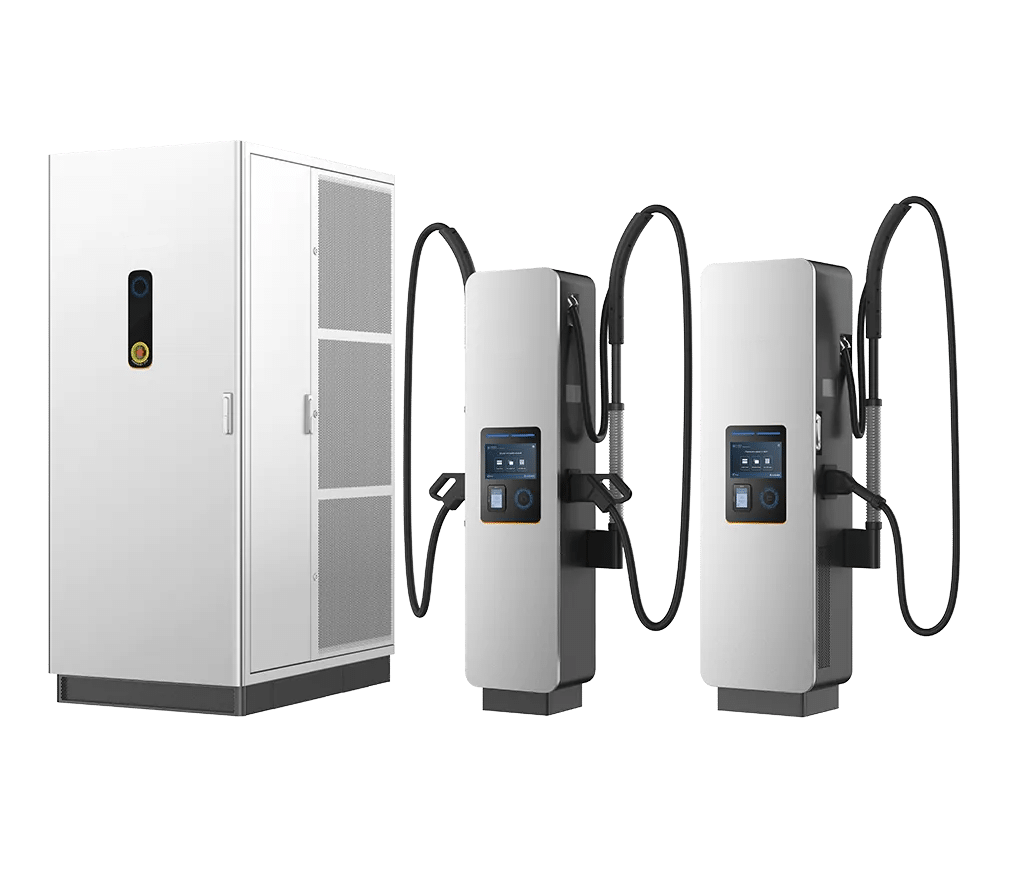
BOLT-DC1000Charging Station

The BOLT-DC1000 MCS is a DC fast-charging system designed for large-scale charging plazas, logistics hubs, and public fast-charging stations. A single power cabinet delivers up to 1,000 kW, distributed across up to 12 charging points. Because the system supports both CCS2 and MCS, passenger cars, vans, and heavy-duty e-trucks can charge simultaneously at the same installation.

  • Up to 1,000 kW per cabinet, expandable in parallel up to 3,500 kW
  • Up to 12 vehicles at a time
  • CCS2 and MCS (Megawatt Charging System, up to 1,500 A)
  • Liquid-cooled SiC modules with an efficiency of up to 97%
Bolt DC1000 MCS

BOLT-DC1000<span>Laadpaal</span>

Combining Fast Chargers with Energy Storage

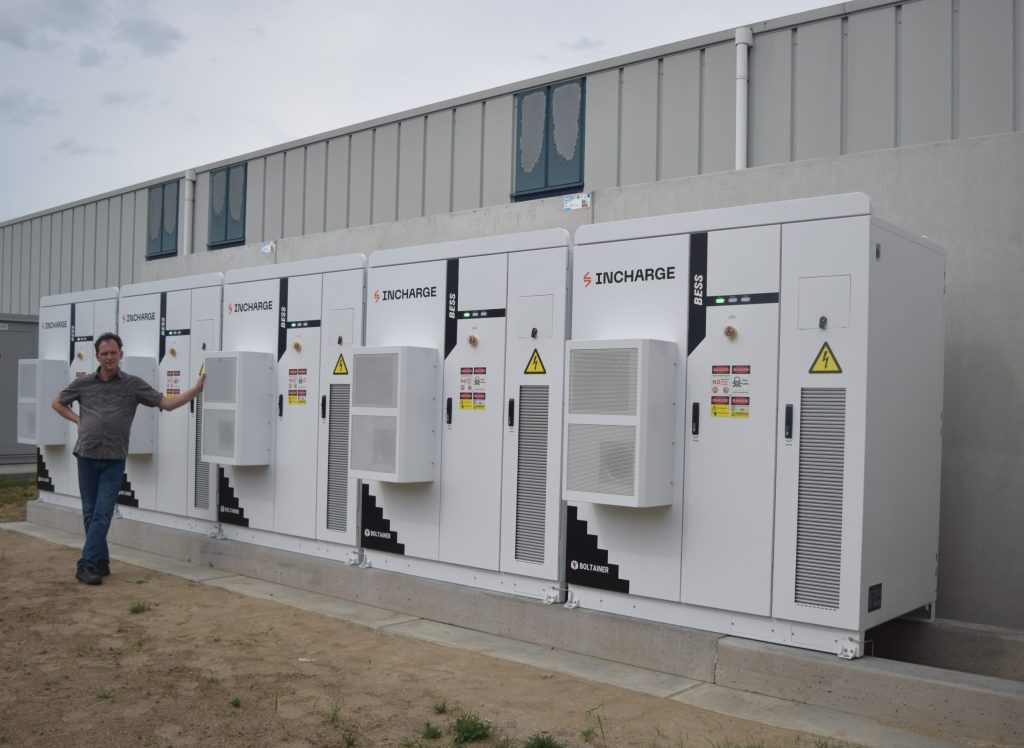
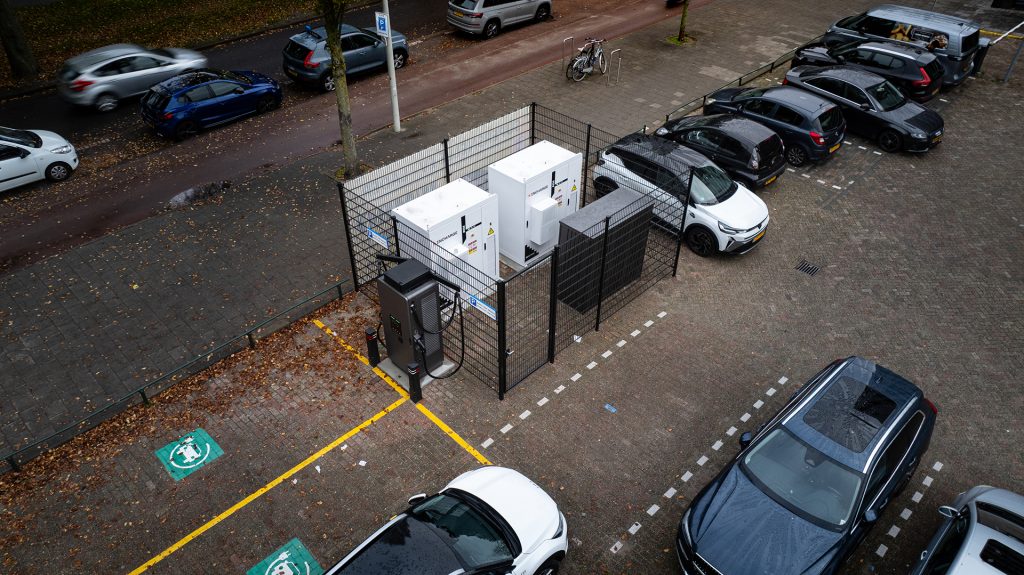
A fast charger requires a high amount of power for a short period of time, often more than the grid connection can supply at once. A battery compensates for this. It charges when there is capacity available on your connection and supplies additional power when the fast chargers need it—for example, when multiple vehicles are charging at the same time. As a result:

  • allows you to handle load spikes without needing a more powerful grid connection
  • You'll make better use of the network capacity you already have
  • enables fast charging at locations with limited grid capacity
Get a free simulation report
Benefits of DC Charging Stations

RELIABLE FAST CHARGING ON-SITE

With your own fast chargers on your premises, you decide when your vehicles charge. You aren’t dependent on public fast-charging stations, occupied charging points, or having to make detours along the way. Your route planning is based on your operations, not on how busy a fast-charging station along the highway is.

In practice, vehicles are charged during scheduled downtime or off-peak hours; scheduling is not disrupted by a full charging station, and drivers begin their shifts with a sufficient charge.

DC FAST CHARGERS SUITABLE FOR HEAVY-DUTY TRANSPORT

The power ratings and voltages for electric trucks are significantly higher than those of chargers for passenger cars. Charging a truck battery with a capacity of 500 to 700 kWh at an AC charging station takes longer than a full night. With the BOLT-DC480 or the BOLT-DC1000 MCS, the same battery recharges in a fraction of that time. The difference is that vehicles don’t just charge at night, but also recharge during loading or unloading. For fleets with multiple trips per day, a tight schedule, or varying deployment patterns, this is an operational necessity.

The most important correction: the BOLT-DC400 and BOLT-DC800 do not exist. They have been replaced by the DC480 and the DC1000 MCS, and this needs to be reflected on the live /dc charging stations as well.

I also made two changes. “An entire night” wasn’t accurate: 600 kWh at 22 kW AC takes over 27 hours. Furthermore, there are no charging times listed by model, because those depend on the vehicle’s charging curve, and a specific time can easily be interpreted as a promise.

CHARGING TIME THAT FITS YOUR SCHEDULE

With a DC fast charger, vehicles can recharge during a break, between trips, or while loading or unloading. This allows you to make use of downtime that would otherwise go unused, keeping vehicles operational throughout the day.

FAST CHARGING THROUGH YOUR HOUSEHOLD ELECTRICITY CONNECTION

You connect the fast chargers to a smart energy management system and, where necessary, to a battery. The energy management system distributes the available power among the active charging points, and the battery absorbs the peaks caused by fast charging. This ensures that your total consumption remains within the capacity of your grid connection.

Boltainer: Smart Energy Storage, Hassle-Free

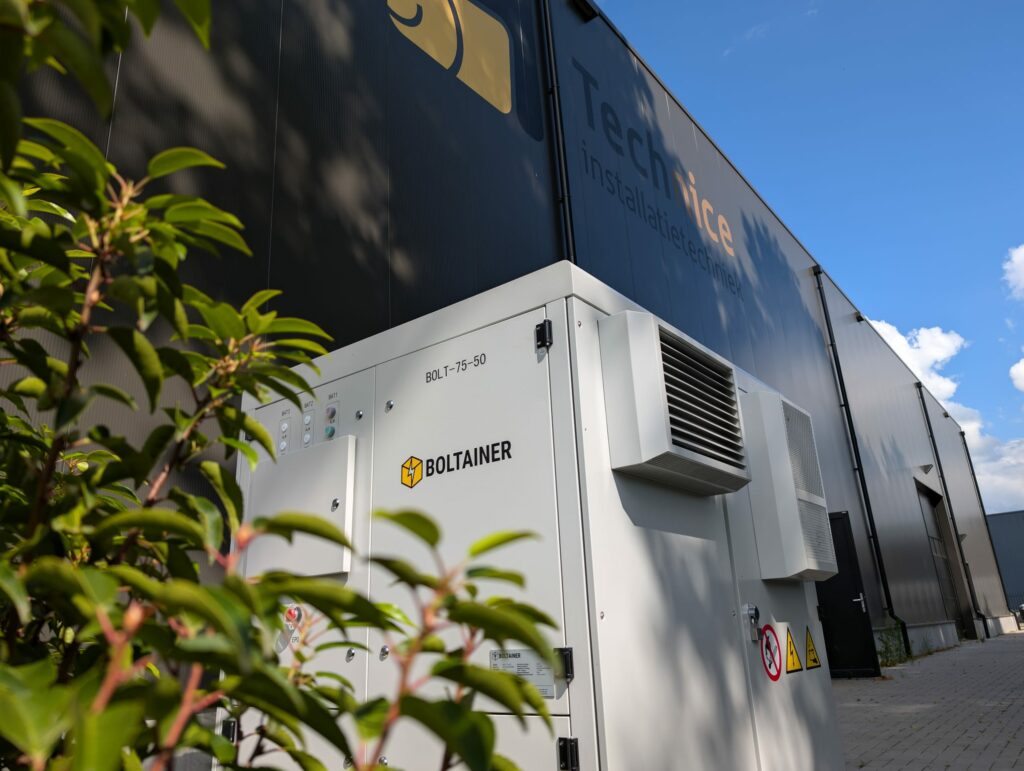
At Boltainer, you get more than just a battery. We help businesses ensure they always have enough power, reduce costs, and get more out of their own energy. We do this with smart technology, Dutch pragmatism, and proven results.

  • Experience in your industry: from agriculture to logistics and manufacturing.
  • A complete, hassle-free service: from consultation to installation, monitoring, and maintenance.
  • Scalable and future-proof:complies with PGS-37-1 and international standards, and grows with your business.
Request a consultation

“We saved €50,000 on our energy bill in the very first year. Not only did this result in significant cost savings, but it was also a major step toward sustainability. A win-win for our company!”

Review from the agricultural sector

Your Own DC Fast Chargers in 4 Steps

1

Insights into Vehicles and Charging Sessions

We’ll assess which vehicles you have, the capacity of their batteries, and how long each vehicle is idle each day. We’ll also evaluate the capacity of your electrical connection and identify the peaks in your current energy consumption. Based on this information, we’ll determine which fast charger is suitable, how many charging points you need, and whether a battery is required for fast charging within your existing electrical connection.

2

Determining Charging Capacity and Number of Charging Points

Based on that analysis, we determine which fast charger is the best fit: the BOLT-DC180, the BOLT-DC480, or the BOLT-DC1000 MCS, with the corresponding number of charging points. We factor in the expected growth of your fleet right from the start.

3

Managing Peaks Through Energy Management and Storage

Two vehicles charging simultaneously at a BOLT-DC180 draw a combined 180 kW. With more fast chargers, this quickly adds up to a power demand that many commercial power connections cannot handle. The energy management system automatically distributes the available power among the active charging points. If that is not enough, a Boltainer battery absorbs the peaks and recharges in the meantime.

4

Installation and Daily Use

After installation, we’ll work with you to get the system up and running. After that, your vehicles will charge at times that fit your schedule: during a break, between two trips, or during a loading or unloading stop.

We love to share success stories

Farmer Dairy farming

"Our solar panels are really paying off now! With Boltainer batteries and BBT software, we use our own electricity whenever it suits us and save a lot on feed-in tariffs."

Fleet & Equipment Manager Construction Company

"We need far fewer diesel generators on the construction site. Combined with battery storage, we now always have a reliable and sustainable power supply, no matter where we're working."

Facilities Manager Industrial sector

"Thanks to Boltainer, we've reduced our energy costs by over 30% and are no longer subject to grid restrictions. Our production is running more efficiently than ever!"

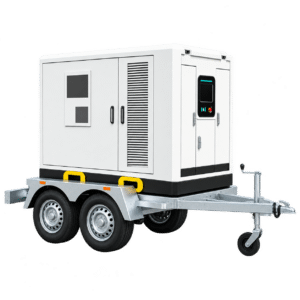
WHO MIGHT BE INTERESTED IN AN OFF-GRID BATTERY?

Construction and Infrastructure

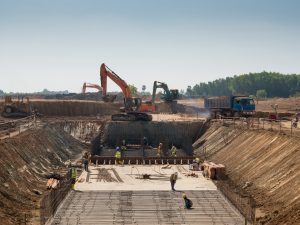
Construction sites often need a power supply before a utility connection is available.

  • Reliable power supply for machines and systems.

Agricultural businesses

Farms and facilities in remote locations can manage their own energy supply.

  • Greater independence and more efficient use of our own energy.

Industry

For production processes that require a continuous supply of energy.

  • A stable power supply for critical facilities.

Energy projects and microgrids

Energy storage plays an important role in local energy networks.

  • A better balance between energy production and consumption.

Frequently Asked Questions About DC Fast Chargers

Can't find your question here? Please contact us.

What charging capacity does a commercial DC fast charger need?

That depends on the battery size and how long a vehicle is parked. Passenger cars and vans charge well on a BOLT-DC180. For charging multiple vehicles at once or heavy-duty e-trucks, the BOLT-DC480 or the BOLT-DC1000 MCS are better options.

Can multiple trucks charge at the same time using our DC charging stations?

Yes. The BOLT-DC180 charges two vehicles at a time, the BOLT-DC480 charges up to four, and the BOLT-DC1000 MCS charges up to twelve. Power is dynamically distributed among the active charging points.

Is energy storage necessary for a DC fast charger?

Not always. If fast charging is compatible with your grid connection, a battery isn’t necessary. In cases of limited grid capacity or high power spikes, a battery absorbs the extra power, allowing you to charge quickly without needing a higher-capacity connection. The simulation report shows what’s required in your specific situation.

Will I be assigned a dedicated contact person?

Yes. You will be assigned a single dedicated contact person who will guide you through the entire process, from the initial analysis through to after the system goes live. This way, you’ll have a single point of contact for all your questions.

What happens in the event of a malfunction?

All BOLT batteries are equipped with BoltOS, a smart monitoring system that provides 24/7 remote monitoring via a 4G/5G internet connection. In the event of a malfunction, proactive measures are taken to quickly identify and resolve any issues, often before you even notice them.

Globe

OUR PARTNERS
BOLTAINER is proud to be associated with a wide range of partners from various sectors and regions, including the public sector, the private sector, and local and national governments. We strive to be the partner of choice and to deliver services that meet and even exceed our customers’ expectations.